On June 8, Korea‘s KOSPI index plunged more than 8 percent in early trading, triggering a circuit breaker that halted trading for 20 minutes. Samsung Electronics and SK Hynix both dropped nearly 10 percent at the open.
Korea wasn’t alone. On Friday, the Nasdaq fell 4.18 percent. The Philadelphia Semiconductor Index plunged more than 10 percent — its worst day since March 2020. NVIDIA dropped 6.2 percent. Micron fell 13.25 percent. Intel fell 11.28 percent. The triggers were familiar: Broadcom‘s guidance came in slightly below expectations. Stronger-than-expected jobs data raised rate-hike fears. SpaceX’s looming IPO threatened to suck liquidity out of the market. But underneath all of that, this was a referendum on one question: have AI valuations simply gotten too expensive?
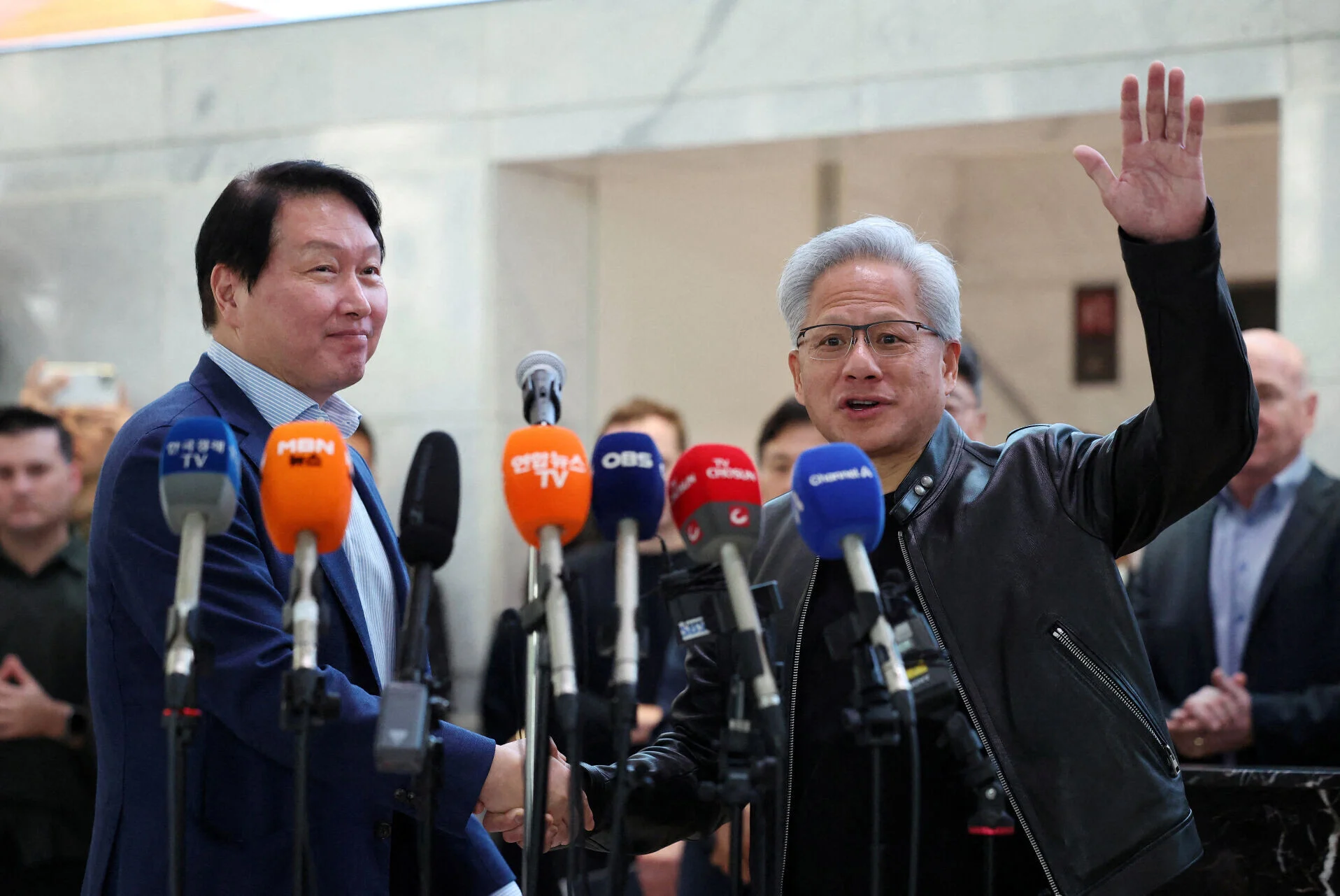
Then, on the same day retail investors were panic-selling SK Hynix stock, Jensen Huang did something that told a different story. NVIDIA and SK Hynix announced a multi-year technology partnership. SK Hynix will supply specialized memory for NVIDIA‘s Vera Rubin AI supercomputer, Vera CPU, RTX Spark PC, and Jetson Thor robotics platform. SK Telecom will also work with NVIDIA to build gigawatt-scale AI infrastructure in Korea, with the first AI factory targeted for 2027.
Huang’s statement left no room for interpretation. “SK Hynix has been NVIDIA‘s largest memory partner and will continue to be our largest memory partner.” That’s not a thank-you note. That‘s a supply chain lock-in. When your largest supplier — who also happens to be your most critical one — is publicly reaffirmed as “will continue to be,” and the deal covers everything from HBM4 to AI factories, that’s not a press release. That‘s a fortress.
SK Group Chairman Chey Tae-won was even blunter. The partnership has deepened to the point where the two companies are now “jointly developing AI roadmaps.” It will extend beyond chips to other SK Group AI projects. He also warned that supply constraints could last until 2030, and that SK Hynix will double its production capacity over the next five years.
Same country. Same day. Two completely different stories. One is short-term sentiment trading. The other is long-term industrial reality. Both are true. They just operate on very different time horizons.
DeepSeek Tops the Chart
If the Huang-Chey handshake was the upstream version of “counting the receipts” — locking in supply, planning capacity, navigating shortages — then DeepSeek‘s rise in the U.S. is the downstream version. Users are starting to calculate exactly how much value each token buys.
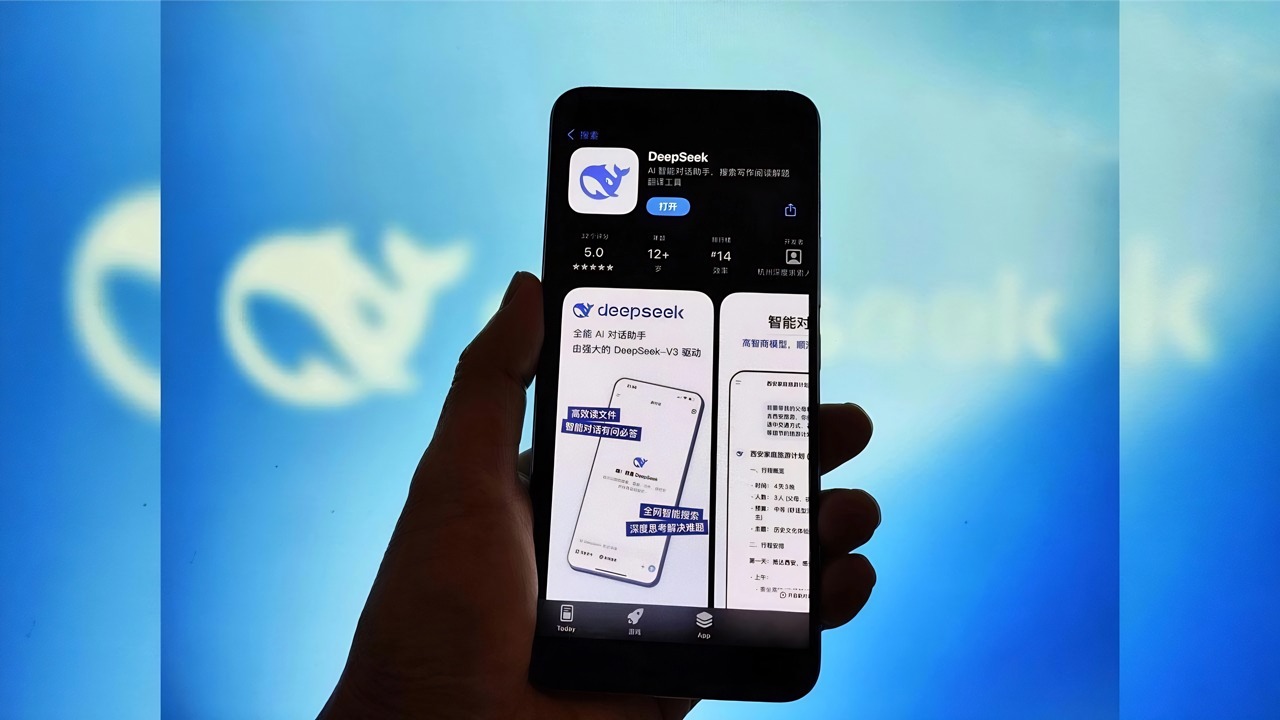
Ramp, a corporate spend management platform, released its June “trending software vendors” list. DeepSeek ranked first. Ramp’s chief economist wrote on social media: “DeepSeek is one of the fastest-growing vendors on Ramp.”
The detail worth noting: according to Ramp‘s data, drawn from more than 50,000 businesses, many U.S. companies aren’t just experimenting with self-hosted open-source models. They‘re buying DeepSeek’s hosted API service. That means they‘re putting it into production.
The chief economist’s conclusion was clear: U.S. companies are gradually shifting from OpenAI and Anthropic toward open-source models. Other inference platforms that offer open-source model APIs — Fireworks AI, fal AI — also made the list.
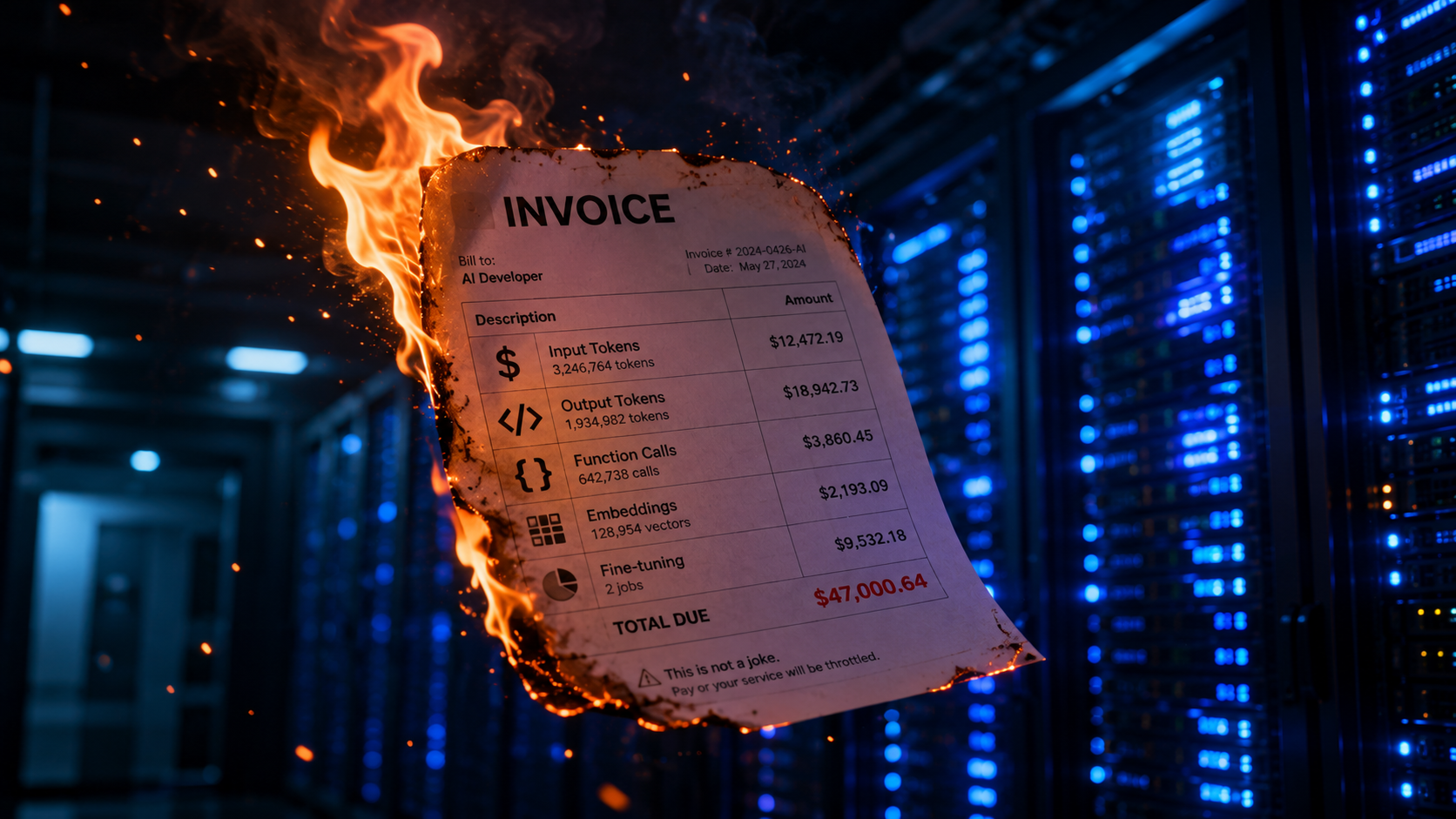
The math is simple. U.S. corporate AI bills have exploded. Uber burned through its entire annual token budget in just four months. Salesforce is expected to pay Anthropic roughly $300 million this year. Amazon shut down an internal AI usage leaderboard because employees were running unnecessary tasks just to climb the ranks.
DeepSeek costs about one-tenth of GPT-5.5. When your AI bill drops from $28,000 a month to $2,800, that‘s not politics. That’s just good business.
Hugging Face CEO Clément Delangue has also noticed the trend. By early 2026, Chinese models accounted for more than 30 percent of what startups were using on Hugging Face. Companies like Airbnb and Pinterest are already using Chinese models. The reason is the same every time: cheap and easy to modify.
The Paradox
Put these two phenomena together, and the structural contradictions of today‘s AI market become clear.
Short-term expectations vs. long-term reality. The market panicked over a $12 billion guidance miss and liquidity fears. Meanwhile, Huang was in Seoul confirming that Vera Rubin ships in Q3, that all three HBM4 suppliers are qualified and producing, and that memory shortages could last for years. Short-term traders see uncertainty. Industrial players are locking in certainty.
The ceiling on premium pricing. OpenAI and Anthropic‘s models are the best. But they’re also the most expensive. When enterprises start calculating “effective cost per completed task,” premium pricing becomes a liability. DeepSeek isn‘t winning because it’s better than GPT-5.5. It‘s winning because it’s good enough and dramatically cheaper. In a market where model capabilities are converging, marginal cost becomes the differentiator.
NVIDIA‘s dual role. Huang warns that “every part of the supply chain is constrained — from wafers to packaging to silicon photonics.” Then he proceeds to lock down Korea’s entire AI ecosystem. That‘s not a contradiction. It’s a strategy. NVIDIA is both the creator of the bottleneck (too much demand) and the solver of the bottleneck (locking up supply). His four days in Seoul weren‘t a sales trip. They were a supply chain command center.
How to Survive the Receipt-Counting Era
Different players need different strategies. But the core principle is the same for everyone: spend your expensive tokens on the tasks that actually need them.
If you’re an AI application company, stop obsessing over building your own foundation models. DeepSeek proved that open-source models are good enough. Spend your energy on data moats and vertical use cases. That‘s where defensibility comes from — not model parameters.
If you’re an AI infrastructure company, supply chain security matters more than a better benchmark score. NVIDIA‘s four days in Seoul were about locking down supply for years. Technology advantages can be caught. Supply chain advantages — once locked in — are much harder to break.
If you’re an investor, stop watching demos and start reading financials. The clearest near-term earnings visibility is in compute, then cloud, then data, then applications. The companies that will survive this cycle aren‘t necessarily the sexiest ones. They’re the ones with real data, real customers, and real revenue.
If you‘re a regular user, start paying attention to your own token bill. Free tiers are shrinking. Subscription costs are rising. Heavy users can easily spend hundreds of dollars a month.
Not every task needs the most expensive model. Daily summaries, simple Q&A, first drafts — use cheaper models for those. Gemini 3 Flash costs $0.50 per million input tokens. GPT-5.5 costs $5.00. That’s a 10x difference. Ask a simple question ten times rather than one complex question once. Your wallet will thank you.
Use caching. Don‘t paste your entire chat history into every new conversation. Start fresh when you can. And don’t subscribe to everything. ChatGPT Plus ($20), Claude Pro ($20), Perplexity Pro ($20) — that adds up fast. Pick the one you actually use and pay-as-you-go for the rest.
Token prices rising isn‘t necessarily bad news. When tokens actually cost something, usage shifts from “just because” to “because it solves a real problem.” And the people who start paying attention early aren’t being cheap. They‘re building good habits for an era where human-AI collaboration — not pure AI, not pure human — is the most efficient way to work.
Putting It All Together
Four things happened on the same day:
Event | Surface | Substance |
|---|---|---|
Korea‘s market circuit breaker | Panic selling of chip stocks | Short-term sentiment, not long-term reality |
NVIDIA-SK Hynix partnership | Technology collaboration | Supply chain lock-in, capacity planning |
DeepSeek tops Ramp’s list | U.S. companies buying Chinese models | Rational cost-based procurement |
Huang says “buy the dip” | CEO comforts the market | Industrial capital signaling long-term value |
These events aren‘t contradictions. They’re the same story told from different angles. AI is moving from storytelling to counting the receipts. Whoever has the lowest cost structure, the most secure supply chain, and the most defensible real-world use cases will win the next phase.
P.S.When Huang said in Seoul, “We‘re just getting started. No matter what happens to the stock market, you should be very happy that you can now buy at a lower price” — he had to say that. His net worth is tied to NVIDIA’s stock price.
But the real signal wasn‘t his words. It was his actions. Four days in Seoul. Deals signed with SK Hynix, Hyundai, LG, Naver, Doosan. Korea’s entire AI ecosystem, now tied to NVIDIA‘s roadmap.
When the market panics, industrial players go shopping. While retail investors ask “should I sell?”, Huang was asking “will we have enough HBM in 2028?”
The storytelling era of AI is over. The receipt-counting era has begun. And the companies with real data, real customers, and real revenue — even if they’re less exciting — may end up being the ones that last the longest and make the most money.