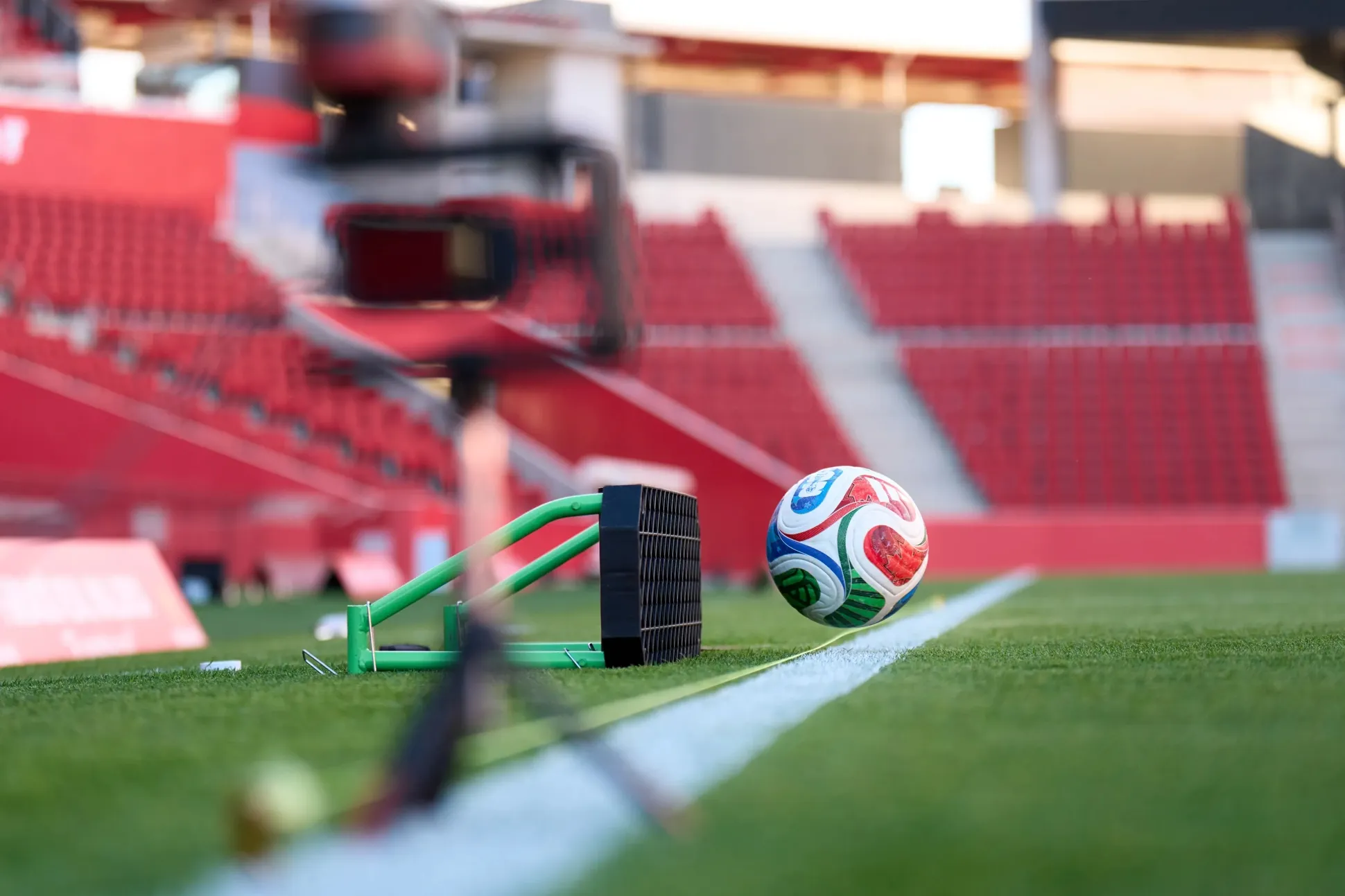
The 2026 World Cup kicks off on June 11 across the United States, Canada, and Mexico. 48 teams. 16 cities. 104 matches. But the real story isn‘t just the expanded bracket. It’s the technology quietly embedded in every corner of the tournament.
This is the first World Cup where AI isn‘t a pilot project. It’s the backbone.
The Offside Call Just Got an Upgrade
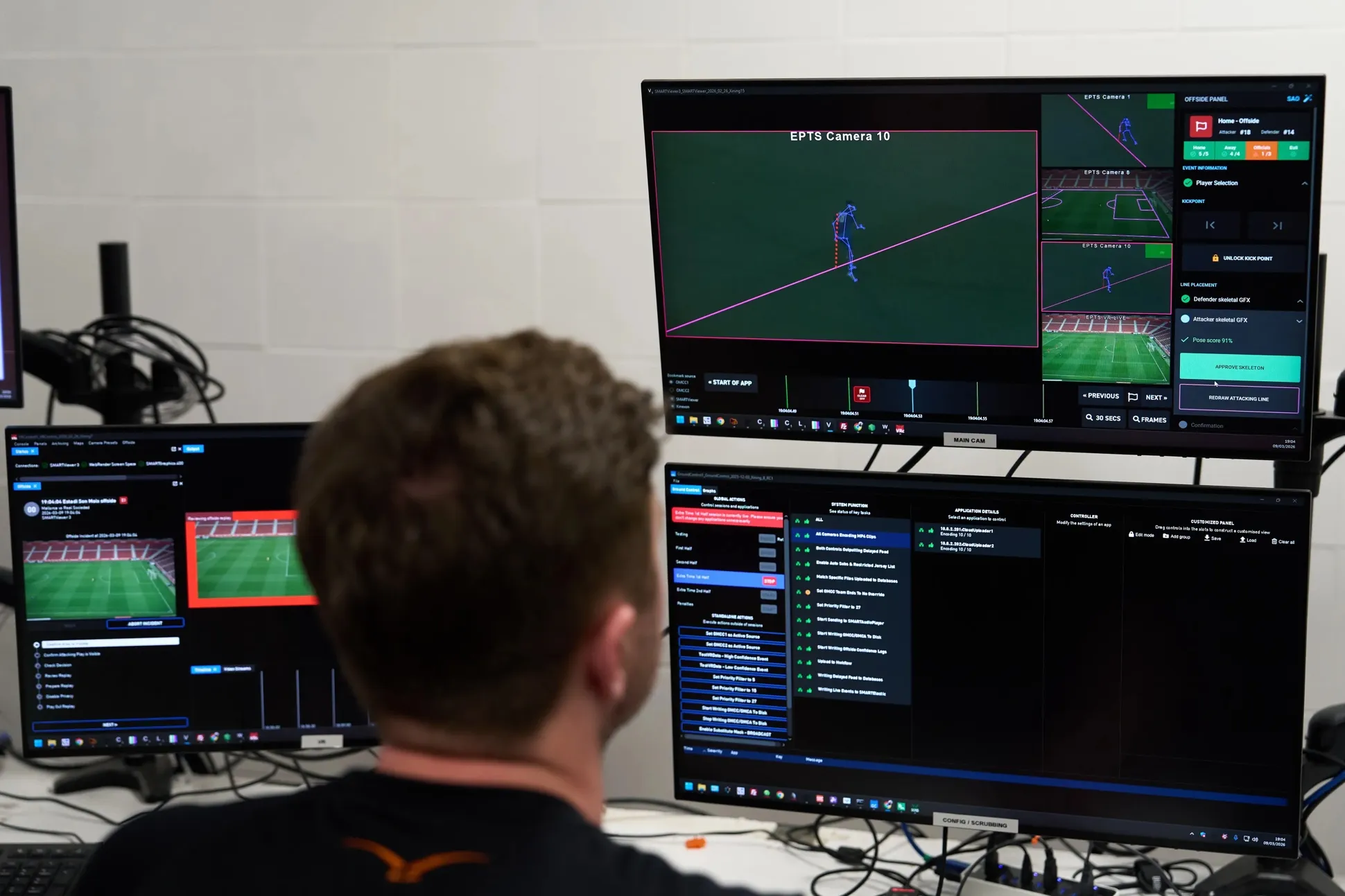
Offside is soccer‘s most debated rule. In 2022, semi-automated offside technology (SAOT) cut the average review time to 70 seconds. In 2026, the system got a complete overhaul.
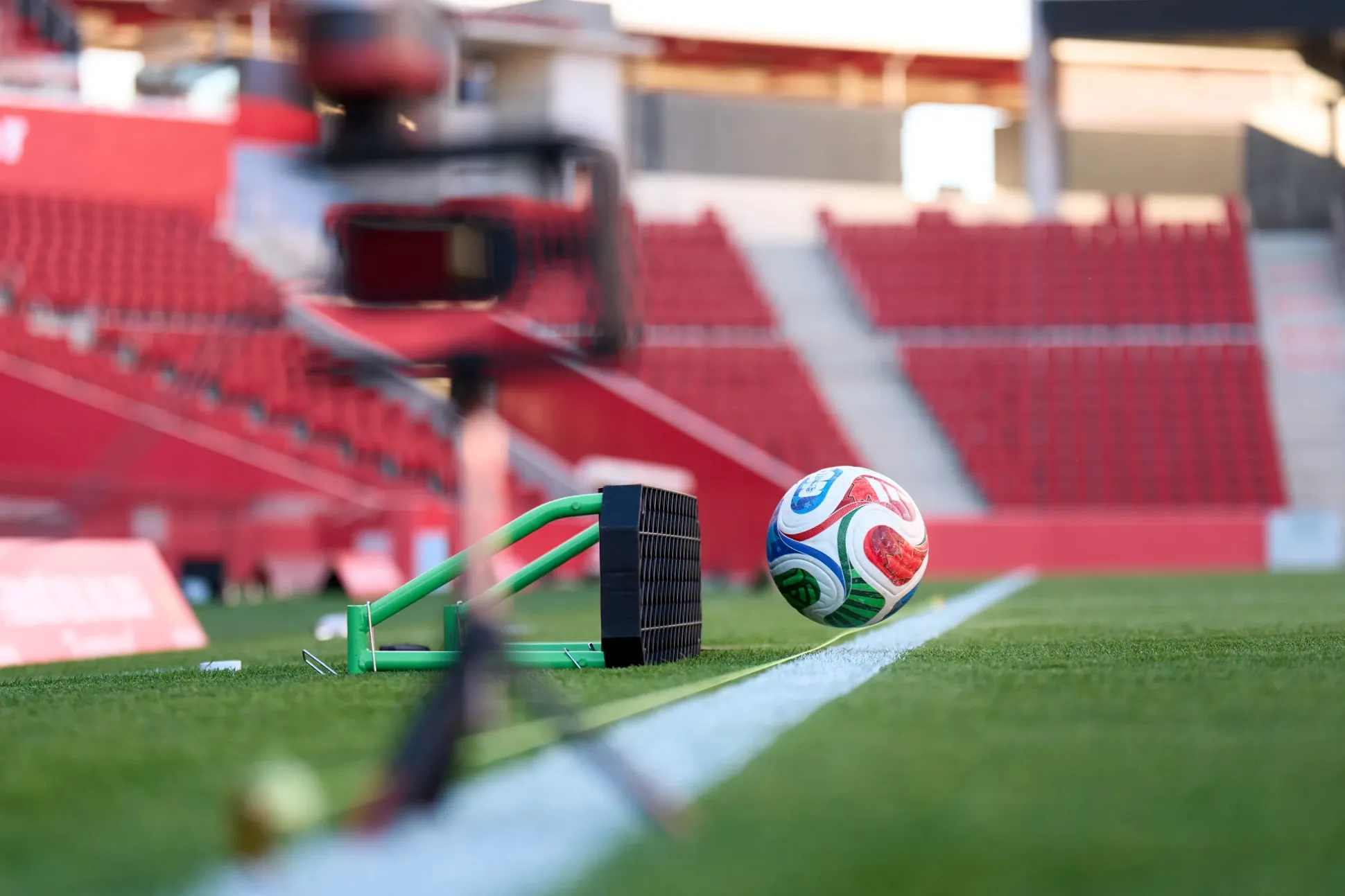
The accuracy threshold dropped from 50 centimeters to just 10. That means plays that used to be too close to call — the ones that sparked endless arguments — now have a definitive answer. Every stadium has 16 optical tracking cameras (up from 12 in 2022), sampling player positions 50 times per second across 29 skeletal tracking points.
The result: average review time has dropped to under 25 seconds. Referees receive an audio alert directly to their earpiece. No more waiting for VAR to relay the decision.
The real innovation is what you don‘t see. Before the tournament, each of the 1,200 players stepped into a scanning pod. The system captured their leg length, shoulder width, torso shape — every measurable dimension — and built a millimeter-accurate 3D digital twin.
Why does that matter? When a player’s arm or shoulder determines an offside call, referees and VAR can now inspect that exact moment from any angle. When a player might be blocking the goalkeeper‘s line of sight — a key factor in “interfering with play” — the 3D model can reconstruct exactly what the keeper saw.
For viewers at home, offside replays have evolved from crude 2D line drawings to video-game-quality 3D renderings. The players look real. The call becomes obvious.
The Ball Has a Brain
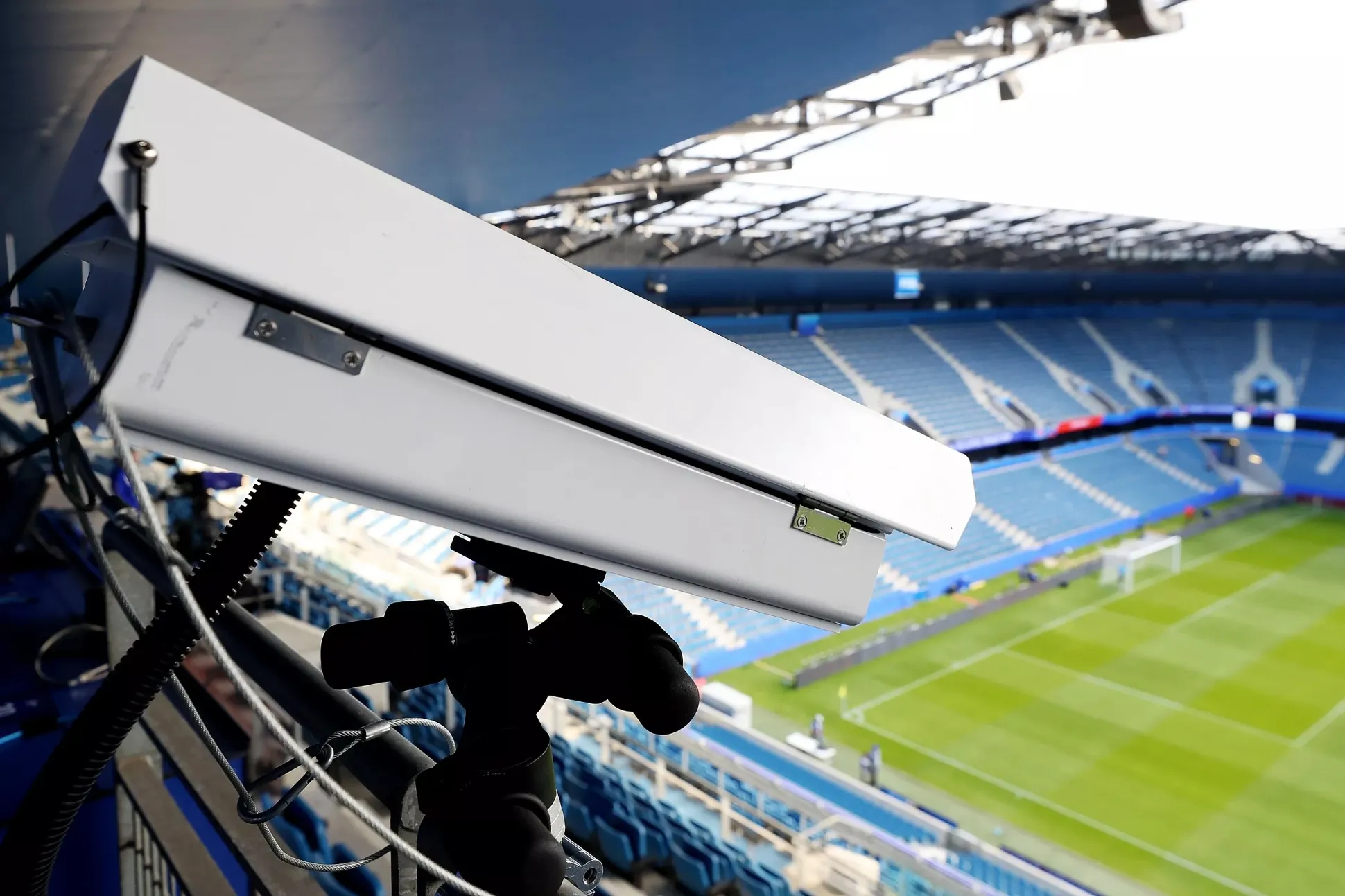
The official match ball is called Trionda — Spanish for “triple wave,” a nod to the three host nations. Inside the familiar white-and-panel exterior is a 14-gram sensor package that never stops working.
It samples movement 500 times per second — measuring acceleration, spin rate, and trajectory. That’s 500 data points every second. The exact moment a player‘s boot touches the ball — the critical timestamp for any offside decision — is now measured with precision that no camera alone could match.
The sensor also maps every contact with the ball throughout the match. That means handball calls and penalty-box fouls have a new layer of evidence: not just video, but sensor data showing exactly when and how the ball was touched.
A single charge lasts six hours — enough for extra time and penalty shootouts. Spare balls sit on the sideline, fully charged, ready to rotate in at any moment.
AI Assistant for Every Coach — Not Just the Rich Ones
Here’s something that doesn‘t make the highlight reels but matters enormously.
In past World Cups, the teams with the biggest budgets — Germany, Brazil, France — had armies of analysts combing through 50-page paper reports after every match. Smaller nations? They made do.
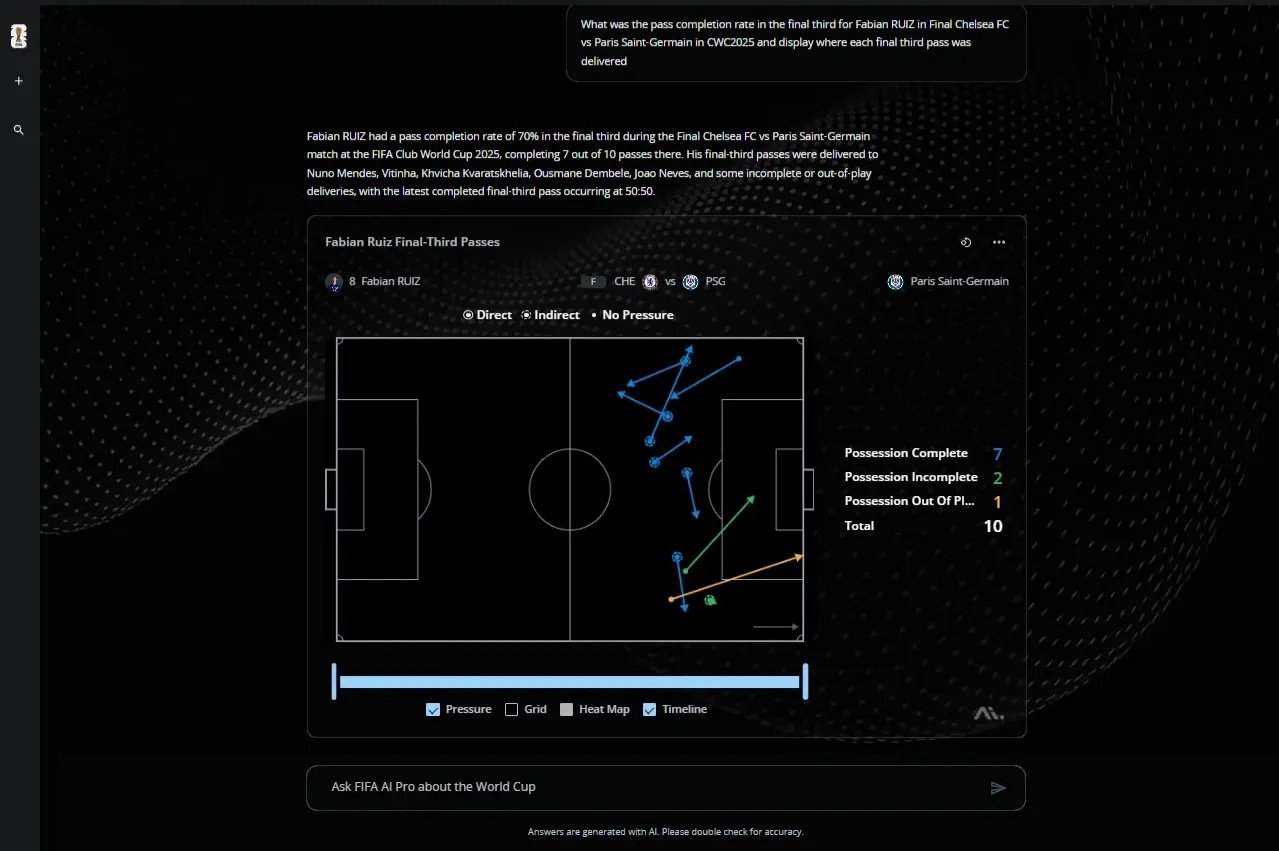
That gap just closed. FIFA launched Football AI Pro, a generative AI assistant trained on hundreds of millions of historical soccer data points. Coaches and analysts can now ask natural-language questions: “What’s our corner kick success rate over the last 10 matches?” “Where are our opponents weakest in defense?” The system answers with text summaries, video clips, and visual charts.
Every one of the 48 teams gets the same access. Same tools. Same insights. The playing field for tactical preparation just leveled.
One rule: the AI is for pre-match preparation and post-match analysis only. During the match, it stays on the bench. FIFA was clear — the game itself belongs to the players, not the algorithm.
Referee Body Cams You Can Actually Watch
FIFA tested referee-mounted cameras at the 2025 Club World Cup. The footage was borderline unwatchable. Referees sprint, stop, jump, change direction constantly. The motion blur made most of the material unusable.
For 2026, the system includes an AI-powered stabilization algorithm. It analyzes each frame in real time, detects the camera‘s motion vector, and applies a compensating correction — all within milliseconds so the feed can go straight to broadcast.
The result: viewers see exactly what the referee sees, without the seasickness. The transparency benefit is obvious. When a controversial call happens, the referee‘s first-person view is part of the public record, not locked in a review room.
Chinese referee Fu Ming, who will officiate at this World Cup, put it this way in a recent interview: “The body camera lets the audience see the real interference and limitations referees face on the pitch. It reduces misunderstandings and helps people understand the game’s spontaneous moments.”
The Watch That Decides Goals
Every stadium has goal-line technology. Sensors detect whether the ball has fully crossed the line and send a signal to the referee‘s wristwatch. The watch vibrates and flashes “GOAL.”
No earpiece interference. No shouting over crowd noise. Just a clear, unambiguous signal on the referee’s wrist. When 70,000 people are screaming and the rain is pouring, that matters.
Where the Tech Goes After the World Cup
FIFA isn‘t building all this just for 104 matches.
In a recent documentary screening, FIFA showed how the same AI tools are already reaching grassroots sports. A rural elementary school in China’s Yunnan province held an “AI art class” where kids designed their own soccer jerseys using generative AI tools. Amateur teams in cities are using AI for jersey design and tactical analysis.
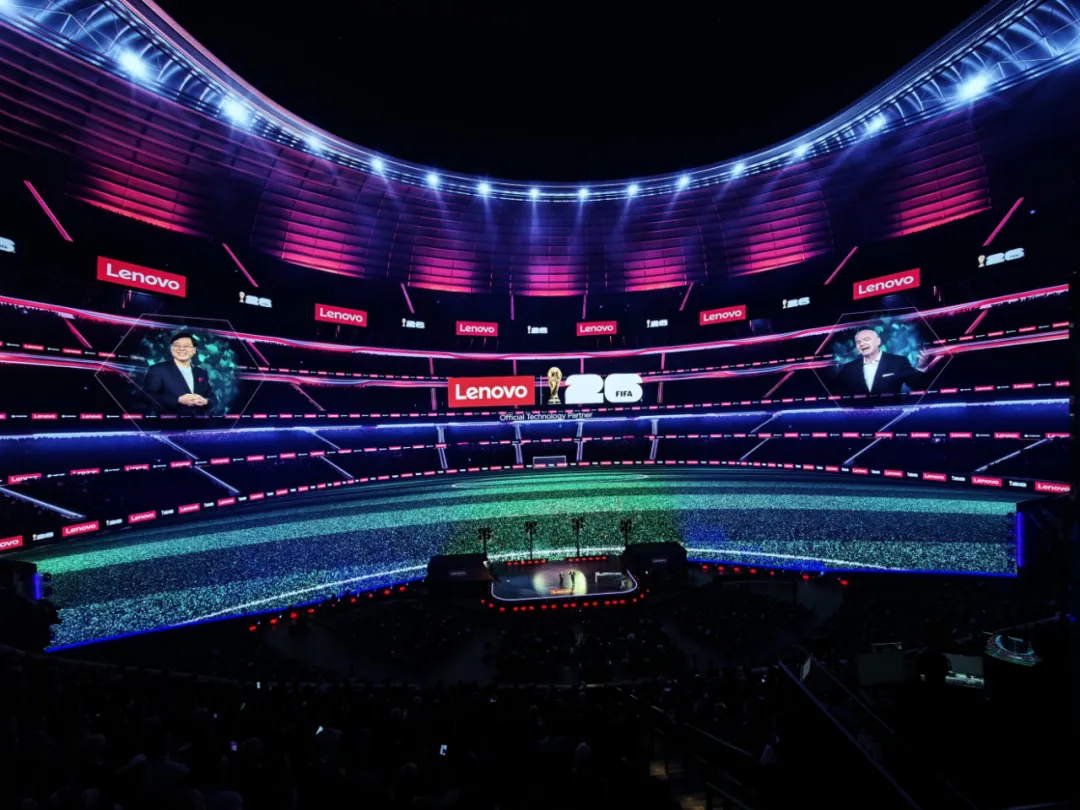
The stated goal, according to a Lenovo executive involved in the project: take the technology validated at the world‘s biggest tournament and scale it down — to professional leagues, youth academies, school sports, community fitness. The sensors, the tracking, the AI assistant — not locked in a World Cup silo, but available wherever people play the game.
One Sentence Summary
The 2026 World Cup is the first where AI isn’t a gimmick. It‘s the invisible infrastructure — making offside calls faster, tactical preparation more equal, and the referee’s perspective finally watchable. The game still belongs to the players. But the technology around it just entered a new era.
P.S. FIFA president Gianni Infantino said it plainly: “We are committed to ensuring that technological innovations benefit every player, team, and fan around the world — while serving football, the greatest sport on the planet.” The 2026 World Cup is the proof of concept. If it works here, it works everywhere. That‘s the real win.