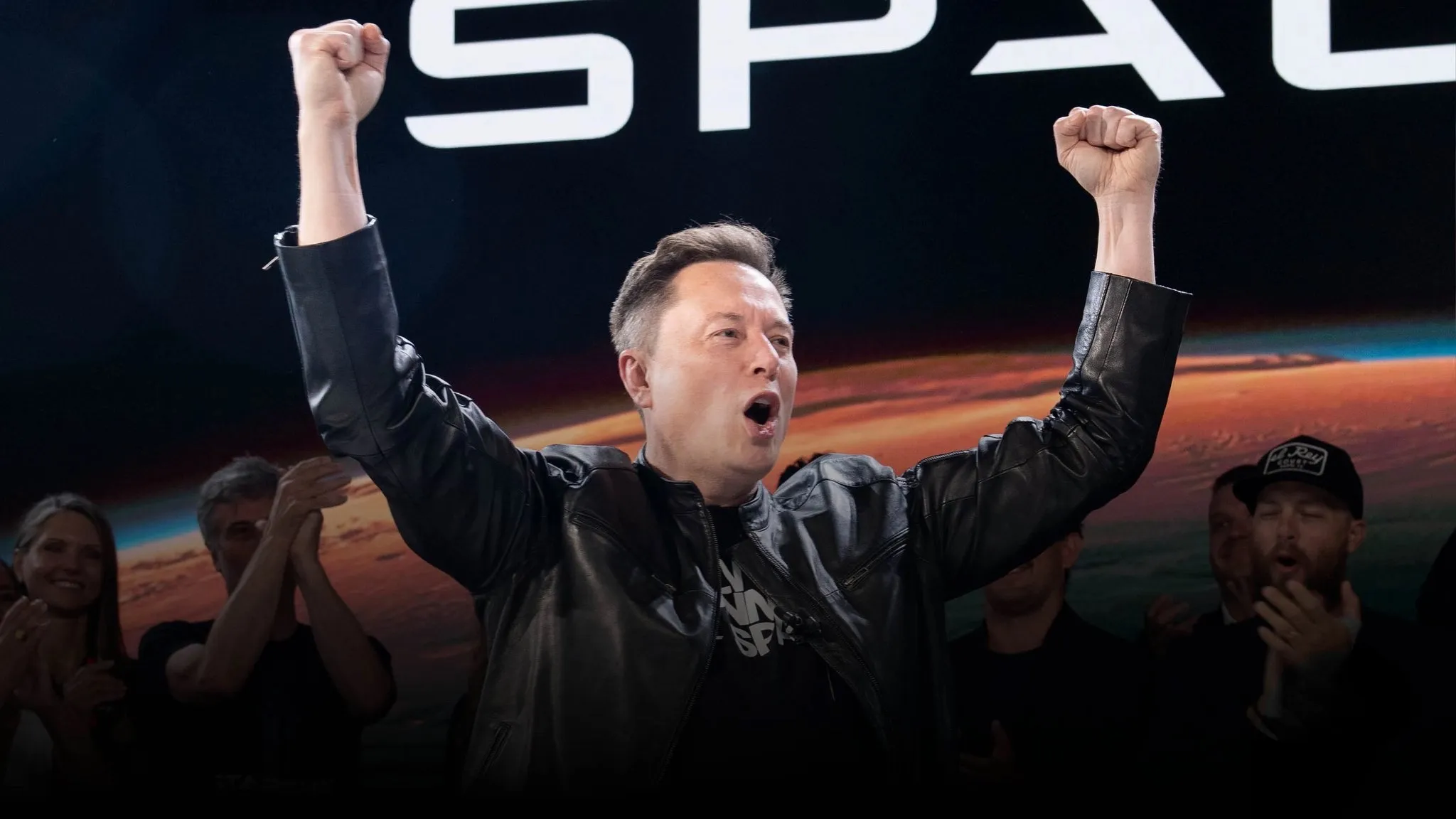
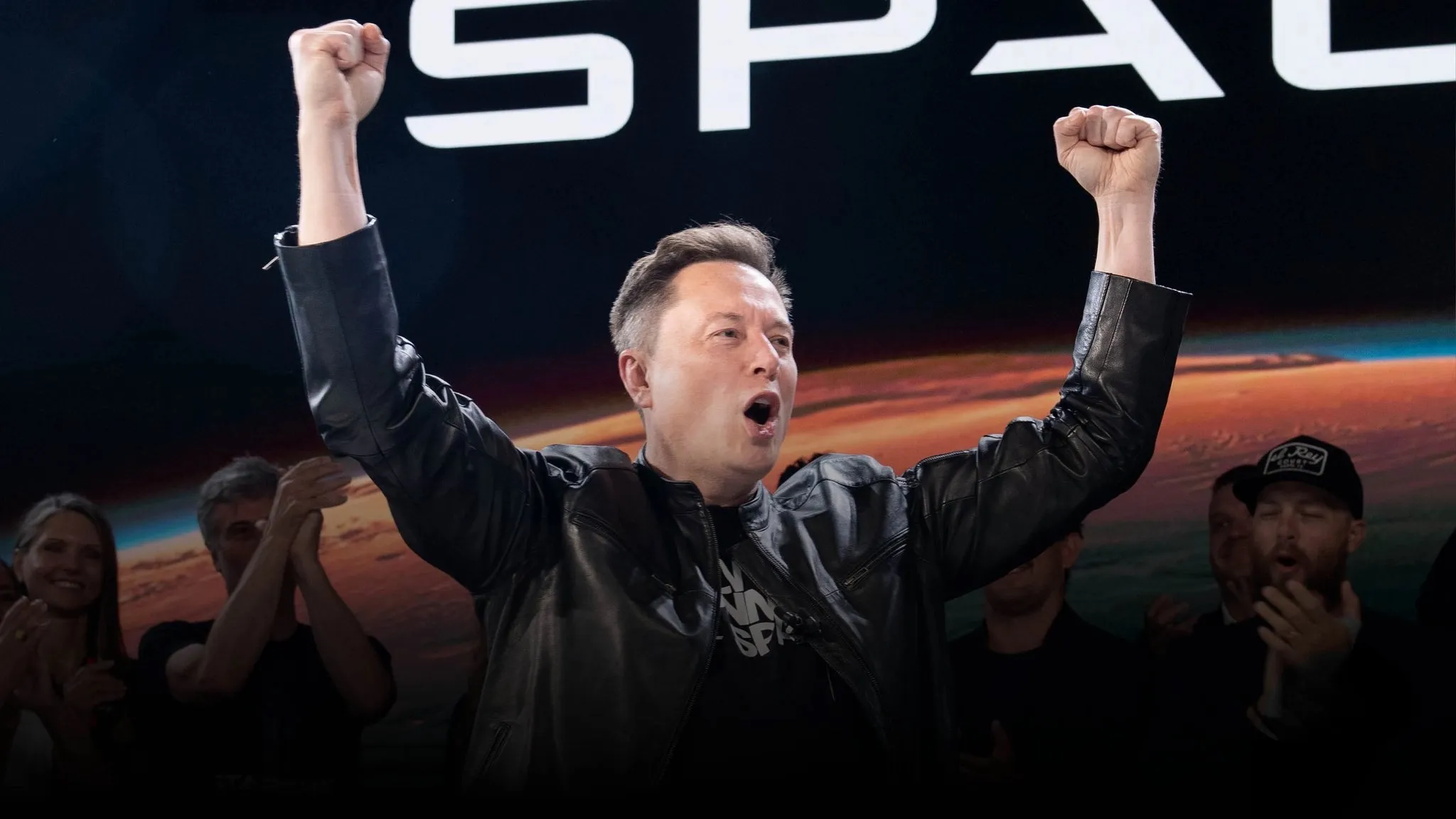
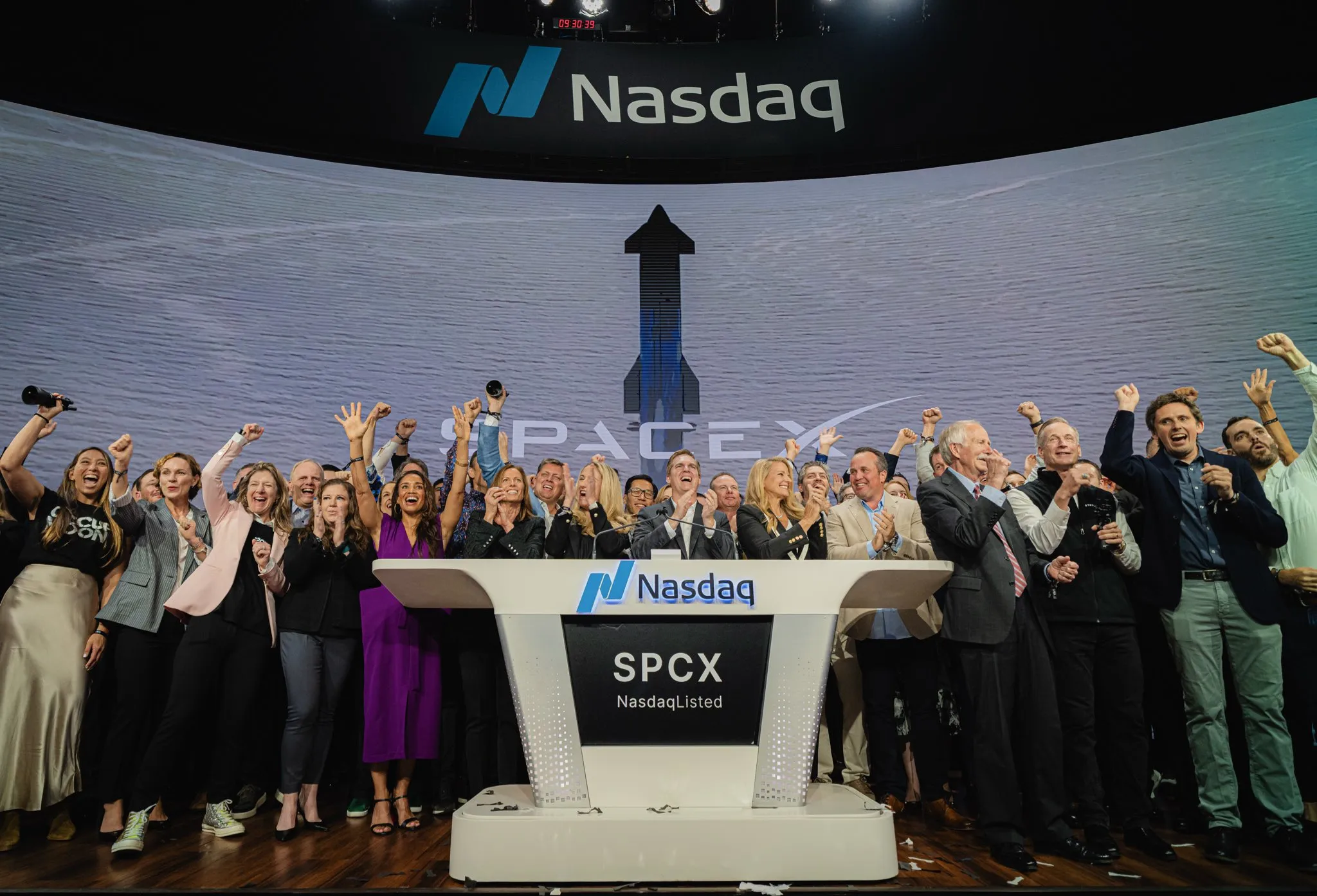
SpaceX began trading on the Nasdaq on June 12. The offering priced at $135 per share. The stock opened at $150, climbed as high as $176.52, and closed at $160.95. First-day gain: 19.2 percent. Market cap: $2.1 trillion. That makes SpaceX the seventh-largest public company in the United States, ahead of both Tesla and Broadcom.
The scale of the offering itself was unprecedented. SpaceX raised $75 billion, more than double the previous record set by Saudi Aramco in 2019. Total demand hit $350 billion. Institutional investors alone wanted $250 billion worth of shares. Retail investors submitted over $100 billion in orders but only got about $15 billion filled, because SpaceX set aside roughly 20 percent of the offering for individual buyers — far more than typical for an IPO this size.
Retail demand was off the charts. Fidelity lowered its participation threshold from $100,000 to $2,000. Robinhood‘s systems buckled under the traffic. By the end of the day, SpaceX’s net retail buying surpassed NVIDIA‘s by a factor of 3.5, according to Vanda Research.
The Valuation Debate
The stock closed at $161. But the argument over what SpaceX is actually worth barely started.
On the bullish side, Oppenheimer set a $190 price target. Their thesis: Starlink provides a cash anchor, Starship lowers launch costs, and space-based AI computing is a long-dated call option on Musk‘s ability to execute.
On the bearish side, CFRA issued the first “sell” rating with a $115 target, arguing that xAI and Starship are capital incinerators. Morningstar’s fair-value estimate came in at roughly $80 per share — less than half the IPO price. Jim Chanos called the valuation “based on hopes and dreams.” Michael Burry said nothing in the S-1 justifies a trillion-dollar market cap and compared the current AI build-out to the 2000 internet bubble.
Here‘s the thing. They can’t both be right. But they can both be rational, depending on what time horizon you‘re using. The bulls are betting on the 2030 story. The bears are reading the 2025 financials. SpaceX’s stock price is the market‘s attempt to reconcile those two views. The 19 percent first-day pop suggests optimism won the opening round.
What Happens Next
Index inclusion. Nasdaq changed its rules last month to accelerate mega-cap IPOs into the Nasdaq 100. SpaceX could join as soon as 15 trading days after listing — potentially late June or early July. That triggers a mechanical buying wave. Passive funds tracking the index will have to purchase SPCX shares, even at elevated prices. JPMorgan analysts estimate index-driven demand could reach $95 billion.
Lockup expiration. Most insider shares are restricted from selling until August. That’s when the real supply hits the market. Employees who just became millionaires on paper will decide whether to cash in. Early investors who have held for a decade will decide whether to take profits.
The space AI timeline. SpaceX now has public shareholders. The orbital AI compute satellites that helped justify the $1.75 trillion valuation are still years away. The first two prototypes launch next year. The Gigasat factory in Bastrop, Texas, is still being built. The cost of launching compute into space — currently $1,400 to $1,800 per kilogram — needs to fall below $200 per kilogram to pencil out, according to a Google research paper.
Musk has never been good with dates. But he has been good with directions. Public markets are now betting he’s right about this one too.
P.S.The retail investors who lined up for SPCX were not buying a rocket company. They were buying a story — space-based AI, orbital data centers, Musk‘s long-term vision. The stock went up 19 percent on day one, and they felt smart. The real test starts when the quarterly earnings start arriving. That’s when we‘ll find out who bought a thesis and who bought a trade.