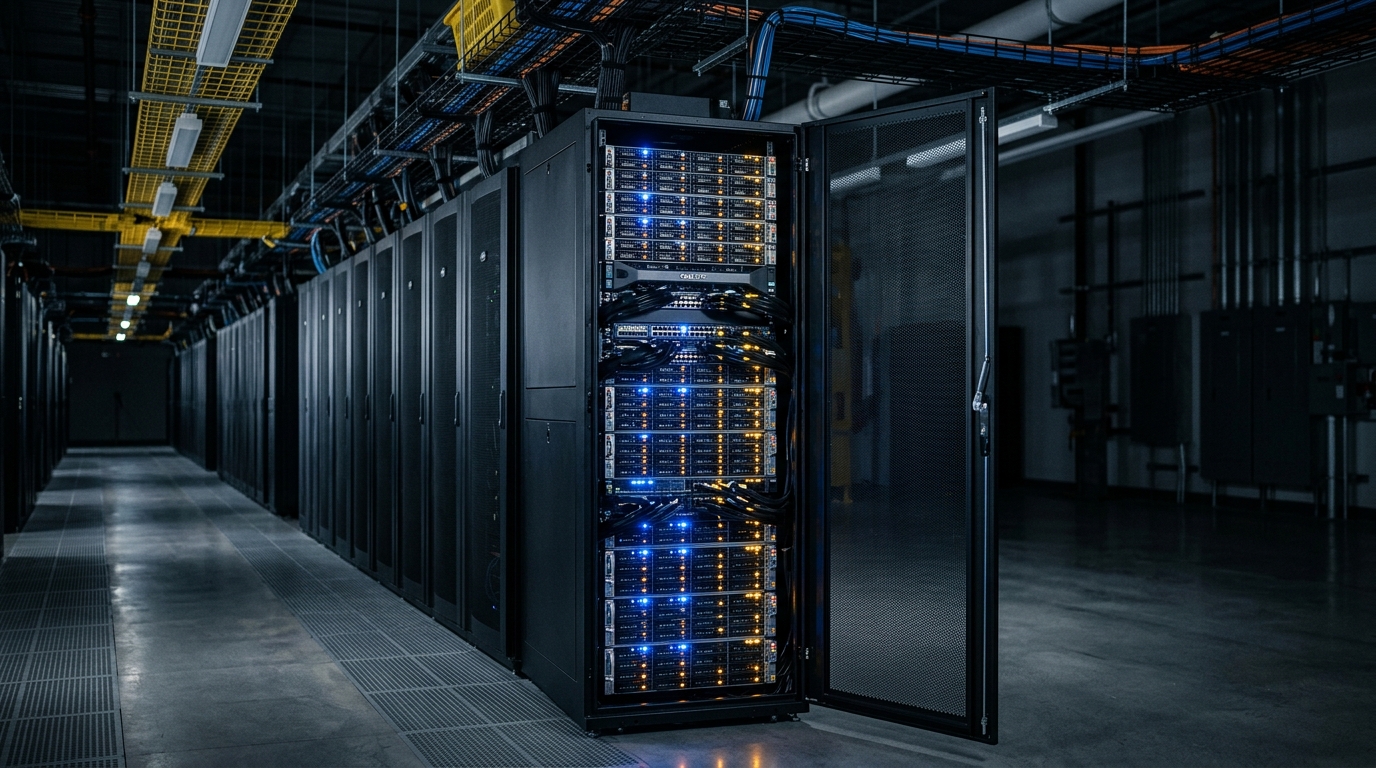
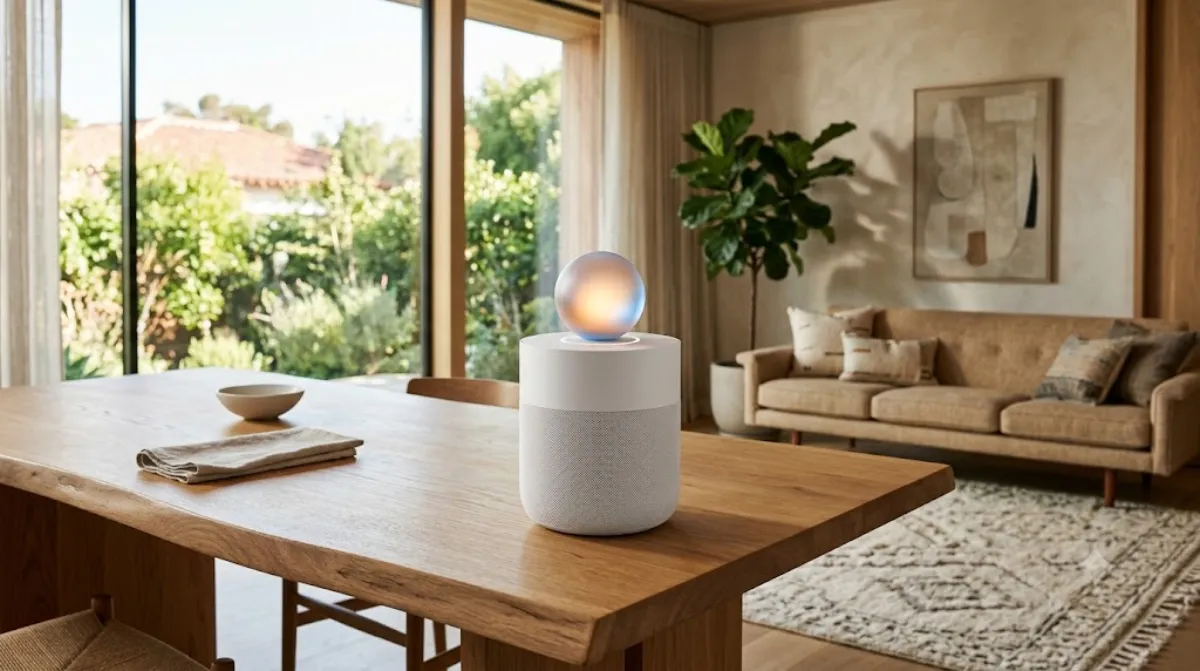
OpenAI's first consumer hardware is a portable, screenless speaker.
It looks like a speaker. It sounds like one too. But internally, OpenAI describes it as a new kind of computer — an AI companion that lives in your home, moves from room to room, and grows smarter about you over time .
The device runs an advanced version of GPT-Live, the voice model OpenAI released last week. It supports simultaneous listening and speaking. It interrupts naturally. It feels like a conversation, not a command prompt .
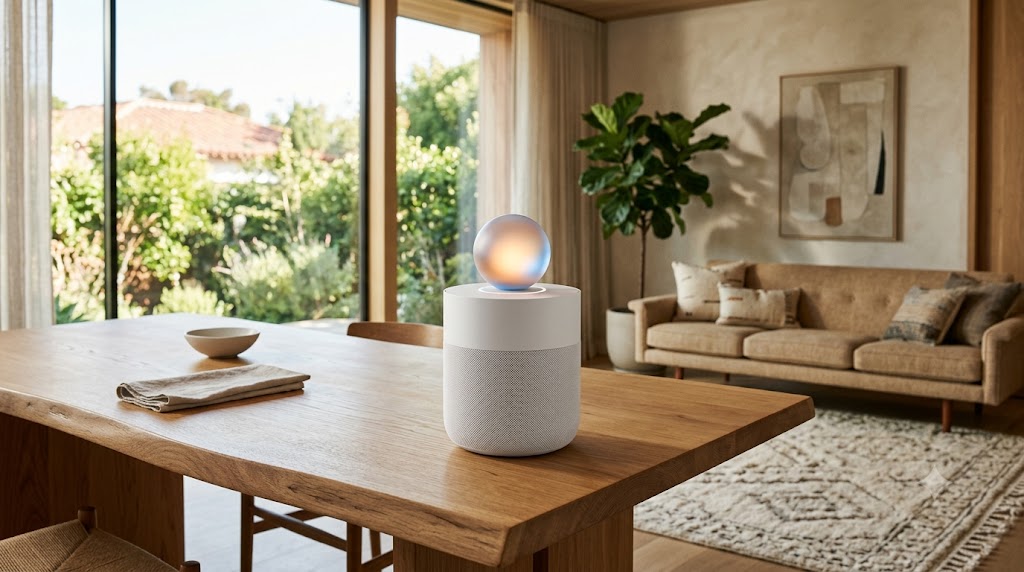
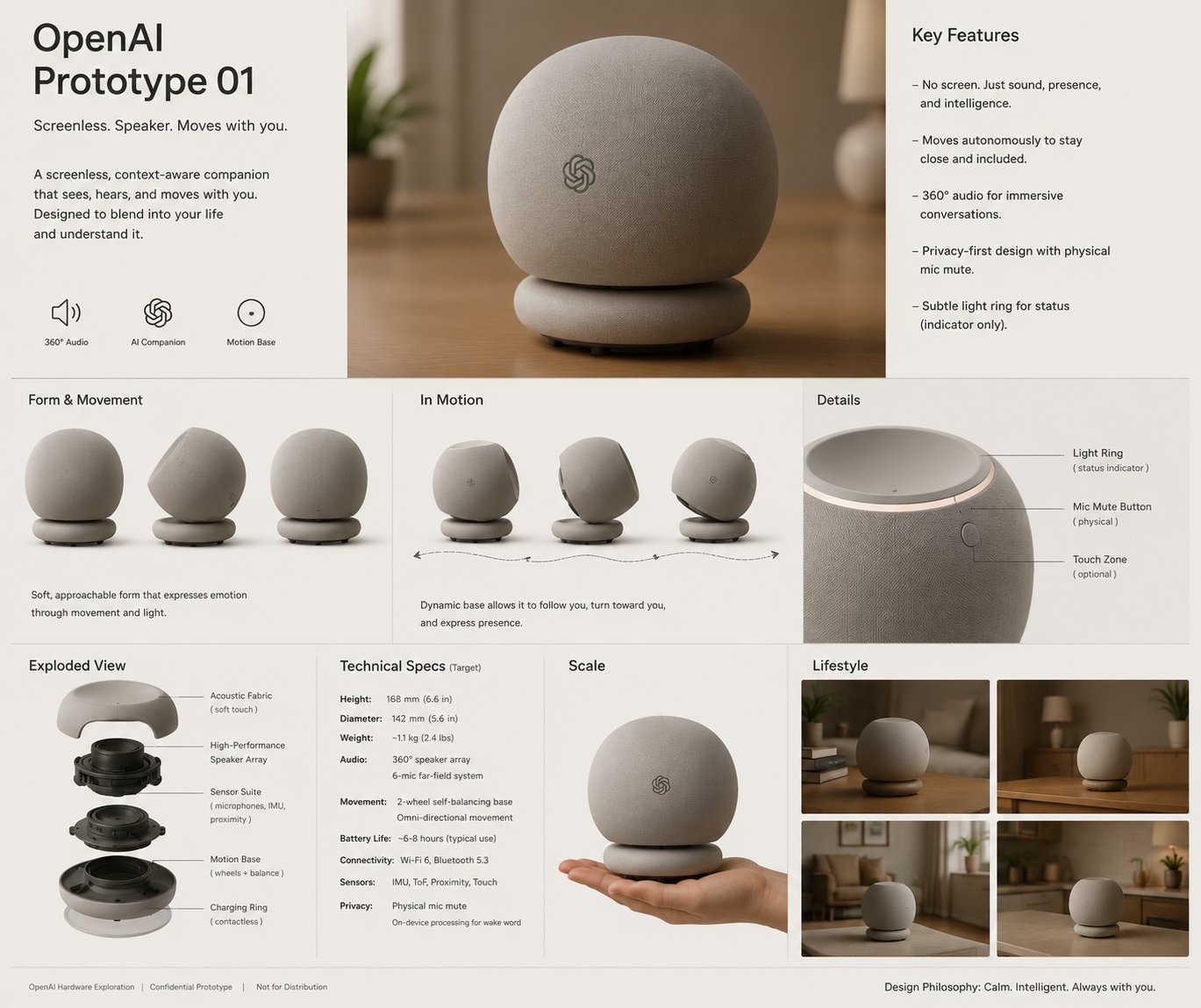
It also has cameras, sensors, and mechanical parts that move. The goal is to make it feel alive .
OpenAI plans to unveil the device later this year and ship it in 2027 . It is the first of roughly five hardware products the company is developing, with a longer-term ambition to build a mobile device that could replace the smartphone .
But there is a problem. A 41-page lawsuit filed by Apple on July 10 accuses OpenAI of systematically stealing the hardware secrets that made this product possible .
Apple's complaint alleges that OpenAI orchestrated a coordinated effort to extract confidential information from Apple employees. The lawsuit names 400+ former Apple employees now working at OpenAI, with two at the center of the case: Tang Tan, former iPhone design chief and now OpenAI's hardware lead, and Chang Liu, a former systems engineer .
The details are striking. Tan allegedly asked Apple employees to bring actual hardware components — batteries, logic boards, prototypes — to job interviews at OpenAI for "show and tell" sessions . Liu allegedly discovered he could still access Apple's internal network after leaving the company and downloaded dozens of confidential files. A text message included in the suit reads: "LOL, I found I can still access network storage. So funny." .
Apple is seeking a court order that could force OpenAI to destroy proprietary materials and redesign products that might contain Apple technology. If granted, the hardware roadmap would have to be rebuilt from scratch .
OpenAI's hardware anxiety is not new. Its model lead over competitors has shrunk from years to quarters. It needs a physical presence — a body — to stay ahead .
That's why it spent $6.5 billion last year to acquire io Products, a hardware startup co-founded by former Apple design chief Jony Ive and Tang Tan. The acquisition brought Apple's product design DNA into OpenAI's hardware division .
Ive's design studio LoveFrom is also involved in the project. But Ive is not named as a defendant. The lawsuit is aimed at OpenAI and the people who took Apple's processes with them .
The timing matters. OpenAI is preparing for an IPO expected to value the company above $850 billion. Hardware is central to that story — it represents a new revenue stream and a new relationship with consumers, independent of Apple and Google .
Apple's lawsuit may not need to win outright to do damage. A lengthy legal battle could delay the product launch, spook investors, and force OpenAI to reconsider its entire hardware strategy .
P.S. If you are a product planner at Amazon or Google, OpenAI's speaker is a direct challenge to your hardware lines — but Apple's lawsuit is doing your work for you. If you are Jony Ive, this is the most expensive design project of your career, and your old employer is trying to stop it from shipping.