The "trillion-dollar" figure unveiled at Computex landed like an oracle — but behind the prophecy lies unproven demand, irreversible environmental costs, and a silicon Tower of Babel stacking ever higher
On the Computex stage in 2026, Jensen Huang once again dropped a number capable of jolting the stock market: by 2027, global data center capex would hit a staggering trillion dollars. He also hinted at a major collaboration brewing between NVIDIA and Microsoft, one that could reshape the industry landscape. It all sounded like a declaration that the future had arrived. Yet within the same news cycle, Erin Brockovich — the environmental warrior who has spent a lifetime challenging the secrecy of industrial giants — trained her sights on data centers. Those enormous gray boxes guzzle freshwater, roar with fans, and keep tight-lipped with local communities. Her target is not just a single company, but the hidden, almost religious logic driving the expansion of AI infrastructure. The collision of these two voices tears open the most fractured reality in tech today: the compute arms race has developed a will of its own. It no longer needs to wait for a "killer app" to emerge before pouring in more money, because the anxiety of falling behind is enough to drive trillions in capital. The problem is, this is not a bet without costs.
A trillion isn't demand; a trillion is faith — and faith needs no ROI model
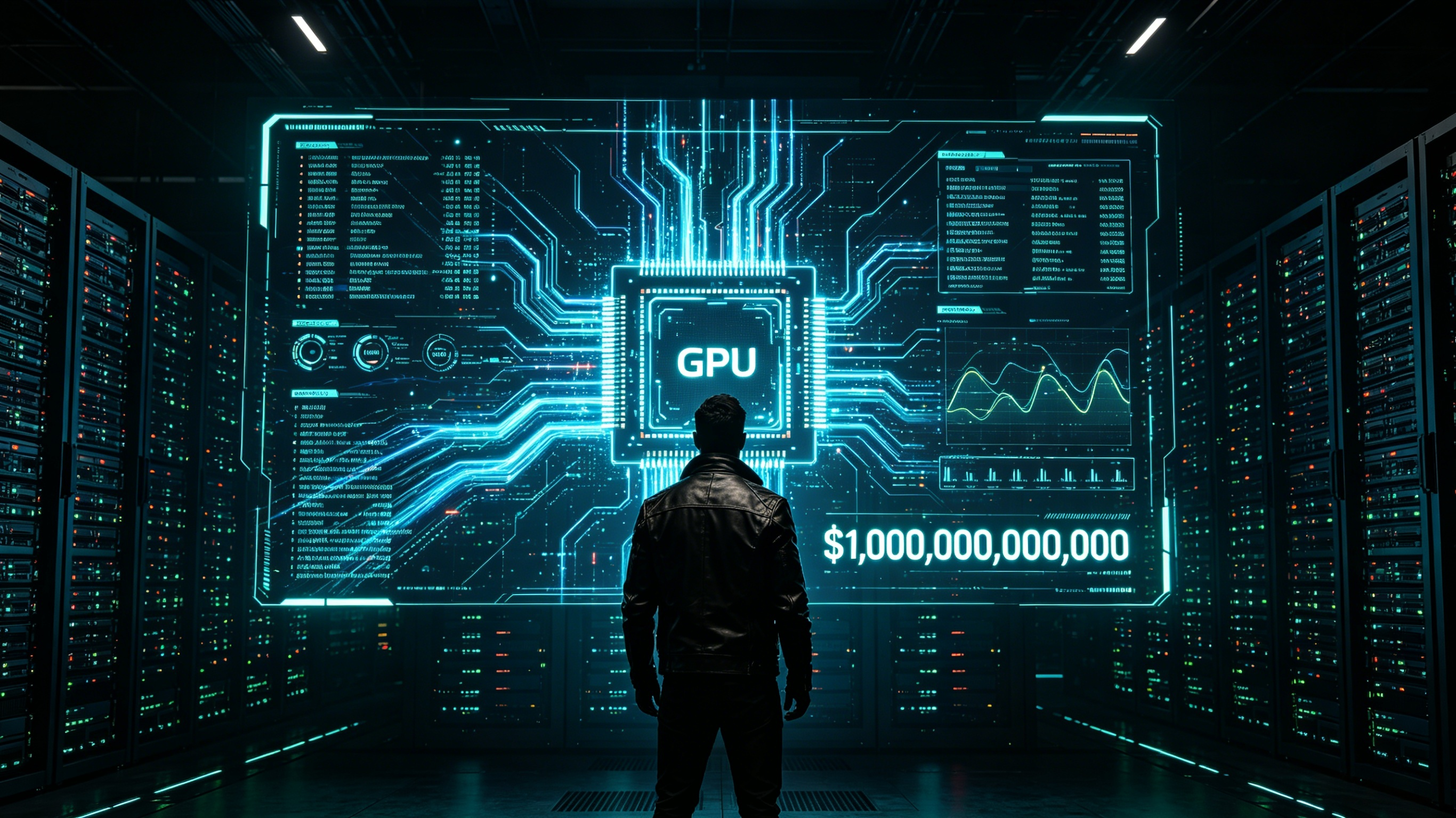
To grasp how absurd the trillion-dollar number truly is, just make a simple comparison: in 2025, the global semiconductor market barely crossed $700 billion, and the global cloud infrastructure services market was under $300 billion. If data centers really swallow a trillion dollars in capex by 2027, that means investment in new infrastructure would far exceed the total direct revenue the entire downstream market could generate today. Supporters, of course, will argue: this is laying the tracks for AGI, and demand will erupt later. But the issue is precisely that this line of reasoning turns capital expenditure into a form of "pre-emptive faith," rather than something based on currently verifiable returns.
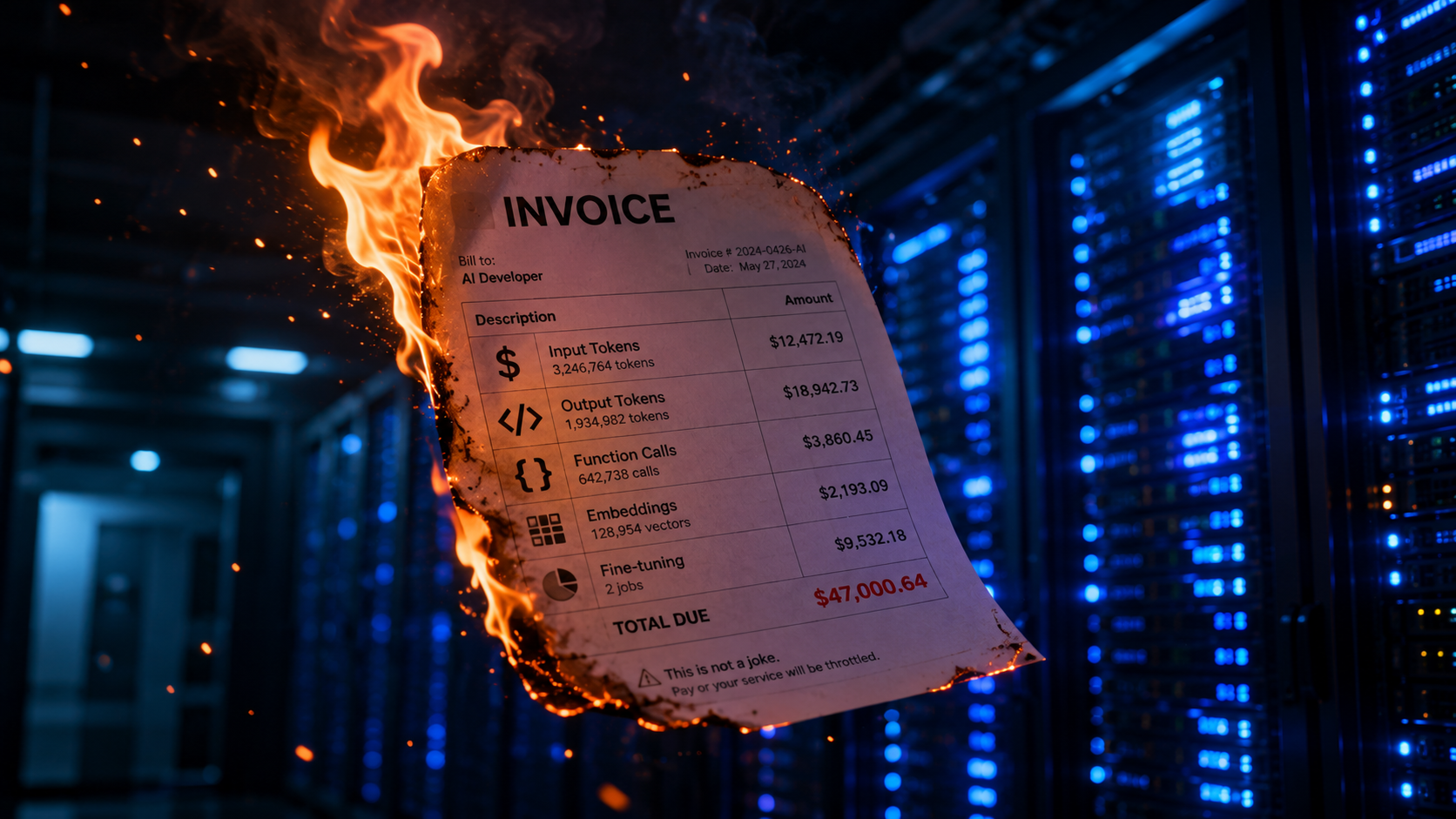
As of today, the genuinely profitable real-world applications of generative AI remain shockingly limited. Microsoft Copilot's penetration into the Office suite is nowhere near "revolutionary" levels; many enterprise customers, after trials, have pulled back or scaled down due to cost and reliability concerns. AI rental revenue at cloud providers is indeed growing fast, but set that income against the money they've spent buying GPUs, and the return story starts to look rather pale. Some will say, look at the internet fiber over-investment back in the day — it eventually burst the bubble, but it also left behind cheap bandwidth that gave birth to the real internet economy. Yet fiber and AI compute have one fatal difference: once fiber is laid, it can be used for twenty years, while training chips like H100 and B200 can turn into near-scrap metal just three years after the next architecture arrives. This is not a one-off infrastructure investment; it's a cash-burning arms race — and once it starts, it must keep going forever, with no generational miss allowed, or the previous round of investment becomes irretrievable sunk cost.
This means the real driver of trillion-dollar spending is not proven demand, but a prisoner's dilemma: Microsoft, Google, Amazon, Meta — none of them dares to be the one to stop. Because the price of stopping is not "earning a little less," but potentially losing all right to play in a future paradigm shift. The most dangerous thing about fear-driven investment is that it systematically crowds out rational calculations about whether "this much" is actually needed. The trillion-dollar blueprint Huang painted on stage is, at its core, the arms dealer telling the generals, "You need more guns, because the other side is buying more guns" — and every general nods, because he's telling the truth.
The truth obscured by water vapor: data centers' environmental toll is far heavier than you've been told
Brockovich's challenge comes at the right time. The data center industry has long dealt with environmental questions through a near-deliberate opacity. They publish PUE (Power Usage Effectiveness) figures, tout carbon-neutral pledges, but almost no data center discloses how many tons of freshwater they consume daily, the specific data on thermal pollution discharged into local water bodies, or what those diesel backup generators belch out during scorching weather. The logic behind the secrecy is not hard to understand: the moment those numbers are truly felt by local communities, no "green AI" narrative can quell the outrage.
Training a top-tier large model can consume enough freshwater to meet the daily needs of a small-to-midsize town, and while the per-inference energy cost seems low, multiply it by billions of calls, and the aggregate effect is not something the word "efficient" can simply erase. A more insidious problem is that data center site selection tends to favor places with cheap electricity and lax regulations — areas that are often also drought-prone or economically disadvantaged communities. The promise given to communities is jobs and tax revenue, but what they often receive is noise pollution, rising electricity prices, and steadily depleting aquifers. What Brockovich is now zeroing in on is precisely this global logic of "compute colonization": externalizing environmental costs onto those with the least bargaining power, and then using the grand narrative of technological progress to make any questioning seem short-sighted. When Huang pre-announces a trillion dollars in spending, he is also pre-announcing the groundbreaking of hundreds of new data centers — meaning more communities will silently bear the hidden tax of this AI frenzy.
NVIDIA's moat is unbreakable in the short term, but the endgame may not be sustained super-profits
There is a perennial hope in the market that AMD, Intel, or the cloud vendors' custom chips will break NVIDIA's monopoly. But the reality is that even in 2026, the CUDA ecosystem's moat remains wide enough to choke rivals. The tools, libraries, and optimization know-how developers have built over more than a decade are almost entirely centered on CUDA. The cost of migrating to another platform is not just about performance loss — it's about those invisible, hidden adaptation costs within complex systems. That's why even deep-pocketed players like Microsoft and Google, to this day, can only gradually infiltrate the inference side with their own chips, while still relying heavily on NVIDIA for training.
But monopoly does not mean the stock can rise forever. The endgame for this trillion-dollar Tower of Babel may well not be NVIDIA's bankruptcy, but its transformation into another Cisco — absolutely vital, indispensable, but once the frenzy cycle of infrastructure investment peaks, its valuation will retreat from "faith-based premiums for changing the world" to "reasonable margins of a shovel seller." When that moment comes depends on which giant is first to seriously cut its GPU orders. So far, no one dares to be first, but this equilibrium of "no one dares to stop first" is also the most fragile — the moment one company's board starts to seriously question the return timeline on AI investments, the dominoes could begin to fall.
When future history books look back at this juncture, they may well see Computex 2026 as a landmark: the peak of a collective hypnosis driven by compute anxiety. By then, we might have a genuinely useful AGI that makes the trillion dollars worthwhile — or we might have mountains of GPUs, drained electricity budgets, and a crop of large-model companies still hunting for a business model. People like Brockovich remind us that, no matter which ending unfolds, beyond the labs and earnings reports, the real world has already inscribed an indelible cost onto this colossal wager.