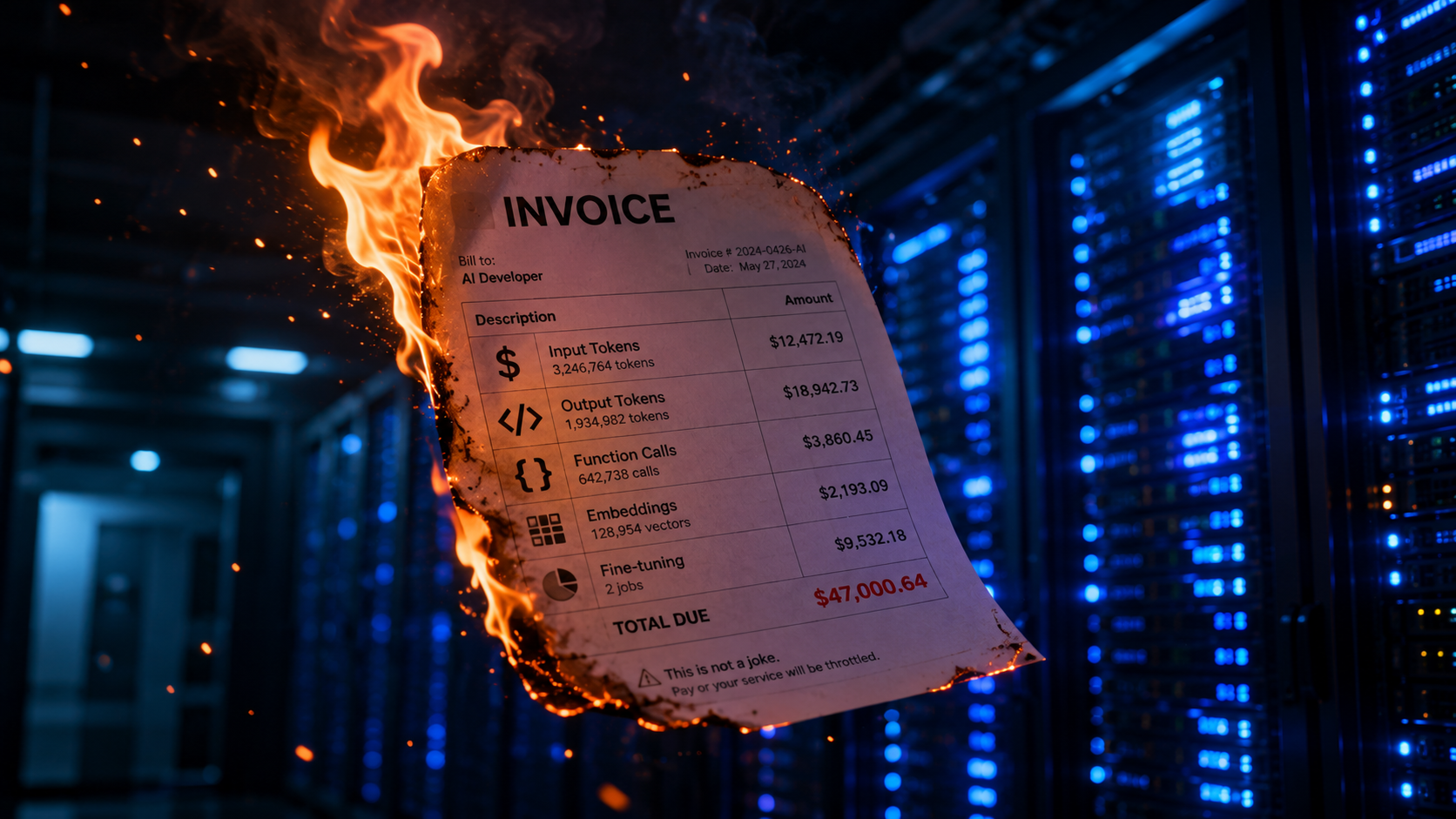
On June 1, Microsoft officially retired GitHub Copilot's fixed monthly subscription in favor of token-based metered billing. In other words, the all-you-can-eat buffet has been replaced by a la carte pricing — and some people just found out they had been eating like competitive eaters.
The change was first announced in April, but today is the first day users are seeing what it actually means for their wallets. For some, the numbers are staggering.
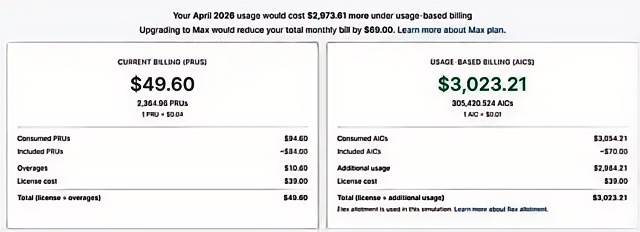
A Reddit user posted a screenshot of their new bill, which had jumped from roughly $50 to nearly $3,000. Another reported their monthly cost was about to skyrocket from $29 to roughly $750. "Wow — did not expect the new pricing to be this insane," one of them wrote. (Translation: "I did not expect to have to pay for what I was actually using.")
On paper, the subscription tiers still exist. Copilot Pro costs $10 per month and includes 1,000 "GitHub AI Credits," each worth one cent. Copilot Pro+ costs $39 per month with 3,900 credits. Once you burn through your allotment, you can either set an overage budget or wait for next month's reset. The problem is that you cannot predict your token bill in advance — which, conveniently, is exactly how Microsoft wants it.
When you make a request, you do not know how long the model will "think." You do not know how many tools it will call, how much context it will read, or how much it will generate. You type a short prompt. Behind the scenes, the model might burn thousands of tokens — reasoning through multiple paths, spinning up sub-agents, verifying each step. You never see it. But every single token shows up on your bill. It is the software equivalent of dining at a restaurant with no prices on the menu.
Why Microsoft Could No Longer Afford You
The short answer is that the old model was bleeding money. In an April blog post, GitHub Chief Product Officer Mario Rodriguez put it bluntly: "GitHub has absorbed too much inference cost. The current model is unsustainable."
Translation: you were getting a deal. A really, really good deal. And Microsoft finally noticed.
According to a 2023 Wall Street Journal report, in early 2023 the company was losing more than $20 per user per month on average. For heavy users, the actual cost hit as high as $80 per month. That means some developers were essentially getting paid to use Copilot — they just did not know it. That is a math problem with only one possible ending: either prices go up, or the product loses money forever. Spoiler: prices went up.
Why is AI coding so expensive? Because the compute cost is far higher than most people realize. When you use a "deep reasoning" model, it does not just spit out an answer. It first generates tens of thousands of internal "reasoning tokens." A simple math problem might produce a final answer of just 200 tokens — but the model could burn several thousand thinking through it. You pay for both the reasoning tokens and the output tokens. Think of it as being charged for both the chef's prep work and the meal itself.
Then there are tool calls. Every time you give the model access to tools, you have to send their JSON schemas along with the request. Ten tools with full descriptions can add 3,000 to 4,000 tokens per call — whether those tools are actually used or not. And then there is the agent loop: think, call a tool, read the result, think again. Six to fifteen rounds is common. A 50-token user question can easily turn into 100,000 or more tokens of total consumption. Microsoft used to eat all those costs. Starting today, you do.
Two Camps: "Vibe Coders" vs. "Getting Ripped Off"
The announcement has split the developer community — but not in the way you might expect. Two very different camps have emerged, and they are arguing past each other with the kind of intensity usually reserved for tabs versus spaces.
The first camp believes Microsoft is price-gouging its users. "To everyone blaming the users — people are just using the system exactly the way Microsoft built and encouraged them to," one Reddit user wrote. "At the end of the day, the only one at fault is Microsoft. They offered this, lowered the bar to let a single premium request burn through a huge amount of tokens, possibly over hours or days, spinning off dozens or hundreds of sub-agents." This anger is understandable. Microsoft spent years encouraging users to treat Copilot as an unlimited resource. Changing the rules now feels less like a pricing update and more like a landlord showing up with a bill for all the "free" air you have been breathing.
The second camp has a different take: if your bill exploded, you are a "vibe coder." "Some people use it all day and barely exceed their token allotment," another user argued. "The screenshots people are posting look completely different. I find it hard to believe this is just about task complexity. This only happens if you're doing massive amounts of redundant, iterative 'vibe coding.'" "Vibe coding" is the term for when you ask AI to generate code without really knowing what you want, then keep asking for fixes until something stops breaking. It works — eventually. It just costs a small fortune now.
The two camps are really asking the same question from opposite sides: how is Copilot supposed to be used? Microsoft never provided a clear answer during the subsidy years. Now the market is providing one by force. And the answer appears to be: "Less. Please use it less."

Not Just Copilot — The Whole Industry Is Shifting
GitHub Copilot is not alone in this transition. Around the same time, Anthropic quietly changed the rules for Claude Code. Pro users paying $20 per month who want to keep using the Opus model now have to pay extra. The logic is identical: subscription models were never built for heavy usage.
Anthropic's Boris Cherny put it plainly: "Subscriptions were not built for this level of intensity." Translation: we cannot afford users who run agents 24 hours a day, seven days a week. You want to run a coding agent overnight? Great. Bring your own credit card.
Tech commentator Ed Zitron has called this dynamic the "subprime AI crisis." Nearly the entire tech industry has been selling AI services at steep discounts backed by massive subsidies. At some point, the burn rate catches up — prices rise, or new high-rate products launch, or both. This looks a lot like the ride-hailing wars of the 2010s. Remember when Uber and Lyft were cheaper than taxis? That was fun while it lasted.
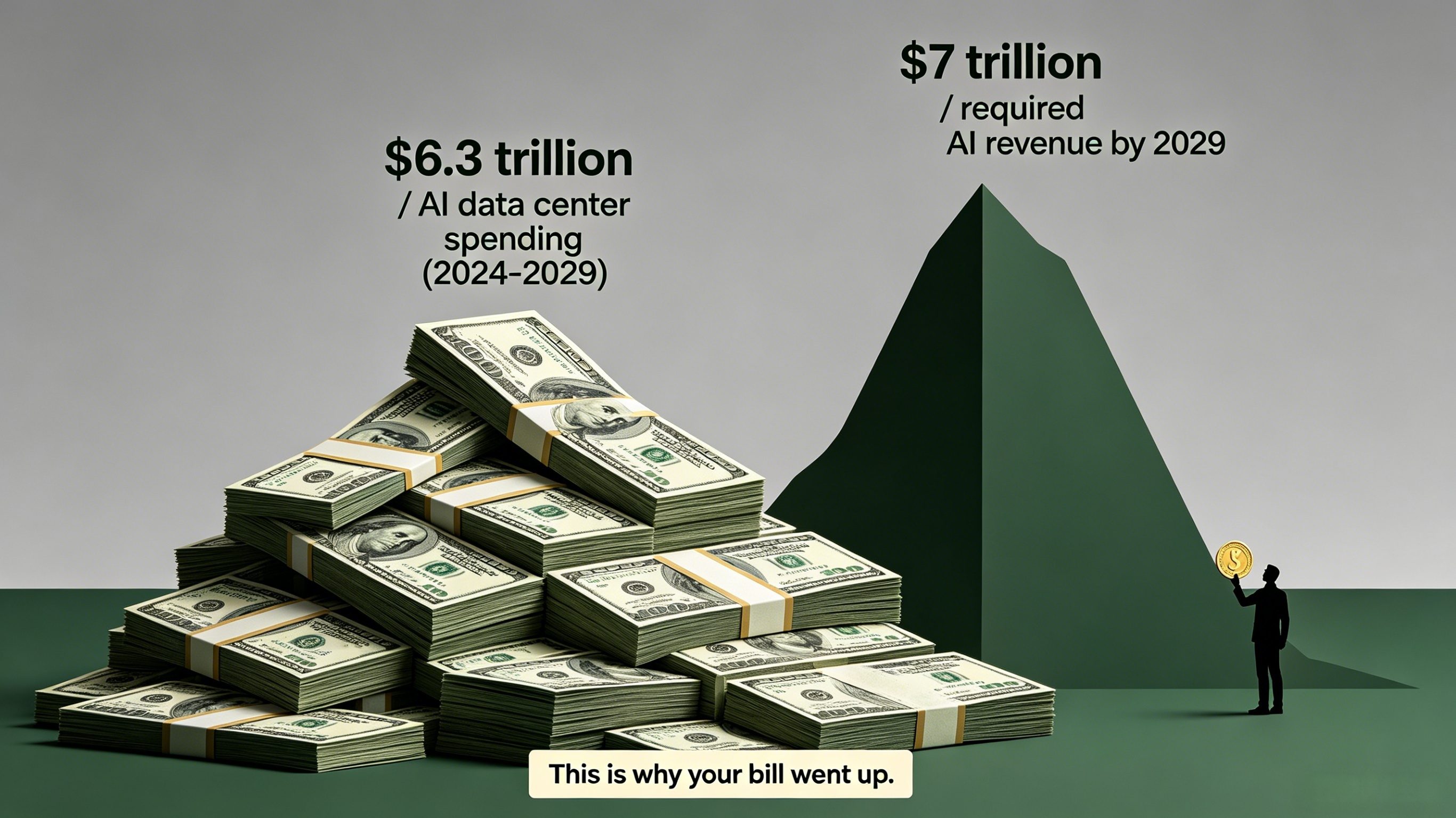
But AI is burning cash faster than any industry in recent memory. Gartner analyst Will Sommer estimates that global AI data center capital spending between 2024 and 2029 will reach $6.3 trillion — roughly one quarter of annual US GDP. To hit minimum return thresholds, large AI companies will need to generate nearly $7 trillion in cumulative AI revenue by 2029. That is roughly $2 trillion per year. Where does that money come from? Only one place: tokens. Your tokens.
The Deeper Question No One Wants to Ask
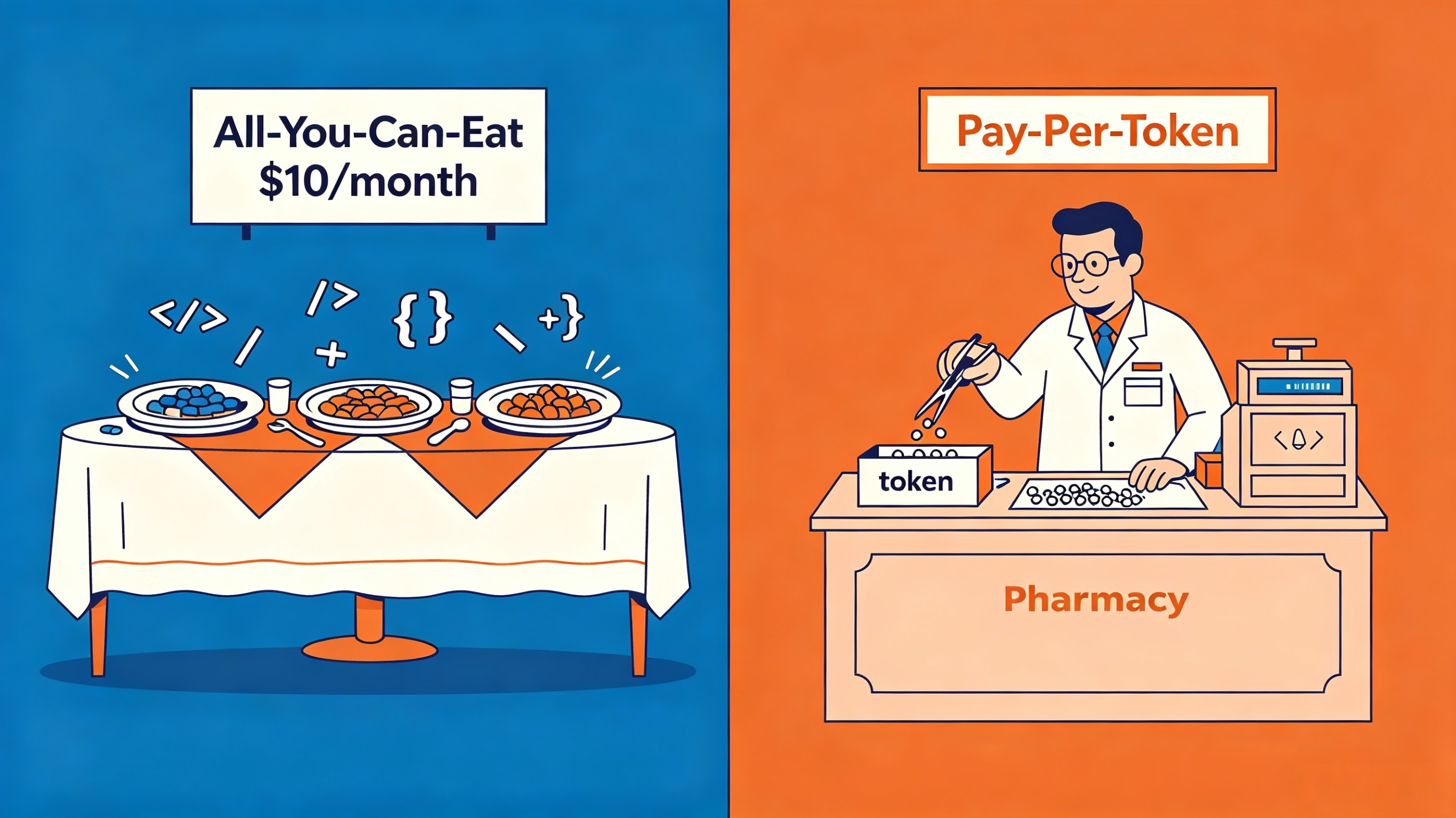
Stepping back, GitHub Copilot's pricing shift is really asking a much more uncomfortable question: what is AI coding assistance actually worth? For three years, we have had an all-you-can-eat buffet. Pay a flat fee, eat as much as you want. It was great. Maybe too great.
That model was built on two unsustainable assumptions. First, light users subsidize heavy users. Second, the platform subsidizes everyone. Neither of those could hold forever. Now the bill has come due — and some people are discovering they were the heavy users all along.
Some users are leaving. The person whose bill went from $29 to $750? They canceled. Others are staying — but they will use Copilot more carefully, spending tokens only when they are worth spending. And some people are realizing something else entirely: maybe the problem was not the price increase. Maybe the problem was that we have all been eating free for years, and we just forgot that none of this was ever cheap to run.
That is not the end of the story. The real question is what happens next. When more developers run the numbers, a quieter shift will begin. The "rational return" window for AI coding is about to open. The developers who actually know how to code — who use AI as a tool, not a crutch — may end up being the biggest winners. Because for the first time, their efficiency advantage can be measured in dollars and cents. Everyone else? They might want to start reading documentation again.
P.S. If you are a "vibe coder" reading this and feeling personally attacked — good. That is called product-market fit finally working as intended.