In early 2024, a video of a robot autonomously assembling car parts in a BMW factory went viral in the developer community. The silver-gray humanoid robot, named Figure 01, without any human teleoperation, precisely grasped metal parts, aligned slots, completed the assembly, and even corrected its own mistakes in real time. The scene was eerily calm—no clumsy stumbling, no stiff mechanical arms, just a highly coordinated "person" doing a real job. Behind this is Figure AI, a company founded less than two years ago, yet it has already secured nearly $700 million in bets from the entire tech world, including Microsoft, OpenAI, Nvidia, and Bezos. What gives? Under the shadow of Boston Dynamics' thirty-year struggle to commercialize Atlas, Figure's path cuts like a sharp blade aimed at practicality, seeking to prove that general-purpose humanoid robots are not science fiction—they are the next computing platform, arriving soon.
Behind the Funding Myth: A Capital Experiment in 'Super Alignment'
Figure AI's founder, Brett Adcock, is a serial entrepreneur who previously founded the electric aviation company Archer Aviation and took it public. The roadmap he set for Figure is incredibly aggressive: go from zero to a fully functional humanoid robot in 18 months. In traditional robotics, this timeline is pure fantasy, but Silicon Valley is eagerly buying in. In May 2023, Figure completed a $70 million Series A; by February 2024, it exploded with a $675 million Series B, pushing its valuation to $2.6 billion. The money didn't come for free—the investor roster itself is a deeply intertwined technology alliance: OpenAI provides Figure's brain, Microsoft Azure supplies computing power and infrastructure, Nvidia offers simulation and edge computing platforms, and Intel's capital is also involved.
This 'super alignment' model is Figure's most ingenious lever. It's not internally closed like Tesla's Optimus, nor lab-research-driven like Boston Dynamics. Figure has bound every possible giant to its chariot, from the top-level AI models down to the hardware supply chain. This solves the two biggest valleys of death for humanoid robots: the lack of general intelligence, where scripted programming can't handle open-ended tasks, and the cost crushing of mass production, where without chip capacity support from semiconductor titans, joint motors and computing chips would be astronomically expensive. With a web of capital, Figure has locked in both technology and market—more persuasive than any technical white paper.
Brain from OpenAI, Body Self-Built: The VLM Robot Brain Built with OpenAI
In the pre-AI era, getting a robot to work in a factory required engineers to manually program every movement, and the system would break down if the environment changed slightly. The core breakthrough in Figure 01's BMW assembly line video is that it taps into a customized multimodal large model from OpenAI. Cameras and microphones embedded in the robot's head and torso capture visual and voice data, which feed into a fine-tuned VLM (Vision-Language Model) that directly maps pixels and instructions to low-level action sequences. This means that when the robot picks up a part, it doesn't follow the traditional step-by-step pipeline logic of 'detect object coordinates → plan path → servo control.' Instead, it understands the scene end-to-end: 'This is a black metal support rod; I need to insert it into that hole with a silver clip next to it, gently, with alignment deviation no more than 0.5 millimeters.'
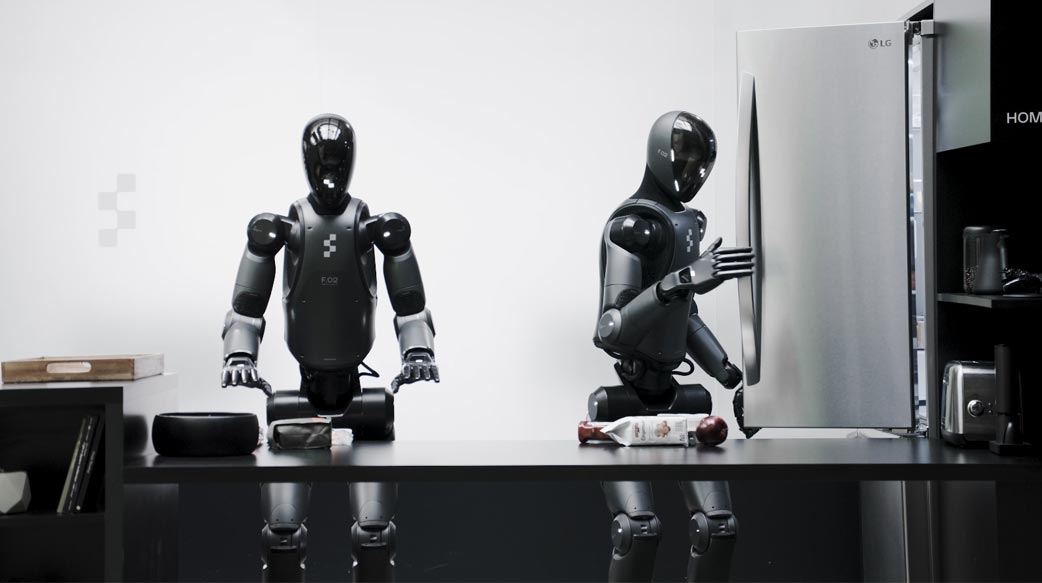
What makes this capability terrifying is its generalizability. In another demo released by Figure, the robot, upon hearing the verbal command 'give me that bag of apples on the table,' correctly identifies that a red plastic bag contains apples and hands it to the right person—all without any pre-programmed object models. This relies on the powerful LLM-level reasoning from OpenAI, combined with Figure's own trained action policy neural network. That action policy isn't traditional reinforcement learning in simulation, but a composite architecture combining imitation learning and online fine-tuning, giving the execution a degree of 'common sense'—the robot knows to grip soft objects gently and not to throw a glass cup from a height.
However, this approach also exposes a huge risk: deep reliance on OpenAI's models. If OpenAI adjusts its strategy or tightens API licensing, Figure could face the threat of having its brain ripped out. To counter this, Figure is building its own multimodal model team internally and shifting some capabilities to edge inference, trying to balance dependence on the best external AI with maintaining autonomy. This fence-sitting stance is the common anxiety of all robotics startups now, and as the loudest voice, Figure is the most vulnerable to being targeted.
The Body Decides the Game: Bionics Don't Have to Be Expensive—Driving Costs Down Is the Only Way Out
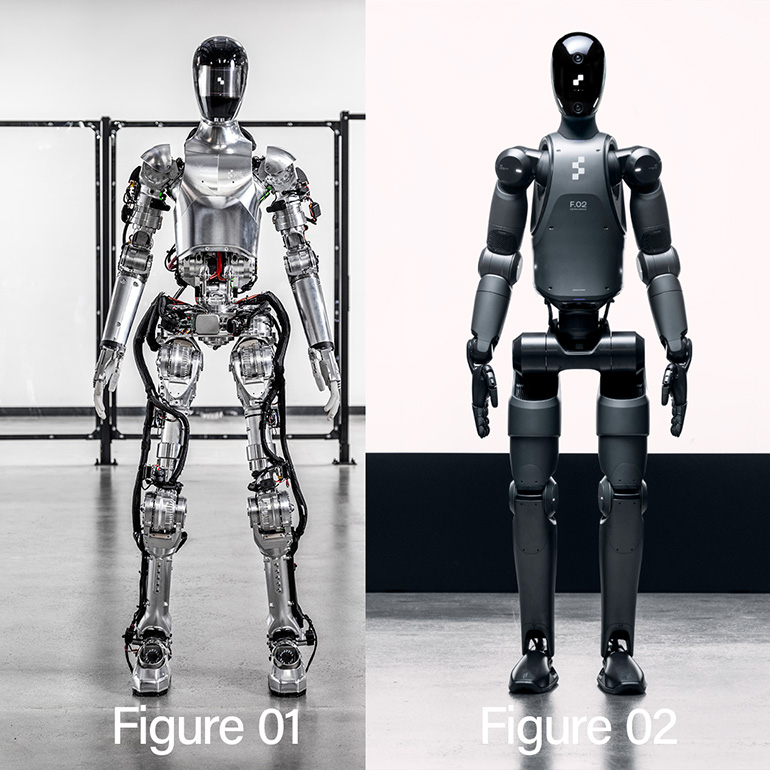
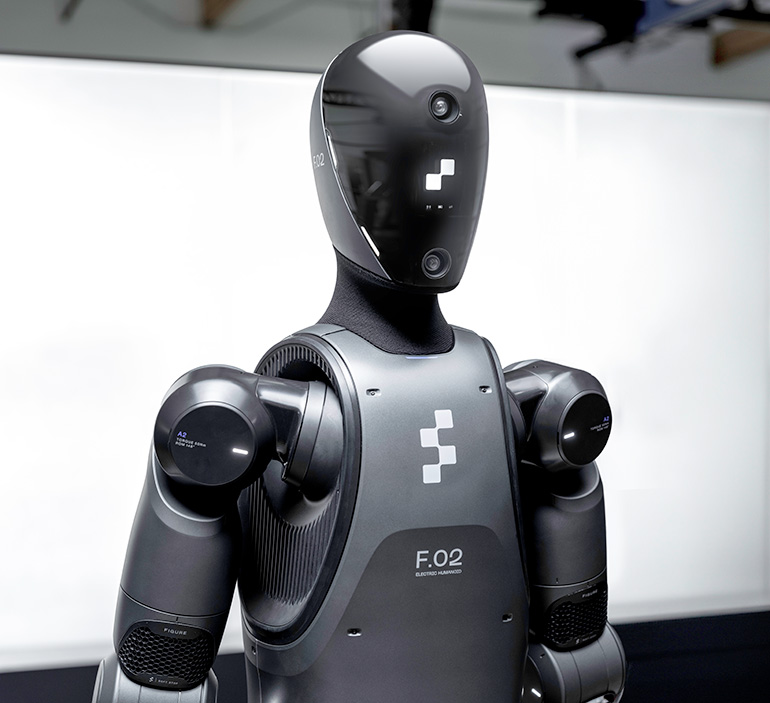
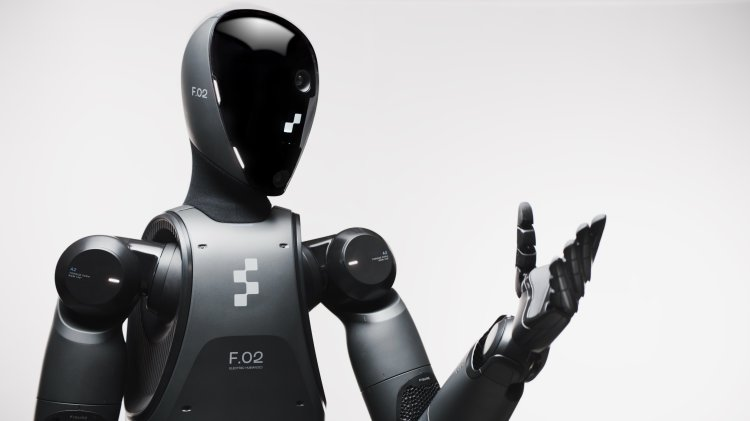
The most tragic predecessor in humanoid robotics is Boston Dynamics' Atlas, whose athletic ability remains unmatched to this day, but with a per-unit cost in the millions of dollars, a heavy hydraulic system that's difficult to maintain, it never became commercially viable. Figure's strategy is full electrification and low-cost precision manufacturing. Figure 01 stands 1.7 meters tall, weighs 60 kilograms, and has 41 degrees of freedom across its whole body, all using self-developed rotary and linear actuators that abandon expensive torque sensors in favor of current feedback from motors and encoder data for torque estimation. This dramatically simplifies the structure and reduces hardware costs.
Even more radically, Figure has been designing for mass production from day one. They acquired a small motor company and publicly claim they'll bring the per-unit robot cost down to under $50,000 within a year—one-third or less of comparable humanoid robot competitors. If this goal is met, it means manufacturing warehouses will be able to purchase humanoid robots like they buy CNC machines. Attention is on the dexterous hands: Figure 01's hands have 16 active degrees of freedom, with tactile sensors integrated at the fingertips. While not as delicate as human fingers, they are sufficient for about 80% of material handling tasks in factories—grasping, twisting, plugging, and pulling. Brett Adcock declared: 'We're not building robot artists; we're building robot workers.'
But reality is always grittier than demos. Currently, Figure's application at the BMW factory is limited to a single task: assembling low-pressure radiators, and it runs at only about 50% the speed of a human worker. It performs brilliantly in structured, well-lit environments with neatly arranged materials, but the moment it encounters oily floors, sudden occlusions, or completely unfamiliar tools, the system still grinds to a halt. Large-scale delivery is far more complex than just tossing a prototype into a factory. The durability of motion control systems, joint wear after thousands of hours of continuous operation, battery life, and thermal management—each is a solid engineering nut to crack. The latest version, Figure 04, is reportedly addressing these issues, but the real progress remains tightly under wraps.
The Humanoid Robot Race: Bubble or Gateway?
With Tesla Optimus, Apptronik, 1X, Agility Robotics, and Figure all on stage, the humanoid robot sector absorbed record venture capital in 2024. Optimists see this as a decisive step for AI moving from the digital world into the physical world, the third major interaction platform after the PC and the smartphone. Pessimists bluntly call it a capital bubble inflated by the large model frenzy—most companies are still stuck at the controlled-environment demo stage, miles away from truly replacing a $16-an-hour warehouse worker.
Figure AI's uniqueness lies in having built an almost irreplicable iron triangle ecosystem: the world's strongest large model company provides cognition, the largest cloud and chip giants supply infrastructure, and a fiercely pragmatic founder with astonishing execution. But precisely for this reason, Figure carries the heaviest expectations. It must prove by 2025 that real customers will pay for its robots, rather than forever wowing audiences on YouTube. In this dawn hour of the field, the light is filled with dazzling capital reflections. The real sunrise may only be witnessed by companies like Figure that brutally throw their robots into real production lines. Then, all the current worries and doubts will be drowned out by the rumbling sound of machines at work.