
Anthropic chose Samsung for a reason that has nothing to do with loyalty and everything to do with capacity. TSMC‘s 2nm production is fully booked through 2028 and 2029. Samsung’s Taylor, Texas, facility is expected to begin production in 2027.
That‘s not a technology choice. That’s a capacity choice. Anthropic doesn‘t want to wait until 2029 to get its chips. It wants them in 2027, and Samsung is the only foundry that can deliver on that timeline.
The financial logic is clear. Inference costs are the single largest operational expense for any AI lab running at scale. Designing a custom chip optimized for Claude’s architecture could reduce inference costs by 50 percent or more, based on OpenAI‘s projections for Jalapeño. For a company spending tens of billions annually on compute, that’s not an optimization — it‘s a survival requirement.
Samsung’s Three-in-One Advantage
Samsung‘s interest is equally straightforward. The company is the world’s largest memory chipmaker and a major supplier of HBM to AI labs, but its foundry business has always been second to TSMC. Winning Anthropic as a customer would be a breakthrough, giving Samsung a marquee AI client in advanced nodes.
The investment ties are already there. In May, Samsung participated in Anthropic‘s $65 billion Series H round, alongside SK Hynix and Micron. The official framing was“strategic infrastructure partner.” The practical effect is that Samsung already has a financial stake in Anthropic’s success — and now it‘s in line to manufacture its chips.
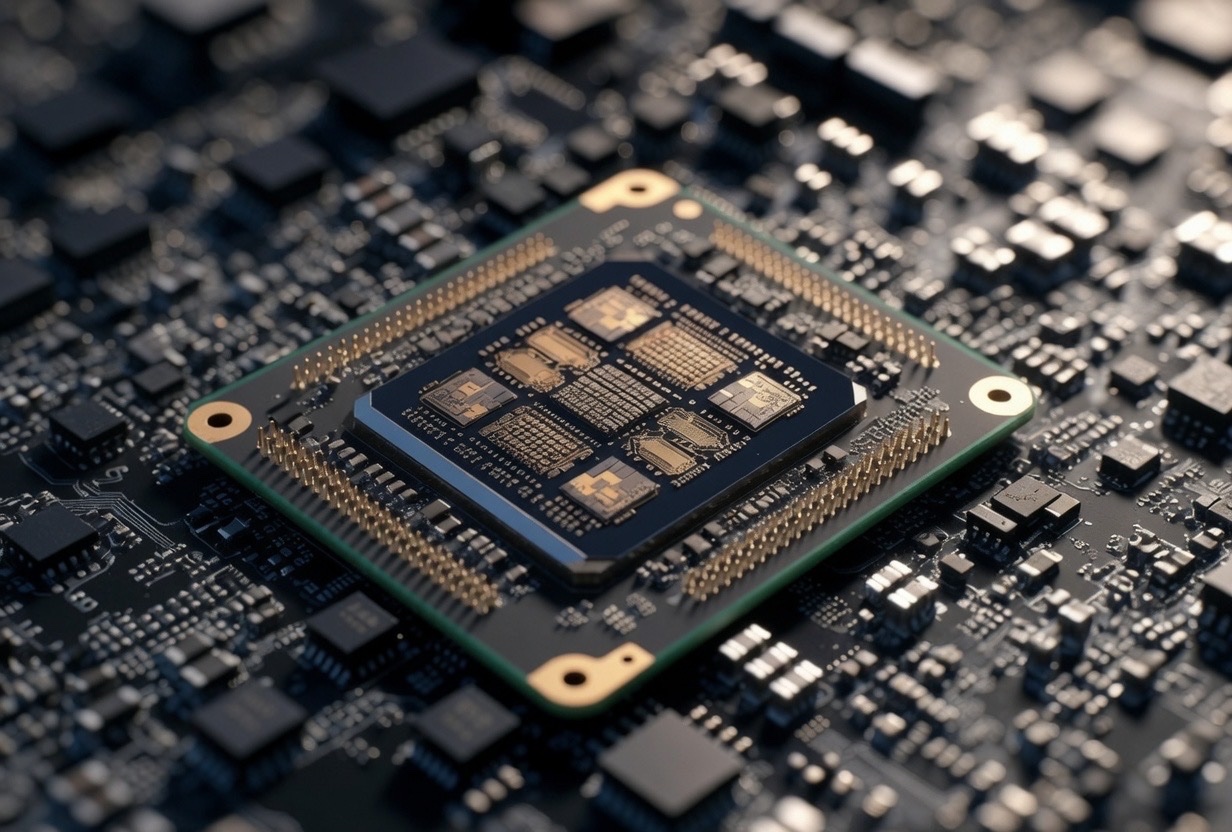
Samsung also has a unique advantage: it produces memory, logic chips, and advanced packaging under one roof. That means it can deliver HBM4 memory, 2nm logic, and integrated packaging as a single solution.
Clive Chan’s Move Tells You Everything
Anthropic has hired Clive Chan, one of the first hardware engineers on OpenAI‘s custom chip team. He joined OpenAI before Jalapeño was even a public project, and he worked on it from the early design phase through engineering samples.
His move to Anthropic is the clearest signal of intent. Anthropic isn’t just talking about chips — it‘s building a team that knows how to design them. OpenAI’s Jalapeño went from concept to tape-out in nine months, partly because its team had deep hardware expertise. Anthropic is borrowing that expertise directly.
P.S. Anthropic‘s chip project is a reflection of the AI industry’s new reality: the model race is ending, and the infrastructure race is beginning. The labs that control their own hardware stack will have a structural cost advantage over the ones that don‘t. OpenAI proved it can design a chip in nine months. Anthropic is betting it can do the same. The foundry choice tells you everything about the constraints of the current supply chain — not about technology, but about who has capacity and who doesn’t.