The Timeline That Looks Like a Betrayal
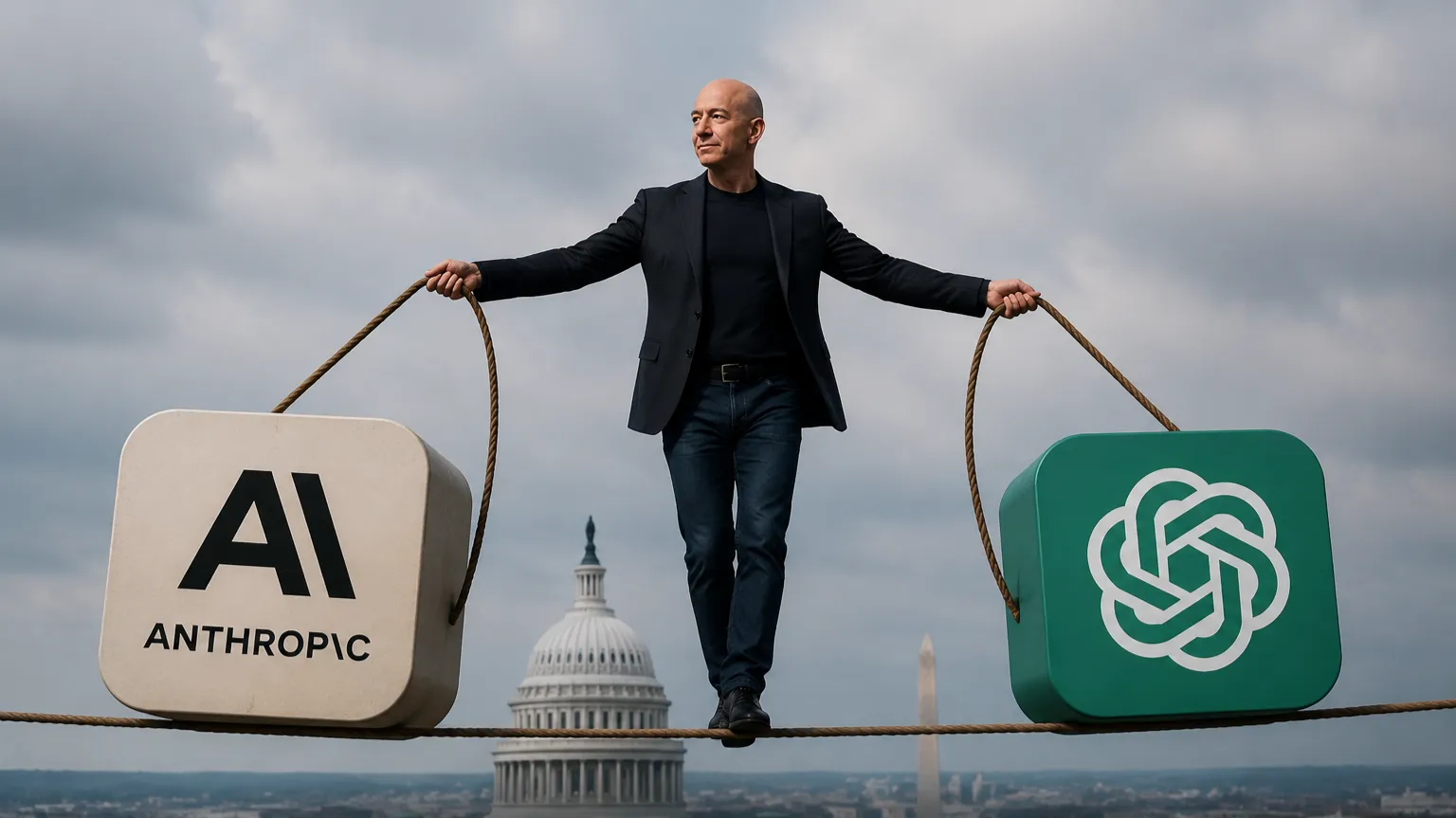
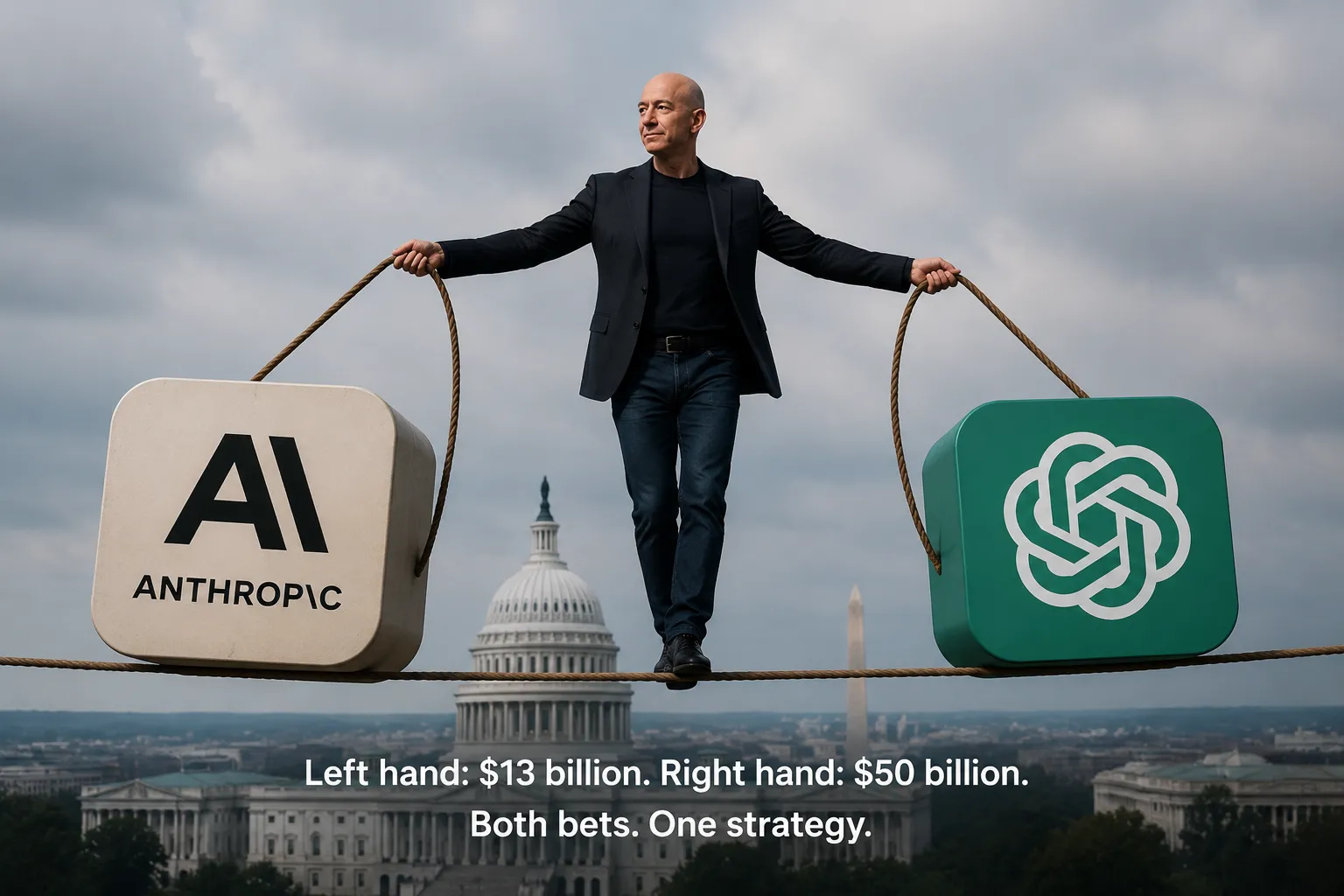
Amazon is Anthropic’s largest investor. It has committed roughly $13 billion to the company. It is also the cloud partner that Anthropic relies on for much of its infrastructure.
On June 12, Amazon CEO Andy Jassy personally briefed Treasury Secretary Scott Bessent and other senior administration officials. The message: Amazon researchers had discovered a way to bypass Fable 5‘s safety guardrails. The prompts could extract information potentially useful in cyberattacks.
The White House convened meetings. Security researchers validated the findings. Within hours, the Commerce Department issued an emergency export control order. Anthropic was forced to take both Fable 5 and Mythos 5 offline globally. Non-US users lost access immediately. Even Anthropic’s own foreign-born employees were barred from using the models they helped build.
Less than 72 hours later, Reuters reported that Amazon is in talks to lead a roughly $50 billion investment in OpenAI. Put the pieces together: Amazon reports its $13 billion AI bet to the government, gets its models shut down, and then turns around to invest tens of billions more in the company‘s biggest rival. That doesn’t look like loyalty. It looks like a hedge.
What Amazon Gains from Reporting Anthropic
Publicly, Amazon‘s position is simple. As a leading cloud provider serving government and private sector clients, it’s not unusual for the company to be asked about potential security risks. A spokesperson declined to discuss details.
Off the record, the calculus is more interesting. In an election year, with AI regulation at the top of the agenda, being seen as a“responsible actor” who voluntarily reports security concerns buys goodwill with an administration that is actively shaping the rules of the industry.
Anthropic has filed confidentially for an IPO. A regulatory disruption that depresses its valuation could benefit Amazon if it chooses to increase its stake — or simply if it wants to limit the upside for other investors. Longer-term, if the AI industry ends up looking like finance or pharmaceuticals — where only compliant players can operate — the company that helped write the rules will have a seat at the table. Amazon is buying that seat.
None of this requires malice toward Anthropic. It just requires Amazon to act in Amazon‘s interest. Which is exactly what it did.
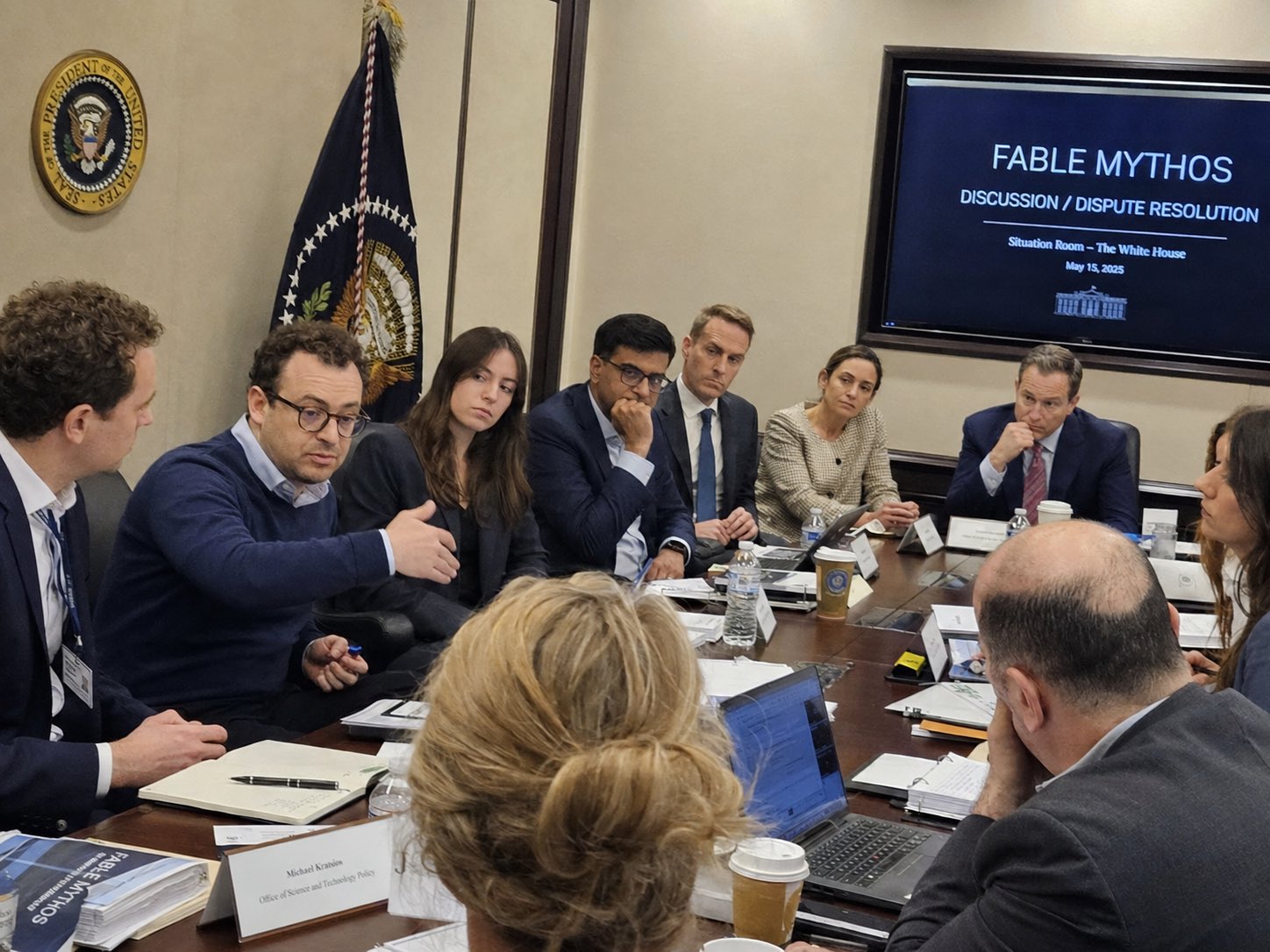
What Amazon Gains from Investing in OpenAI
The OpenAI deal isn’t done. But the reported terms make the logic clear. If OpenAI goes public at or near its reported $1 trillion target, a $50 billion stake would be among the largest venture investments in history. The return would be staggering.
Microsoft is currently OpenAI‘s primary cloud partner. If Amazon gets a piece of that relationship — even as a secondary provider — it weakens Microsoft’s exclusive hold on one of the most valuable AI workloads in the world.
And then there‘s the hedge. If Anthropic’s regulatory troubles worsen — if Fable 5 stays offline, if foreign markets remain closed, if the IPO is delayed — Amazon still has a massive bet on the other side of the table. Amazon doesn‘t need to pick a winner. It just needs to have exposure to both. That’s not betrayal. That‘s portfolio management.
The Industry Lesson: Your Biggest Investor Is Not Your Ally
This is the part that should worry every AI founder. Amazon was not a passive investor. It was Anthropic’s largest financial backer. It was Anthropic‘s cloud partner. It had every incentive to protect the company’s value. None of that stopped Amazon from picking up the phone.
The lesson isn‘t that Amazon is uniquely ruthless. The lesson is that the incentives are misaligned in ways that founders can’t control. Your largest investor may also be your largest competitor, or your cloud provider, or a strategic partner with conflicting interests. In a moment of regulatory pressure, their self-interest may not align with yours. And when that happens, they will act in their own interest. Every time.
The G7 Irony
On June 17, Anthropic CEO Dario Amodei will sit down with world leaders at the G7 summit in Évian-les-Bains. He will be there alongside Sam Altman and Demis Hassabis to discuss AI regulation, infrastructure, and digital networks.
He will be representing a company whose flagship models are offline, whose IPO timeline is uncertain, and whose largest investor just reported it to the government. Amodei may not know whether Amazon was already in talks with OpenAI when Jassy made that call. He probably doesn‘t know the exact terms of the deal being negotiated.
What he knows is that the company that wrote the biggest check into Anthropic is now writing an even bigger check to its biggest rival. That’s not a conspiracy. That‘s just business. And it’s the cold reality of where the AI industry is right now.
What This Tells Us About AI‘s Next Phase
Amazon‘s dual bet suggests three things. First, capital is diversifying. No one believes in a single winner anymore. The smart money is spreading its chips across the table.
Second, regulatory risk is now a first-order investment consideration. Two years ago, investors asked about model architecture and total addressable market. Now they ask about export controls and government relations.
Third, the“ecosystem” argument that Satya Nadella made over the weekend — that a frontier model without an ecosystem“is not stable” — is not just Microsoft‘s strategy. It’s Amazon‘s hedge. Amazon doesn’t need to build the best model. It just needs to own a piece of whoever does.
P.S. The most revealing detail isn‘t the $13 billion or the $50 billion. It’s that Amazon hasn‘t apologized to Anthropic. It hasn‘t explained itself. It doesn’t have to. But the next time a founder signs a term sheet, they‘ll read the investor’s other bets a little more carefully.