Cloudflare CEO Matthew Prince dropped a quiet bombshell this week. AI agents now generate more internet traffic than actual human beings. The current split: 57.4 percent bot traffic, 42.6 percent human. Over the past week, the number has fluctuated between 52 and 62 percent. But the direction is clear. We have crossed the line.
Prince had previously predicted this would happen by the end of 2027. Then he revised it to early 2027. The actual arrival date: June 2026. His reaction on social media was characteristically understated. “Welp, that happened faster than I predicted.” Understatement of the year.
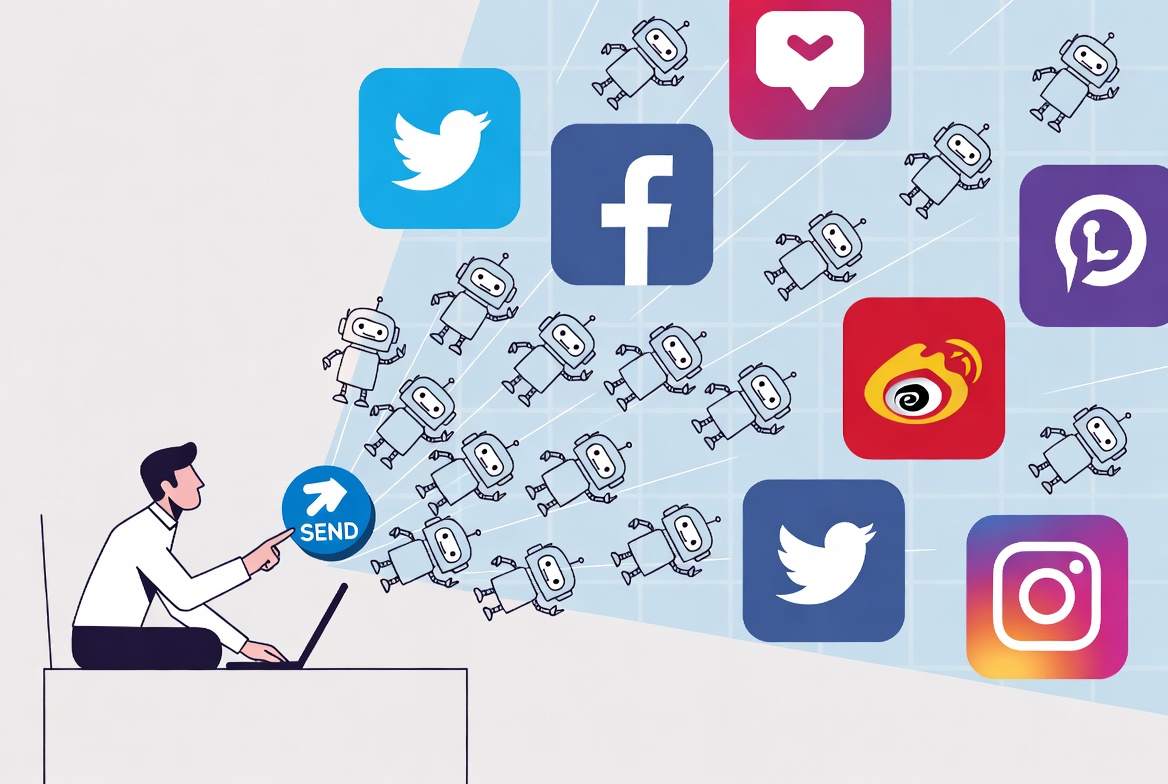
This is not traditional web crawlers or malicious bots. Cloudflare draws a sharp distinction. “Agentic traffic” refers to AI agents acting on behalf of humans. When you ask ChatGPT to research a camera, the AI quietly visits dozens or even hundreds of websites. One request. Thousands of page views. That multiplication effect is what tipped the scales.

One Request, Thousands of Page Views
Let me give you a concrete example from Cloudflare‘s own analysis. A human shopping for a camera might manually visit five websites. An AI agent completing the same task might visit 5,000. Multiply that by hundreds of millions of users, and the math becomes obvious.
This is what AI agents are doing right now. Reading product pages and comparing prices. Executing multi-step tasks like flight comparison and travel booking. Crawling and indexing web content for AI training — not for search engines. Acting as personal assistants for ordering food, shopping, and customer service.
The amplification effect is staggering. One human asking one question can trigger thousands of automated visits. That is not how the internet was designed. That is not how anyone planned for this to work. But here we are.
The Geographic Divide
The global average of 57.4 percent bot traffic hides dramatic regional variation. In North America, bots account for 68.6 percent of traffic. Humans are down to just 31.4 percent. In Gibraltar, bots hit 92.1 percent. Singapore and Iran both sit at 76.4 percent bot traffic.
Some of these numbers strain credibility. A place where nine out of ten visitors are not real people is not really a place anymore. It is a machine talking to itself.
Cloudflare‘s data comes from millions of websites using its security and performance services. It is not a small sample. This is the most authoritative view of global internet traffic available. The trend is unmistakable. And it is accelerating.

What This Actually Means
Before anyone panics, let me add a critical caveat. Cloudflare is measuring HTTP requests, not human attention or time spent. Humans still dominate content consumption — watching videos, scrolling feeds, posting, shopping, arguing in comment sections. Bots are winning the quantity game. Humans still win the quality game.
For now.
But the implications are already real. Website analytics are increasingly unreliable. How many of those “visitors“ in your Google Analytics are actually human? Probably fewer than you think. Advertisers are paying for impressions that bots generate. The entire economic model of the web is built on a foundation that is quietly dissolving.
Business models built on human attention need a hard rethink. The era when every visitor was a potential customer is over. Welcome to the era of potentially fake visitors.
Here is the really uncomfortable part. More than 10 percent of AI-generated summaries already cite other AI-generated content. That is the “Dead Internet Theory“ playing out in real time. If most traffic and most content come from AI, who is the internet actually serving?
The Bottom Line
Cloudflare put it bluntly. These AI agents are faster than humans. They visit more pages than humans. And increasingly, they determine what humans see. They are shaping reality by deciding which information surfaces and which disappears.
Prince noted that the data is “a bit messy.“ But the conclusion is not. “We are clearly past the line.“ The internet just crossed a threshold it will never uncross. The only question now is what comes next.
P.S. Next time you hit “send“ on a ChatGPT query, think about the thousands of websites that just got visited on your behalf. Don‘t feel sorry for them. They haven‘t realized they‘ve been replaced yet.