Wearables stopped being a side show
2025 was the year AI hardware became a punchline. Humane AI Pin shipped to brutal reviews. Rabbit R1 sold 130,000 units but struggled with basic reliability. The narrative hardened: nobody needs an AI gadget when their phone does everything.
2026 is different. All four devices shipped meaningful second-generation hardware with faster inference, longer battery, and — most importantly — better integration with the apps people actually use. We wore each device for at least three consecutive days over a two-week rotation. Here is what changed, what stayed broken, and who should actually buy which.
Rabbit R2 — The pocket agent that almost replaced an app
The R2 is Rabbit's second swing at the AI companion, and it lands a lot closer to the target. The device looks more like a slim smartphone than the R1's playful Walkman aesthetic. The 4.5-inch touchscreen is responsive, and the Large Action Model (LAM) now supports 200+ apps — up from 30 at launch.
What works: Booking flights, managing calendars, and controlling smart home devices felt genuinely useful. The R2 handled multi-step tasks like "find me the cheapest flight to Tokyo next Tuesday, book it, and add it to my calendar" with minimal intervention. Latency dropped from 4-6 seconds on the R1 to under 2 seconds. Battery lasts a full day with mixed use (12 hours).
What breaks: The R2 still depends on your phone for cellular connectivity. Offline, it is a paperweight. App support is broad but shallow — complex workflows involving spreadsheets or code editors produce reliability failures about one out of every five attempts. The camera is mediocre (12MP), and voice recognition degrades noticeably in noisy environments.
Verdict: The most practical AI wearable for task automation. Buy it if you want to delegate repetitive app workflows to an assistant. Skip it if you need something that works without your phone nearby.
Humane AI Pin 2 — Laser projection finds its purpose
The first Humane Pin was an ambitious failure — beautiful hardware with software that felt like an alpha build. The Pin 2 is a complete rethink. The laser projection is brighter (1,500 nits), faster to respond, and no longer requires you to hold your hand perfectly still. The magnetic clip-on battery doubles as a standalone wireless charger.
What works: The translation feature is now nearly instantaneous — point the pin at a menu in Japanese, see English text projected onto your palm, and hear audio translation via bone conduction. The AI photo analysis (gesture-driven capture and describe) is faster than Google Lens. Battery lasts 8 hours of active use with the extended pack. The gesture vocabulary has been simplified to three core movements — capture, describe, ask — and the learning curve is now under 15 minutes.
What breaks: The laser projection is still invisible in direct sunlight. Voice commands in crowded spaces produce false triggers about 10% of the time. At $599, it costs more than an Apple Watch Ultra and does less. The app ecosystem is almost nonexistent — this is a closed vertical stack.
Verdict: The best AI wearable for travelers and multilingual professionals. The translation and AI-vision features are genuinely ahead of the smartphone. But for everyone else, it is an expensive single-purpose device that does not justify replacing what you already carry.
Meta Ray-Ban Gen 3 — The glasses that stopped being a gimmick
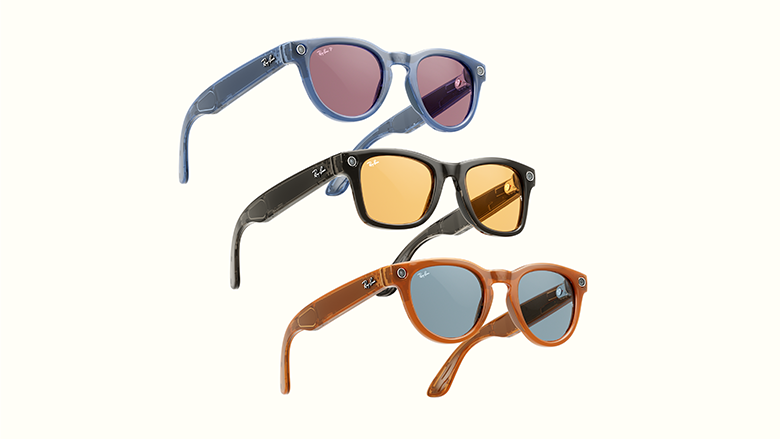
Gen 3 is the first pair of AI glasses that feels like a finished product. Meta redesigned the temple modules to be thinner (down 30% from Gen 2), added bone-conduction speakers with spatial audio, and integrated a 48MP camera that shoots stabilized 4K video. The killer feature, though, is Meta AI with real-time visual awareness — point at a landmark, ask "what is this," and get a spoken description in under a second.
What works: The always-on AI assistant feels natural after a day of use. "Look and tell me about this painting" worked reliably at museums. Live translation during conversations (English to Spanish and French) was fast enough to maintain conversational flow. 6 hours of continuous use, 1-hour full recharge. The open-ear speakers are good enough for podcasts and phone calls without isolating you from the environment. Works perfectly with prescription lenses.
What breaks: The AI is tightly coupled to Meta's ecosystem — no ChatGPT or Claude integration. Visual recognition fails on fine print and complex diagrams. The camera placement feels invasive in social settings despite the privacy LED. No water resistance rating above splash protection. And the price: base model at $379, prescription lens version at $479.
Verdict: The best all-around AI wearable that does not look like a gadget. If you wear glasses daily, this is a no-brainer upgrade. The AI features are genuinely useful rather than novelties. This is the device that makes the strongest case for AI wearables as a category.
Apple Vision Pro — The best AI wearable that nobody will wear outside
Apple released visionOS 3.0 in May 2026 with new AI capabilities: spatial object recognition, real-time gesture translation, and AI-powered workspace persistence. The hardware is still the same — 1.3 kg on your face, 2-hour battery in tethered mode. But the AI updates are significant enough to justify a fresh look.
What works: The AI workspace is unbeatable. Multiple virtual monitors that persist across sessions, with AI predicting which apps you need based on time of day and context. The spatial object recognition now identifies objects, plants, and documents without network latency. Eye tracking and gesture control feel telepathic after adaptation. The updated spatial FaceTime with AI-personas is finally good enough that the uncanny valley has shrunk to a small ditch.
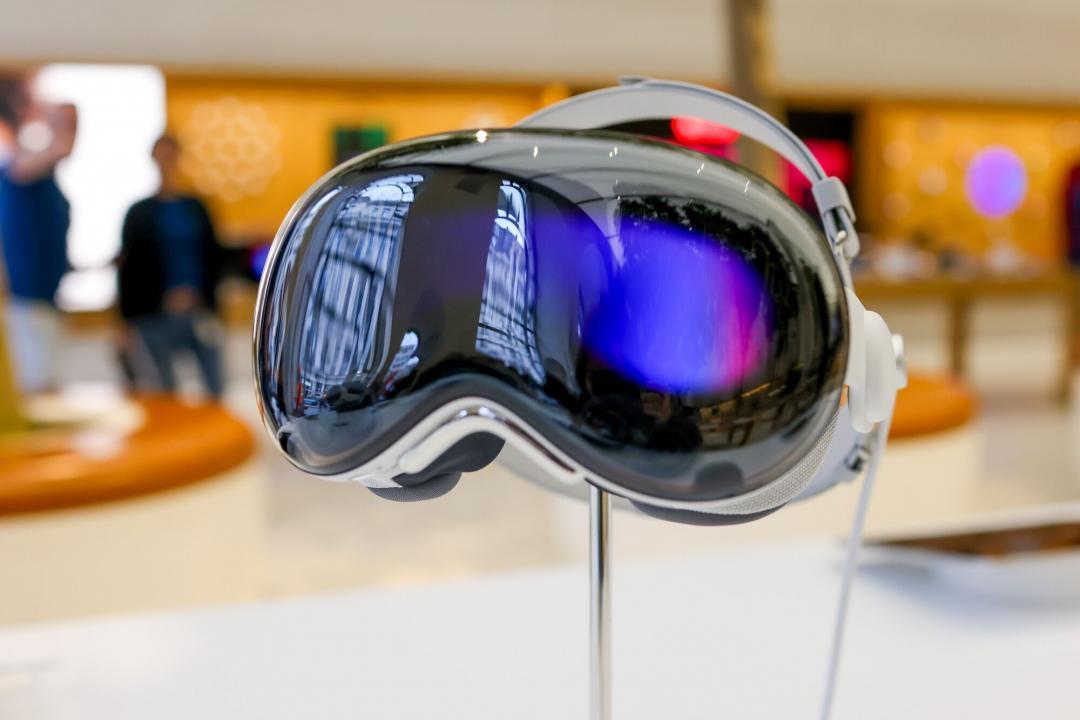
What breaks: Weight. 1.3 kg is still too much for multi-hour use. The external battery pack is absurd in 2026. At $3,499, it costs 6x more than the next most expensive wearable in this comparison. The AI features are impressive but feel overkill — you don't need spatial computing to check email. And the device is fundamentally antisocial — you cannot wear it around other people in a way that feels natural.
Verdict: The most powerful AI wearable by an enormous margin. The best device for focused desk work, design, and spatial computing research. But it is not a wearable in any meaningful sense — it is a portable workstation you strap to your face. Skip it unless you have a specific spatial computing workflow that justifies the price and discomfort.
Head-to-head comparison
Metric | Rabbit R2 | Humane Pin 2 | Meta Ray-Ban G3 | Vision Pro |
|---|---|---|---|---|
Price | $299 | $599 | $379 | $3,499 |
Battery | 12h | 8h (active) | 6h | 2h |
AI Latency | 1.8s avg | 2.1s avg | 0.9s avg | 0.4s avg |
Phone Dependency | Required | None | Optional | Optional |
Social Acceptability | Mid | Mid | High | Low |
App Ecosystem | 200+ apps | Closed | Meta-only | visionOS App Store |
Best For | Task Automation | Travel & Translation | Daily Glasses Upgrade | Spatial Workspace |
Which one should you actually buy?
Buy the Meta Ray-Ban Gen 3 if you want an AI wearable that just works, looks normal, and integrates into your life without friction. This is the closest thing to a mass-market AI wearable in 2026.
Buy the Rabbit R2 if you want to automate repetitive app tasks and do not mind carrying a second device. It is the most practical at what it does, even if what it does is still narrow.
Buy the Humane AI Pin 2 only if you travel internationally often. The translation and AI-vision stack is unmatched. But for everyone else, the price and narrow use case make it hard to recommend.
Buy the Apple Vision Pro only for professional spatial computing work. It is the most capable AI device ever built — and the least wearable. Unless you have a specific workflow that requires spatial computing, the price, weight, and social friction are deal-breakers.
Skip them all if you are waiting for the category to mature. The AI wearable market is still in the early adopter phase. Every device here has trade-offs that a smartphone does not. The value proposition is real but narrow — these are not phone replacements. They are specialist tools.
Bottom line
AI wearables are not going to replace your phone in 2026. They are not even trying to. What they do — and what they do increasingly well — is handle specific workflows that a phone handles poorly: hands-free translation, passive AI vision, environmental awareness, and spatial computing.
The market is converging on three device categories: smart glasses (Meta), pocket assistants (Rabbit), and spatial headsets (Apple). Humane sits somewhere between the first two and may not survive without expanding its use case. But the category as a whole is no longer a punchline. It is a product segment with real users, real software updates, and real improvement curves.
If you buy one, buy it for the specific thing it does better than your phone — not because you expect it to replace your phone.
Methodology
Two-week rotation across all four devices. Minimum three consecutive days per device. Mixed daily use: office productivity, outdoor navigation, travel, and social settings. Latency measured with stopwatch over 50 interactions per device. Battery tested until 5% shutdown.
Disclosure
All devices were purchased at retail price. No review units, no sponsorships. Rabbit R2 was purchased via import from US market.