
Jensen Huang flew to Tokyo on July 15. He met developers. He talked about Japan's AI future. He answered one question that mattered more than any of it.
SemiAnalysis had reported a delay. A specialized circuit board was causing manufacturing problems. Vera Rubin, Nvidia's next-generation AI system, might not ship on time.
Huang's answer was direct: "That's not true. Vera Rubin is in production. Giant amounts of production incoming."

His denial was a surprise only to those who had already priced in a delay. Nvidia has been here before — product rumors, stock volatility, the CEO stepping in to correct the record. The next-day market reaction was muted.
But the story of this week's AI hardware isn't Vera Rubin. It's what happened in Seoul.
On July 13, SK Hynix fell 15.4% in a single day. Samsung Electronics fell nearly 11%. The KOSPI index triggered its seventh circuit breaker of the year, dropping nearly 9%.
SK Hynix had just completed a $26.5 billion US IPO — the largest foreign company listing in American history. The ADR gained 13% on its first day. But in Seoul, investors sold. The contradiction tells you everything about the AI trade in 2026.
The problem was a local brokerage report. KIS Securities estimated SK Hynix's Q2 operating profit at 60.4 trillion won — 8% below consensus. The explanation was telling: HBM accounted for a larger share of SK Hynix's product mix than its competitors, and HBM prices are locked into long-term contracts. When spot DRAM prices rose faster, SK Hynix captured less of the upside.
That's a technical explanation for a structural problem. SK Hynix's HBM-heavy mix made it a "pure AI play." When AI trade expectations are already stretched, being the purest play means being the most vulnerable to a sentiment shift.
The broader context makes it worse. Six AI giants — Alphabet, Amazon, Meta, Oracle, Nvidia, and SpaceX — have issued $244 billion in bonds this year. That's more than all of last year. The debt is financing the AI infrastructure boom. If returns don't materialize, the spending stops. If the spending stops, the memory demand evaporates.
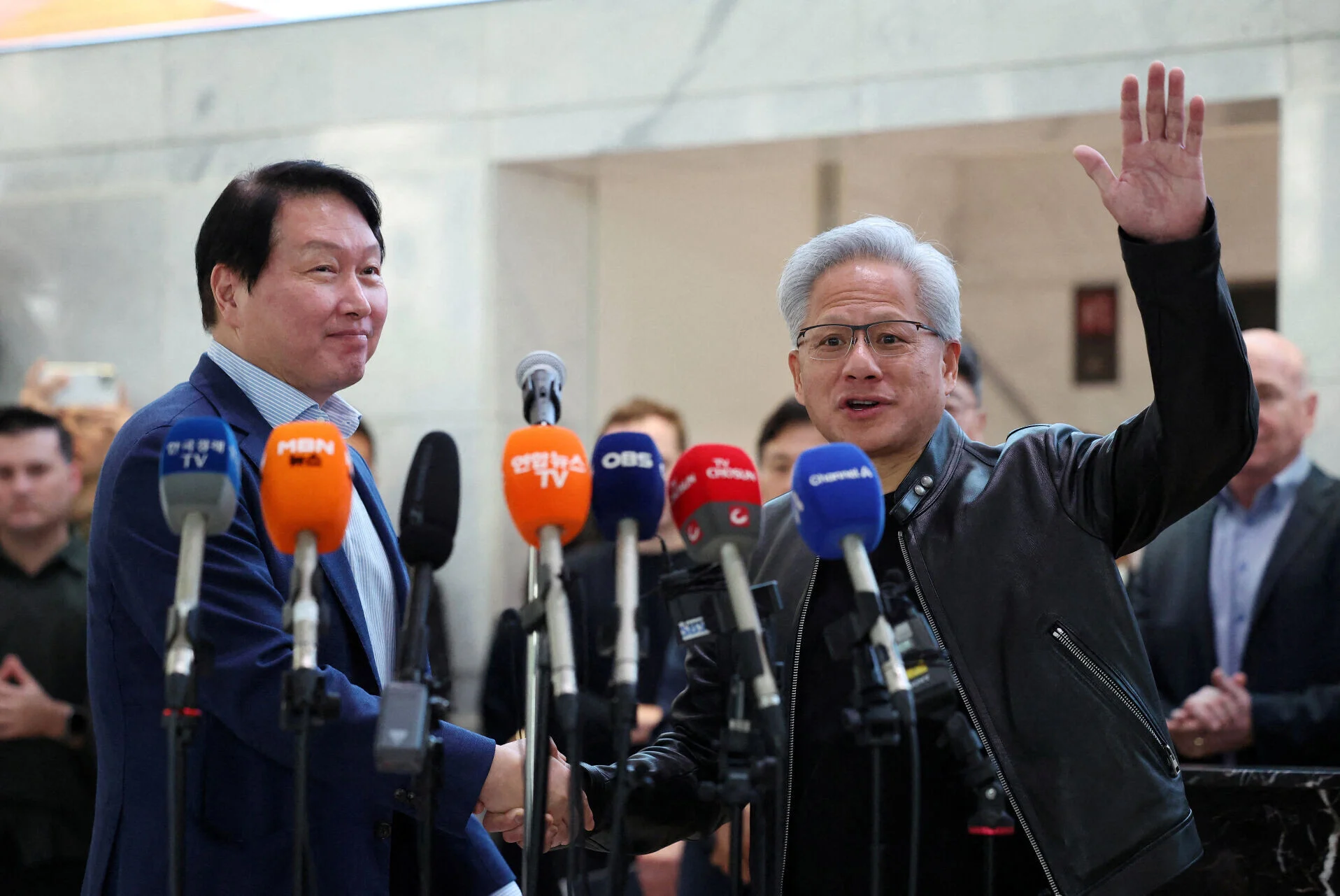
Huang's Vera Rubin denial was designed to reassure markets that Nvidia's product roadmap is intact. But the Korea sell-off suggests the market is worried about something else: whether the AI infrastructure spending that drives Nvidia's growth, and SK Hynix's margins, is sustainable.
The irony is that both sides of the AI trade are telling different versions of the same story. Nvidia says demand is strong and products are on track. The memory chip makers say demand is strong and contracts are locked in. Investors are asking whether that's enough to justify the multiples.
P.S. If you're an investor in AI hardware stocks, the important question isn't whether Vera Rubin shipped on time. It's whether the $244 billion in AI infrastructure debt gets repaid by actual returns. Jensen Huang can control Nvidia's product schedule. He can't control the math on the other side of the balance sheet.