On June 28, the Bank for International Settlements — the “central bank for central banks” — published its annual economic report. The message was unusually direct.
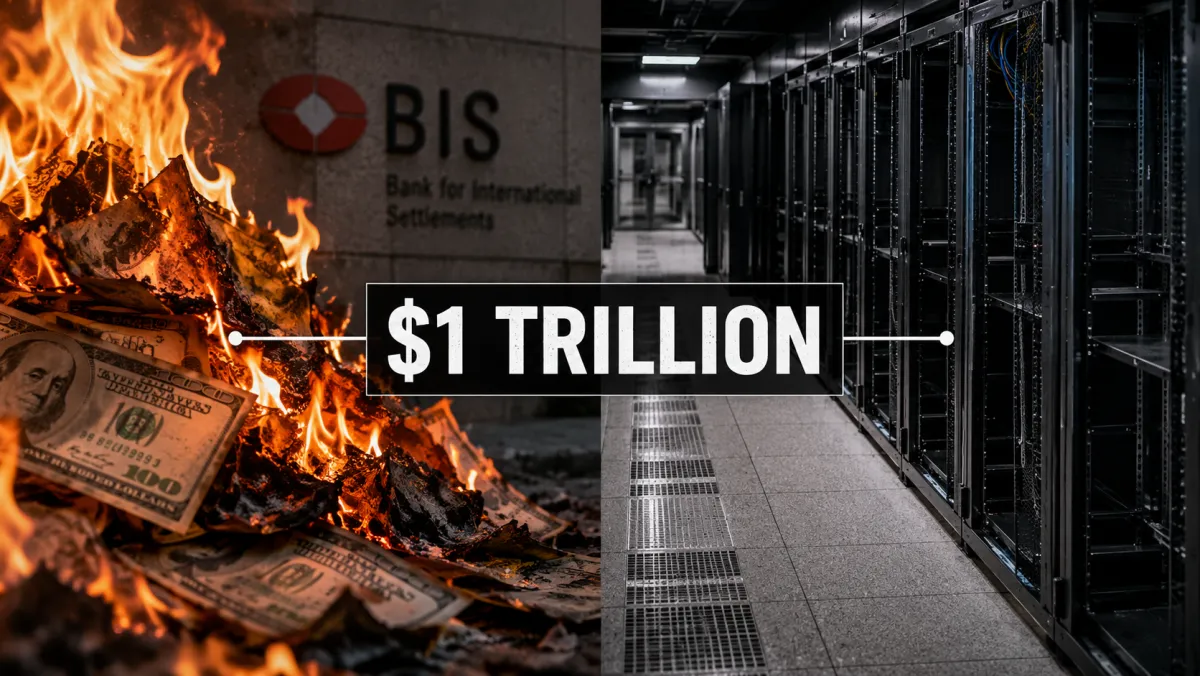
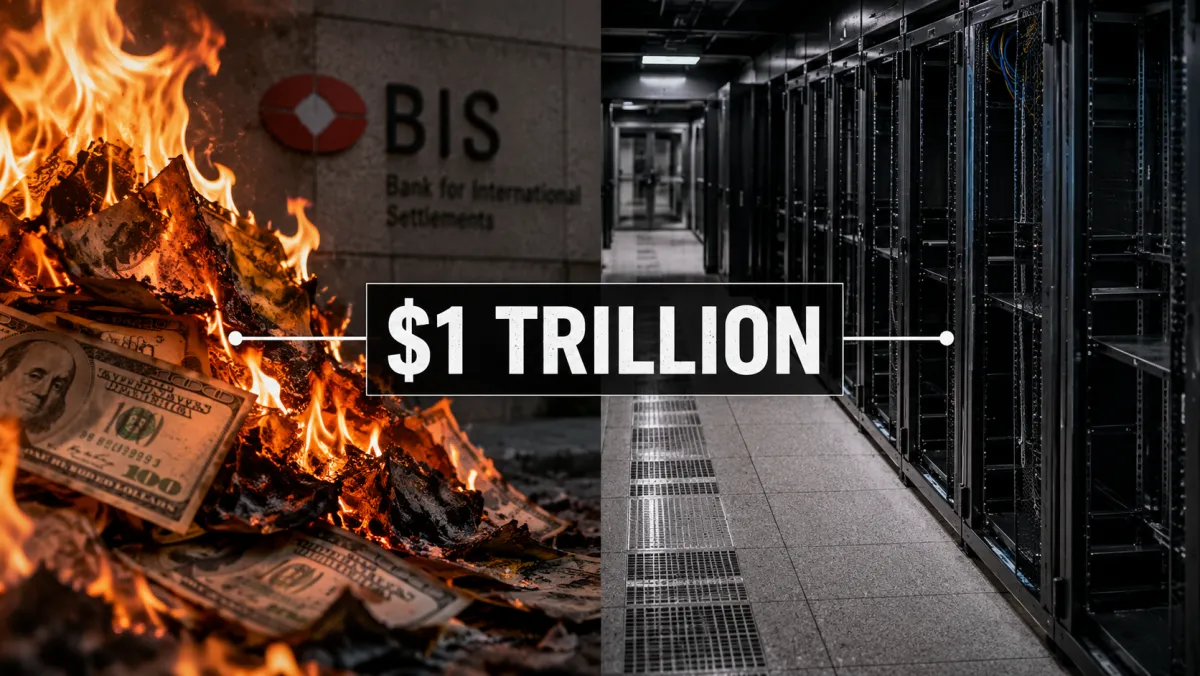
The BIS warned that the current AI investment boom carries a risk of a “protracted investment bust” if technology sector returns disappoint. The five largest hyperscalers — Alphabet, Amazon, Meta, Microsoft, and Oracle — are expected to invest over $1 trillion on AI infrastructure from 2025 through 2026. If returns fall short, investors could rapidly tighten funding, turning the capex boom into a prolonged downturn.
The BIS also flagged a specific risk mechanism: the complex “circular investment” structure intertwining big tech firms, semiconductor companies, AI developers, and data center builders. Chipmakers invest in AI labs, which then use the funds to purchase chips from the same investors. Data center construction is increasingly outsourced to third parties that lease facilities back to hyperscalers on long-term contracts with embedded exit clauses. “The terms of such deals are typically poorly disclosed, with risks of the same asset being pledged multiple times,” the BIS warned.
This isn’t the first time the BIS has sounded this alarm. The report drew explicit parallels to historical technology booms: the 1830s canal construction, the 1840s British railway mania, and the late-1990s dot-com bubble. Each began with genuine technological breakthroughs and a flood of capital that eventually exceeded what commercial returns could justify. Each ended with investment reversals and broader economic slowdowns.
The BIS noted that the current AI investment surge is larger and faster than those historical precedents:
Historical Boom | Time Period | Investment Growth |
|---|---|---|
Canals | 1830s | 4.1x over 5 years |
Railways | 1840s | 2.7x over 4 years |
Mass Production | 1920s | 1.9x over 5 years |
Dot-com | 1990s | 1.9x over 5 years |
AI | 2020s | 4.5x over 3 years |
“A common feature of past transformative technological innovations that attracted massive investments was that peak investments later contracted, leading to broader economic downturns,” the BIS noted. “The current scale of AI investment must be approached with caution.”
Mountain View: Meta’s Gemini Access Is Capped
The same weekend, the Financial Times reported that Google has placed limits on Meta’s use of its Gemini AI models because it cannot provide the computing capacity Meta requested. Google informed Meta around March that it couldn’t meet the social media company’s full demand.
Multiple internal AI projects at Meta have been delayed or disrupted as a result. Meta had been using Gemini for content moderation and safety processes — tasks where Gemini outperformed Meta’s own Llama models. With access now capped, Meta is accelerating its shift to Muse Spark, its own internal model, to reduce external dependence. The company has also asked employees to use AI tokens more efficiently.
Google itself is so compute-constrained that it agreed to pay SpaceX $920 million per month for access to 110,000 Nvidia GPUs, calling it “bridge capacity” to meet surging demand for Gemini Enterprise. Alphabet spent over $180 billion on capex this year and still cannot serve all customer demand. During the company’s first-quarter earnings, Alphabet reported that Google Cloud revenue rose to $20 billion — but CEO Sundar Pichai said limitations in computing capacity had prevented even stronger growth and contributed to a significant increase in the cloud division’s backlog.
Two Time Horizons, One Problem
The BIS warning and the Gemini rationing are two sides of the same coin — but they operate on different timelines.
The BIS is worried about the long term. If AI companies can’t turn infrastructure into profit, the capital markets that funded the buildout will pull back. The warning is about years, not months. The BIS also noted that elevated asset valuations and investor complacency have left core bond markets more fragile. Tech groups have flooded global credit markets to raise billions for AI projects, using near-record-low corporate spreads. Allianz’s investment chief warned that SpaceX’s decision to issue $25 billion in bonds so soon after its record IPO is a sign the market has entered “bubble territory.”
Google’s rationing is about the short term. The problem isn’t that no one wants to fund AI. It’s that the physical infrastructure can’t keep up with demand — even for a company spending over $180 billion this year. The BIS itself noted that supply bottlenecks “could restrain production” and intensify over-investment.
Both warnings are valid. Neither cancels the other out.
Why the Math Might Not Work
The AI industry has been running on a simple logic: demand is infinite, so spending is always justified. But the math is becoming less forgiving. According to J.P. Morgan, capex is rising much faster than actual revenues, putting pressure on available cash flows. Ptarmigan Capital’s analysis estimates that the hyperscalers would need to generate roughly $1.6 trillion in annual AI services revenue just to earn a 15% return on the $2.9 trillion cumulative investment base expected by 2028. Current run-rate revenue for AI services is estimated at only about $50 billion.
The gap is not small. The BIS warning and Google’s rationing are both pointing in the same direction: the AI boom is entering a phase where the rules of the game are changing. The era of unlimited spending on unlimited compute may be ending. The era of asking whether the math actually works is about to begin.
P.S. The BIS report landed from Basel. The FT report landed from Silicon Valley. They are not coordinated. But they are pointing in the same direction. The era of unlimited spending on unlimited compute is ending. The era of asking whether the math actually works is about to begin.