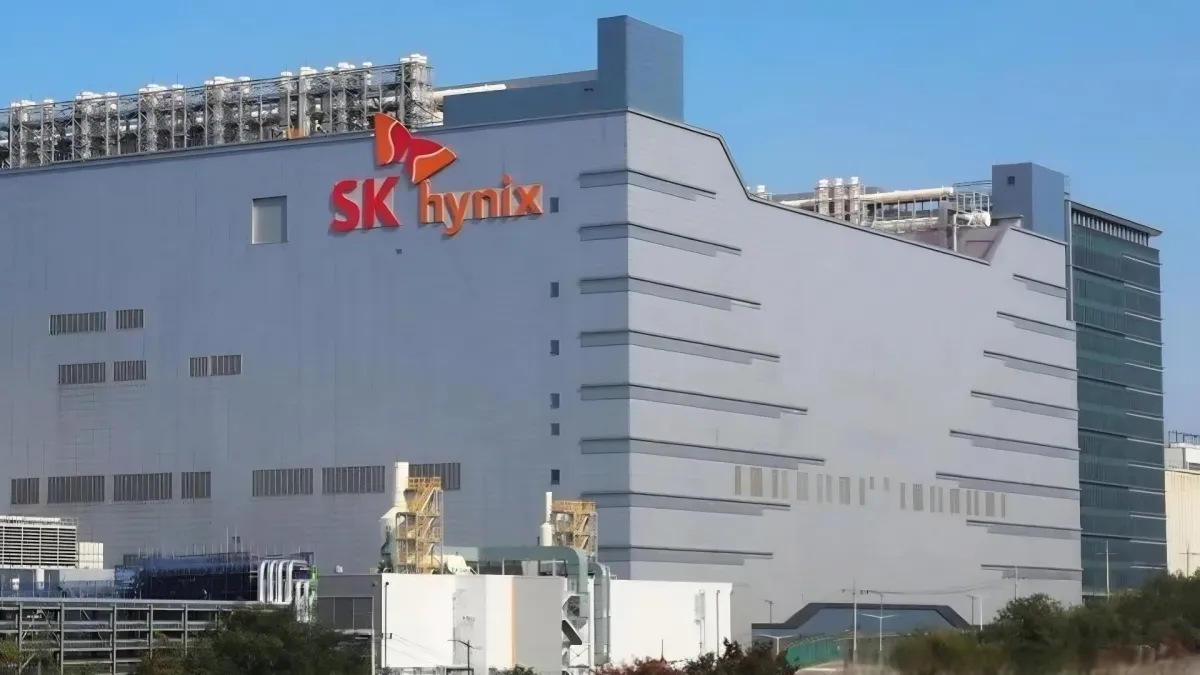
SK Hynix is coming to America.
On July 10, the Korean memory chipmaker will list on the Nasdaq under the ticker SKHY, raising roughly $28 billion in what will be the largest foreign company IPO in U.S. history and the second-largest overall, trailing only SpaceX’s $85.7 billion offering last month.
This is not a company raising money because it needs it. SK Hynix‘s operating profit surged 1,724 percent last year. The company is printing money. It is listing in New York because it wants access to the world’s largest pool of AI capital — and because American investors have been demanding a direct stake in the company that supplies the HBM (high-bandwidth memory) chips that power every single NVIDIA GPU.
The deal is a test. Not just of SK Hynix‘s valuation, but of the entire AI hardware investment thesis. If this IPO trades well, it signals that Wall Street still believes the AI compute build-out has room to run. If it stumbles, it’s a sign that the “sell shovels during a gold rush” strategy may have peaked.
The timing is not ideal. Just last week, Meta‘s plan to sell excess compute capacity rattled the semiconductor sector, raising the first serious questions about whether the AI industry is building more compute than it can use. NVIDIA’s stock has been volatile. The broader semiconductor index has pulled back from its highs.
SK Hynix‘s arrival in New York is a test of whether the AI memory trade still works. And unlike a startup’s IPO, this one comes with real financials — the company is expected to post $144 billion in net profit this year, with DRAM gross margins hitting a staggering 91 percent.
Wall Street sees the play. U.S. investors have been unable to invest directly in SK Hynix without taking Korea market risk or buying over-the-counter, low-liquidity American depositary receipts. One observer called the deal “eliminating the accessibility discount, not the quality discount.” The listing could also be a real test for rival Micron, which suddenly faces a better-capitalized competitor trading on the same exchange, with a commanding lead in the HBM market.
Of course, timing is everything. The IPO comes as the industry is watching for signs of a memory cycle downturn. When prices normalized, SK Hynix and Micron both lost money just three years ago. The risk is real: the industry could be building new plants just as demand peaks.
The Korean government is aware. On the same day SK Hynix launched its roadshow, President Lee Jae-myung ordered officials to accelerate the country‘s $576 billion chip investment plan, warning that any regulatory delay could weaken Korea’s lead in advanced industries. The implicit promise: the state is behind this company. The IPO isn‘t just a corporate event. It’s a national priority.
SK Hynix isn‘t a startup with a story and a slide deck. It’s a profitable, expanding, established player at the center of the AI supply chain. But its arrival on U.S. markets is also a test of whether the semiconductor industry is at a turning point. The listing might be perfectly timed. Or it might be a near-perfect signal that the AI hardware trade is peaking.
P.S. Roundhill Investments CEO called it “eliminating the accessibility discount, not the quality discount.” The question is whether the quality discount arrives later, once the cycle turns.