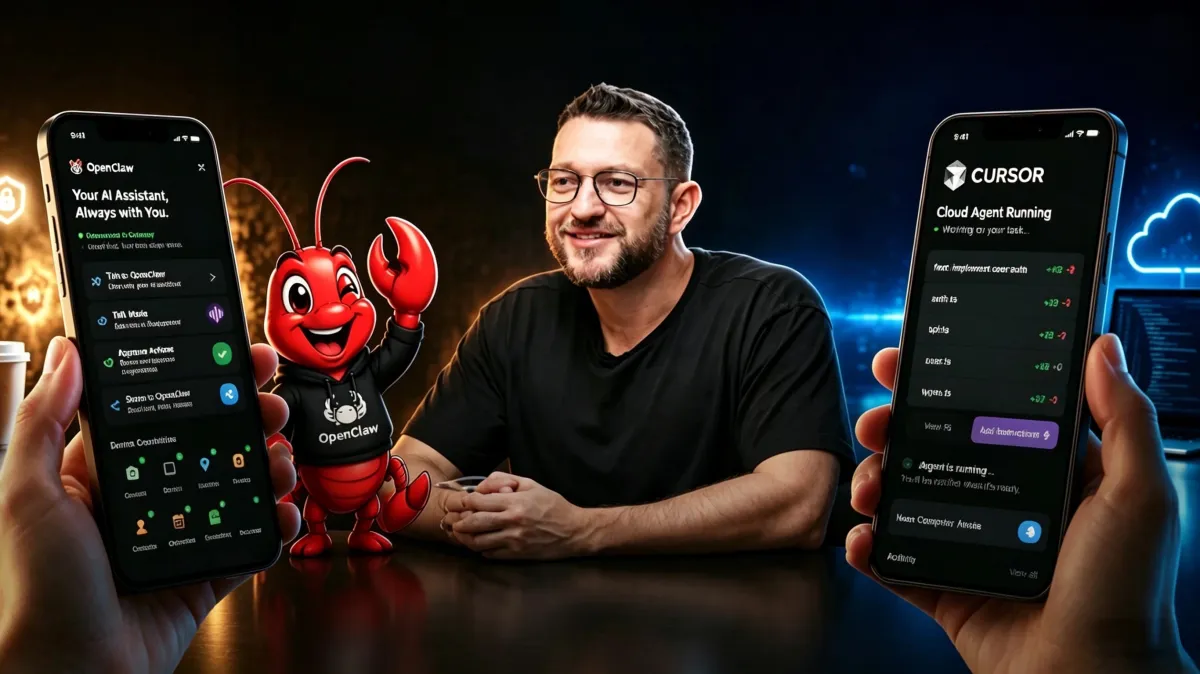
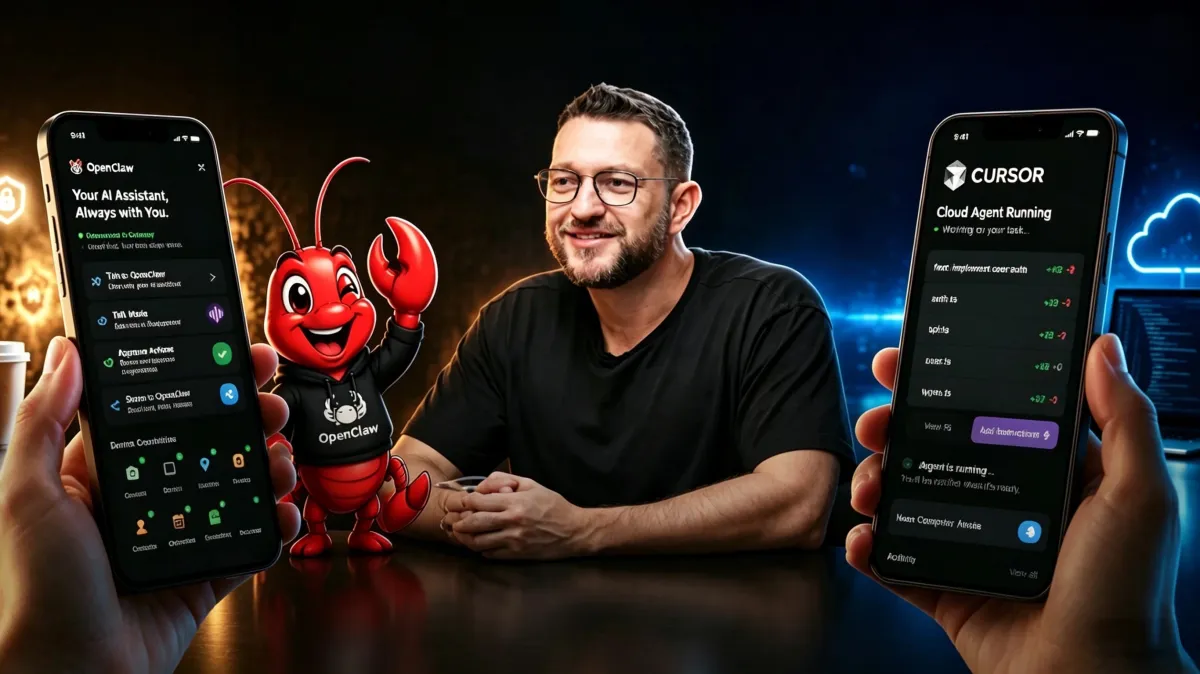
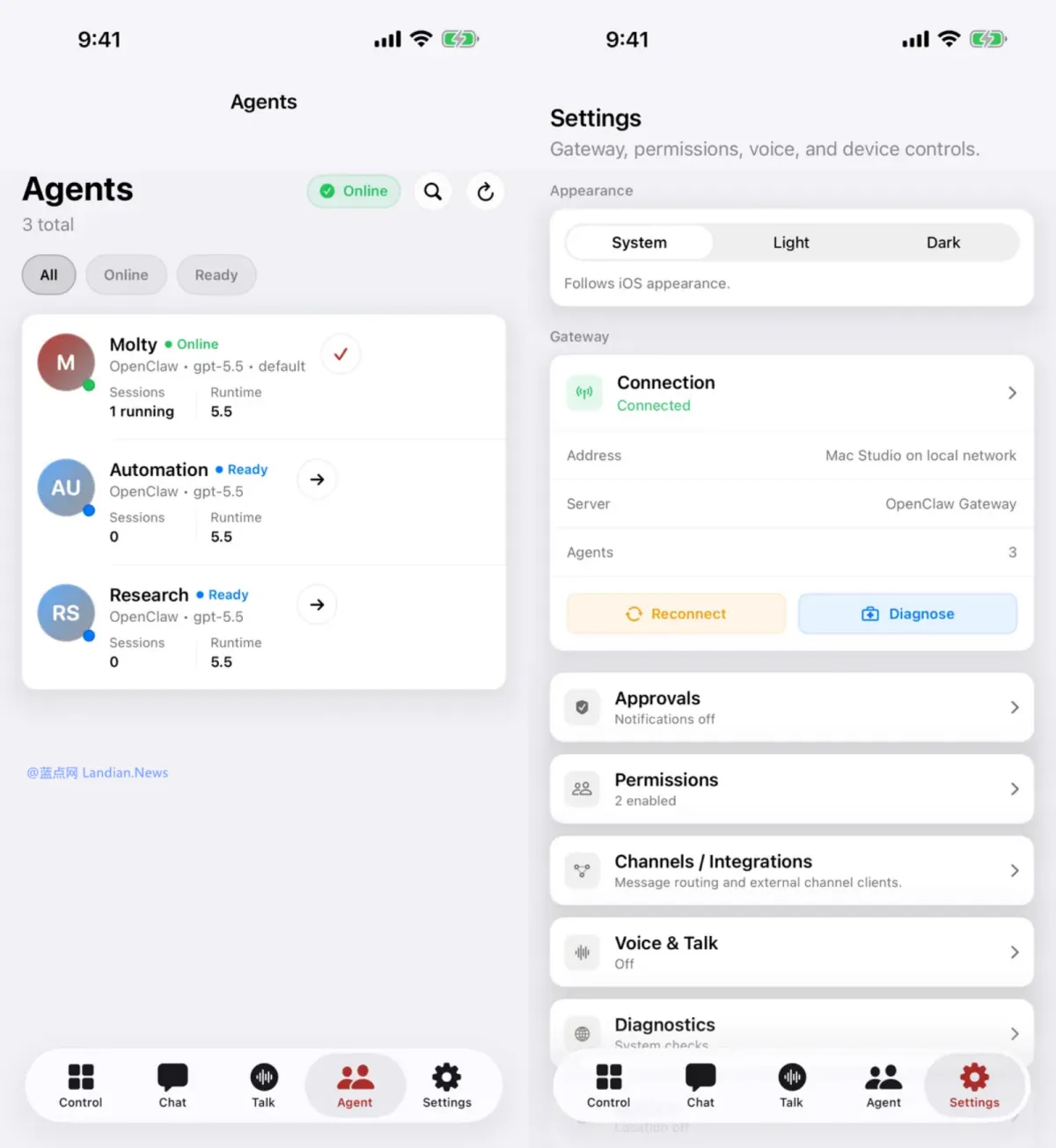
On June 30, OpenClaw and Cursor both launched native mobile apps. OpenClaw released iOS and Android versions. Cursor released an iOS public beta. Same day. Same ambition: put AI agents in your pocket.
But the gap between them is telling. OpenClaw‘s Android app has a 2.2-star rating. Users report broken pairing, rough UI, and frustration. Cursor’s iOS beta isn‘t perfect, but it works—you can start an agent, review code, and approve PRs from your phone.
The difference isn’t just polish. It‘s the gap between open-source ambition and commercial execution. Both are pushing in the same direction. Only one has arrived.
Why Now? The Technology Is Ready
OpenClaw proved on desktop that a local-first agent can handle complex tasks across multiple tools and systems. Cursor proved that independent coding agents can work without constant supervision. The desktop phase was the proving ground. The technology now works well enough to be trusted away from the keyboard.
The model is no longer the bottleneck. The harness—the layer that connects tools, memory, and execution—has matured. Agents can run asynchronously, report back, and wait for human approval. That‘s the infrastructure that makes mobile viable.
The work has also shifted. Boris Cherny, who leads Claude Code at Anthropic, said it plainly: “Most of my coding now is on my phone.” He reviews agent-generated code and approves changes between meetings or while commuting. If the person building a competitor’s product is doing that, it‘s not a prediction anymore. It’s a signal.
Why Now? The Job Has Changed
The developer‘s job is no longer writing every line. It’s supervising agents that write the lines. That work doesn‘t require a workstation. It requires attention—not a keyboard.
The mobile app is the physical manifestation of this shift. When developers are managing agents rather than typing code, the phone becomes the command center. You don’t need to be at a desk to approve a PR, review an agent‘s plan, or unblock a stalled task. You need to be where the decisions are made—which is increasingly anywhere.
This changes the geography of work. The desktop is where you operated the tools. The phone is where you supervise the agents that use those tools for you. One requires presence. The other requires attention.
Why Now? The Market Demands It
Cursor has more than 1 million paying customers and 70% of the Fortune 1000 as clients. OpenClaw’s open-source popularity created a user base that wanted to take agents everywhere.
They are not building mobile apps for fun. They are responding to where the work is actually happening. The desktop is no longer the center of AI work. The phone is becoming the command center for managing AI agents that run elsewhere.
What This Actually Means
OpenClaw and Cursor both understand this. They are not building mobile apps to let you code on the go. They‘re building them so you can manage work while you’re literally anywhere else. The agent runs. You approve. That‘s the future of AI work.
The gap between the two products is also instructive. OpenClaw represents the open-source path—features first, polish later. Cursor represents the commercial path—product-ready from day one. Both are moving in the same direction. One is just further along.
P.S. Anthropic’s Boris Cherny says most of his coding now happens on his phone. If the head of a competitor‘s product is doing that, it’s not a prediction anymore. It‘s a signal. The question isn’t whether mobile AI work will happen. It‘s how fast the rest of the industry catches up.