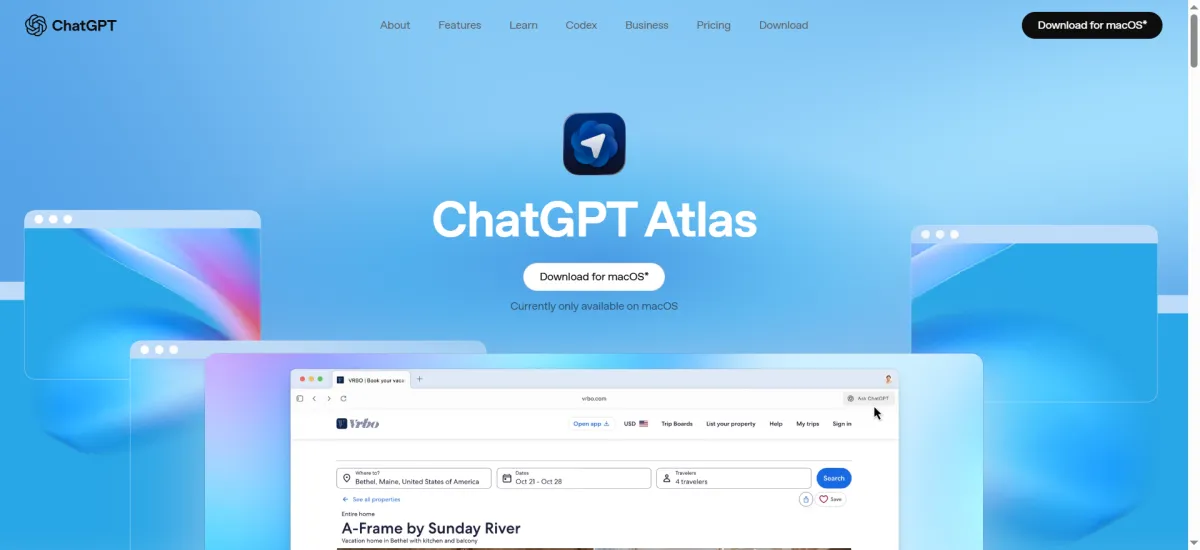
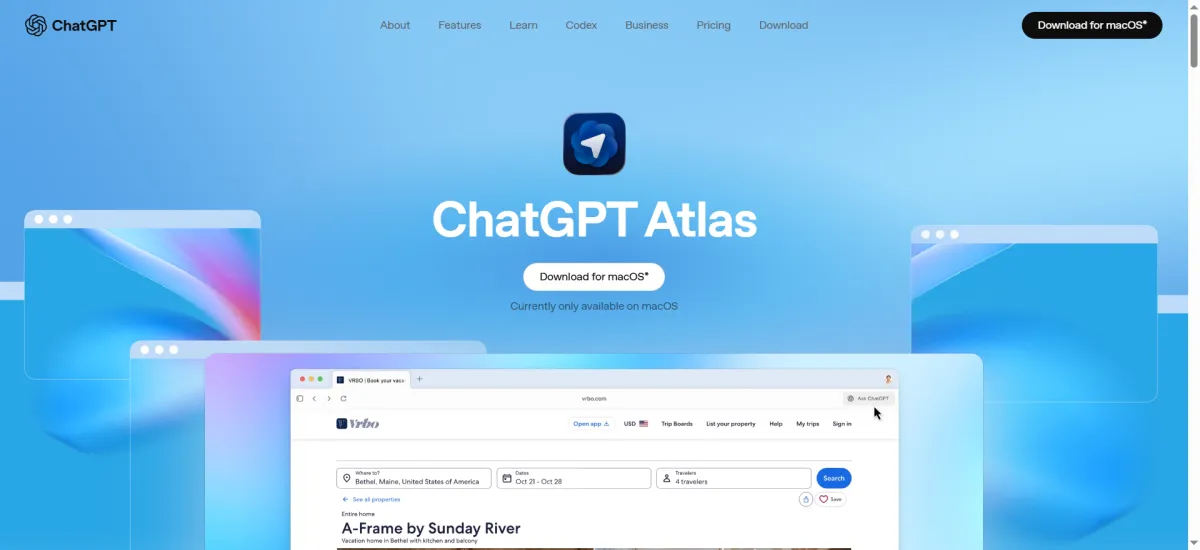
OpenAI launched Atlas in October 2025. A browser with ChatGPT built in. Agent mode. Deep integration. The whole package. It's dead already.
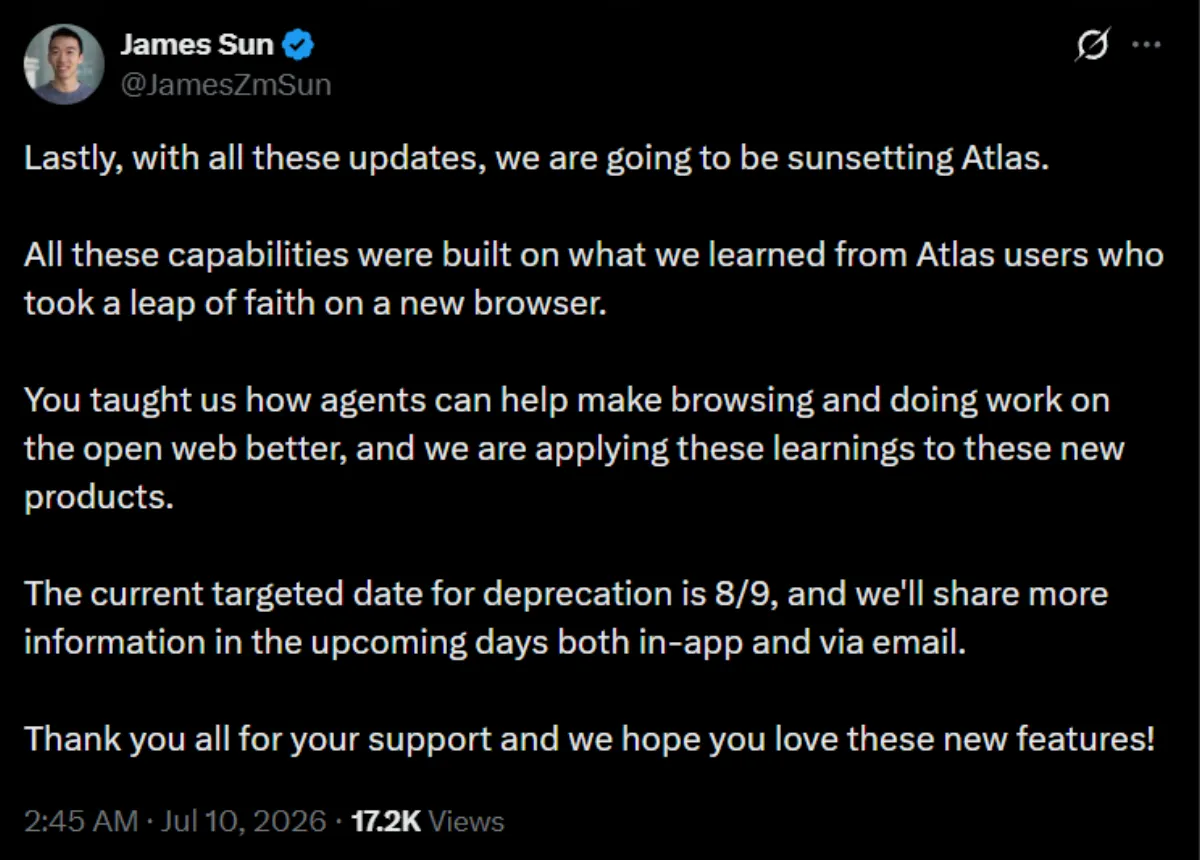
OpenAI product manager James Sun announced the sunset on X yesterday. The target date: August 9, 2026. That's less than a year. Sora got killed earlier this year for the same reason.
OpenAI's application boss Fidji Simo told teams to cut back on "side quests." Atlas was a side quest. Now it's gone. But here's the thing: this isn't a retreat. It's a refocus.
Why Atlas Failed
The idea wasn't stupid. The AI industry spent the last year trying to build the "Chrome killer." Perplexity launched Comet. The Browser Company launched Dia. Google and Microsoft keep adding AI features to Chrome and Edge.
Atlas was built on Chromium. It wasn't really a new browser. It was ChatGPT with a browser wrapper. And the reviews were mixed. PCMag's hands-on found that "practically any other browser is better than Atlas for standard web surfing."
The Agent mode could take over tasks — but often slower than a human would. Paid-only. Mac-only. A Windows version was planned, but canceled. OpenAI spent months learning a simple lesson: people don't want a new browser. They want AI to work where they already are.
What Replaces It
OpenAI isn't abandoning the idea. It's distributing it. First, a ChatGPT Chrome extension. It reads the page you're viewing. You ask questions. You get summaries. You start long tasks. No browser switching required.
This is a direct shot at Google's Gemini Side Panel. Second, a beefed-up ChatGPT desktop app. It has its own built-in browser. You can browse websites, log into accounts, download files. All inside ChatGPT.
Third, a cloud browser on OpenAI's servers. Agents execute tasks in the background while you do other things. Together, these turn ChatGPT into a continuous workspace. It spans Chrome, the desktop app, and AI agents.
James Sun's X post said: "We'll bring some of these features over, but they won't be 1-1 replacements as the focus is more now on work & productivity."
What This Actually Means
Atlas was a product. The new approach is a strategy. The product couldn't win. Chrome has 69.65% market share as of June 2026 — up from 66.7% in March. Safari sits at 15.31%. Edge at 5.21%. Atlas was in the "other" bucket.
Competing there was a losing game. But the strategy? Embed AI into the world's most popular browser. Own the agent layer on top of Chrome. Make ChatGPT the assistant that works everywhere.
OpenAI is pivoting from "let's beat Google" to "let's be the interface on top of Google." That's smarter. This also fits the broader consolidation trend. Atlas is gone. Sora is gone. OpenAI is building one unified product — ChatGPT — with everything inside.
The browser war isn't over. OpenAI just realized the battlefield isn't the browser. It's the workspace. And they're building a continuous workspace that spans across Chrome, desktop app, and AI agents.
P.S. If you're an Atlas user, you have until August 9 to export your bookmarks and passwords. The features will live on in different forms — just not the form you signed up for. That's tech in 2026: "We're shutting down your product, but don't worry, we're using what we learned to build something better. Somewhere else."