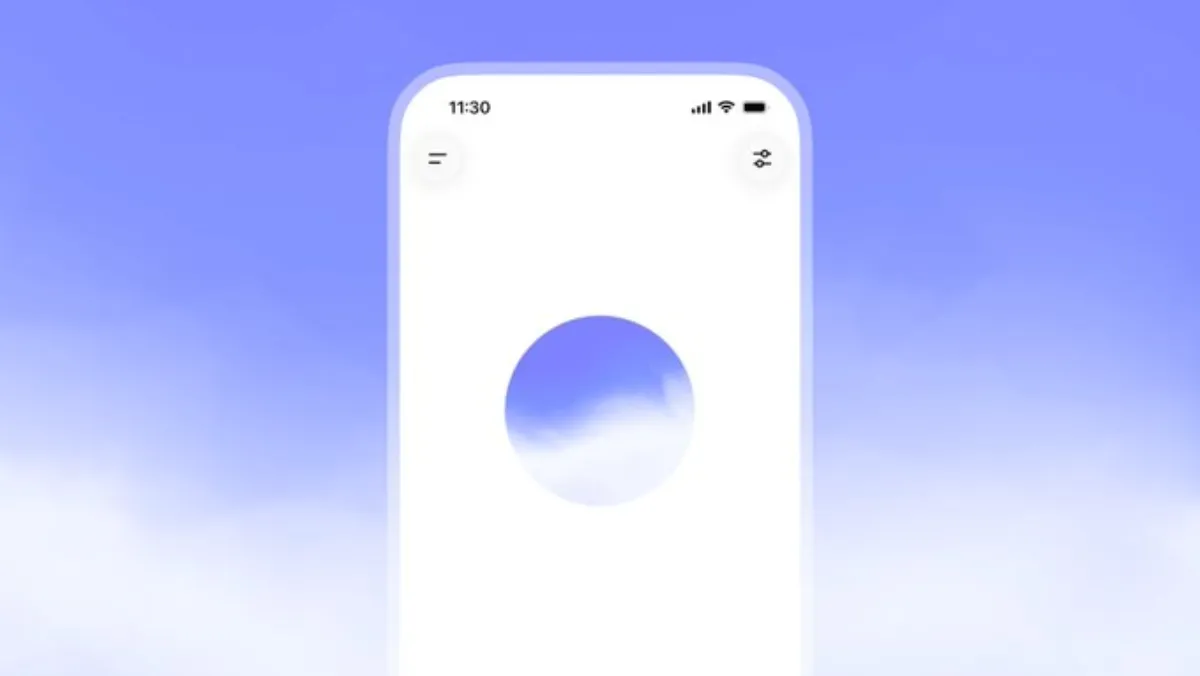
OpenAI dropped GPT-Live today. Full-duplex voice. Listens and speaks at the same time. It says "mhmm" while you're still talking. Stays quiet when you pause. Interrupts like a human who doesn't care about your turn-taking rules.
This doesn't sound like a big deal. It is. Previous ChatGPT voice was a walkie-talkie. You talk. It waits. You stop. It responds. GPT-Live is a phone call. Both sides jump in. Interruptions are normal. Silence doesn't break the conversation.
One user tested it during a full-hour dog walk. No awkward pauses. Just a 60-minute brainstorming session while picking up poop. That's progress.
The smartest part isn't the audio. It's the architecture. OpenAI split the model in two. Front-end: a lightweight voice model that handles real-time chat. Says "mhmm" and "got it" while you speak. Buys time. Back-end: GPT-5.5 handles the hard stuff. Search. Reasoning. Complex tasks.
The front-end keeps chatting while the back-end works in silence. When the back-end finishes, the front-end delivers the answer without missing a beat. The model you talk to isn't the one that does the thinking. That's a breakthrough. No one else has done this at scale.
The numbers are ridiculous. On GPQA, Advanced Voice Mode scored 45.3%. GPT-Live hit 84.2%. On BrowseComp: 0.7% to 75.2%. That's a different species.
But the feature everyone's talking about isn't the reasoning. It's the "mhmm." OpenAI spent billions on the most advanced voice AI ever built. The thing that made people lose their minds? A $0.0001 worth of computational empathy.
Some users love it. "Finally feels like talking to a person." Others find it condescending. One tester said GPT-Live interrupted a joke and laughed at it. "Felt a bit rude." The robot laughed at you. And not in a fun way. OpenAI says they've clamped that behavior. But emotional tone is harder than latency. They haven't fully nailed it yet.
Now the hardware. Because this is where sanity goes out the window. OpenAI's first device is an AI headphone. Codenamed "Sweetpea." Designed by Jony Ive's team. Target: 40 to 50 million units in year one.
Apple sells about 100 million AirPods annually. OpenAI wants half of that. On its first try. That's not ambition. That's audacity. The pitch writes itself: "150 million people already use ChatGPT voice weekly. We have distribution. We have the model. The headphone is just the last mile."
Sure. And Tesla was just a car company before it tried to build a robot. Hardware is a graveyard for software companies. Humane Pin. Rabbit R1. Google Glass. Every one promised a new AI-native form factor. Every one failed.
OpenAI has Jony Ive. A 2nm chip. A "pebble design." Zero retail presence. Zero supply chain. Zero hardware support infrastructure. Launching at 50 million units in year one isn't a goal. It's a prayer.
The real race isn't about the model anymore. It's about who owns the ear. The interface is shifting from screen to ear. Whoever owns that owns the next decade.
The "mhmm" isn't trivial. It's emotional engineering. An AI that says "yeah" while you speak signals attention. It builds trust. OpenAI's safety card flags "emotional dependence" as a risk. They know exactly what they're doing. Making you fall in love with the voice. Then selling you the headphones to keep it close.
OpenAI just shipped the most natural AI voice ever. The architecture is smart. The hardware goal is insane. The combination is either a masterstroke or a very expensive lesson. Voice is the next computing interface. OpenAI just drew a line in the sand.
P.S. I'm not saying the headphones will fail. I'm saying a software company aiming for half of AirPods' volume on its first try is like a startup CEO promising profitability in "18-24 months." Classic. But I'd love to be proven wrong.