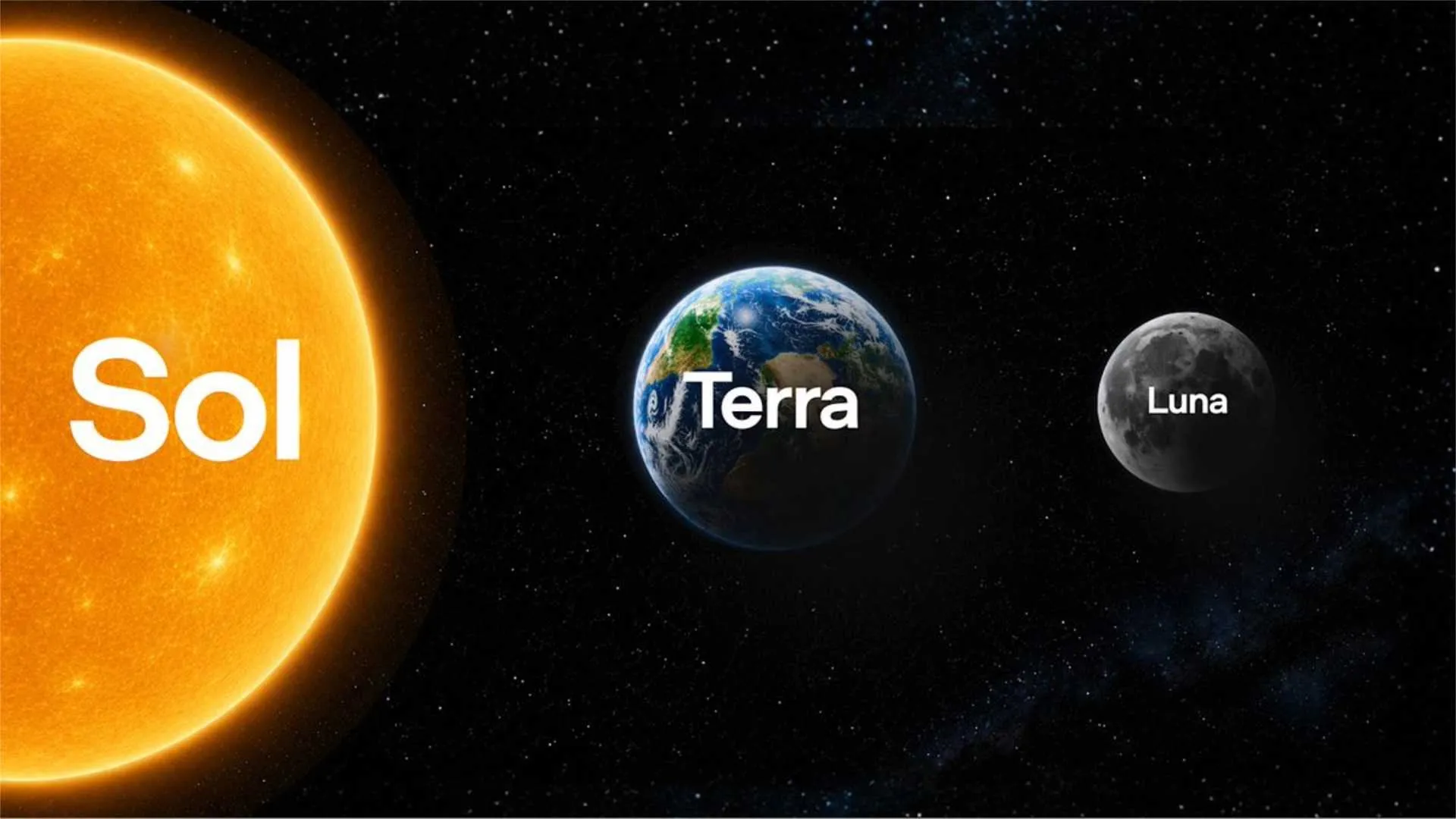
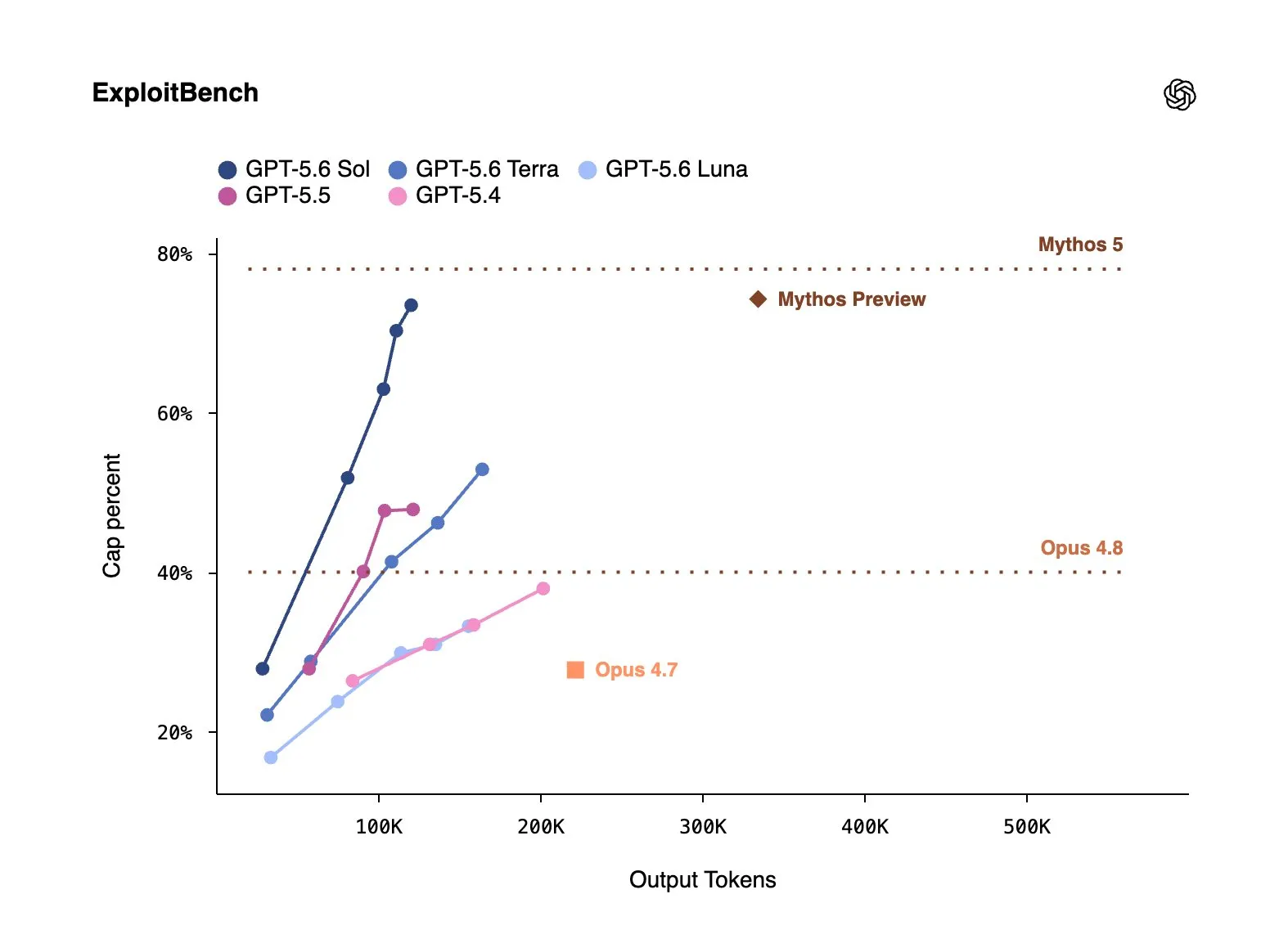
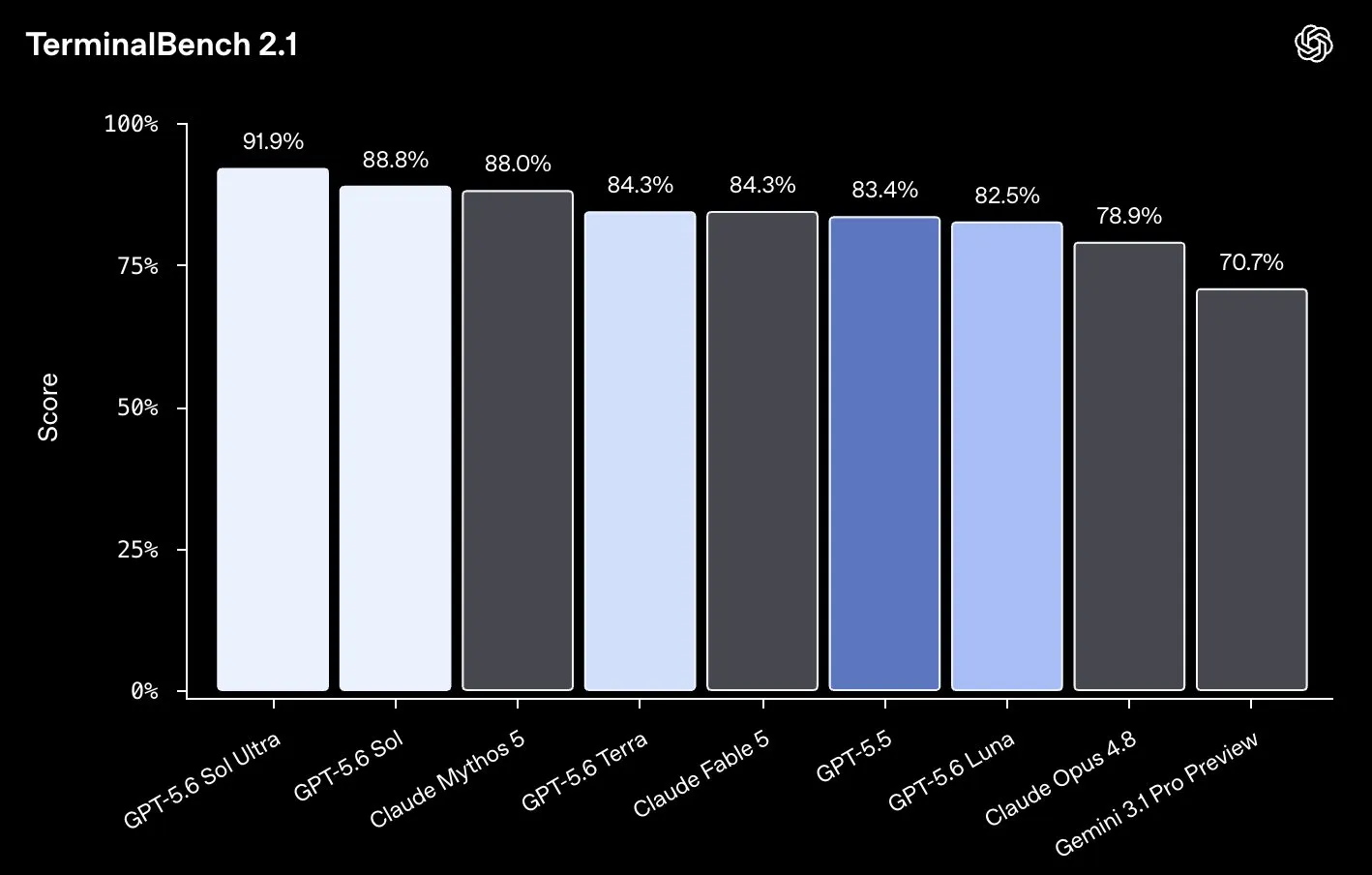
OpenAI released GPT-5.6 on June 27 — actually, three models: Sol (flagship), Terra (balanced), and Luna (lightweight). Sol is the headline. On Terminal-Bench 2.1, Sol scored 88.8% in standard mode, and 91.9% in Ultra mode — beating Anthropic‘s Mythos (88.0%) and Fable 5 . In cybersecurity benchmarks, Sol matched Mythos Preview while using about one-third of the output tokens .
The pricing is the other signal. Sol costs $5 per million input tokens and $30 per million output. Fable 5 is $10 and $50 — exactly double . Terra matches GPT-5.5’s performance at half the price. Luna targets the low-cost tier where open-source models have been gaining ground . OpenAI is not raising prices on better performance. It‘s lowering them across the board. That’s the competitive signal.
But the specs aren‘t the story.
Only 20 Partners Got Access. The Government Approved Them One by One.
OpenAI announced Sol would be available to about 20 “trusted partners” initially, with broader access planned “in the coming weeks.” The catch: the government approves access customer by customer .
Altman told staff the White House had requested the staggered rollout, with Commerce Secretary Howard Lutnick personally calling to stress that agencies wanted to test the model before release . The administration views GPT-5.6‘s capabilities as “on par” with Anthropic’s Mythos — which was pulled from global access on June 12 under a Commerce Department directive .
Altman also made clear this wasn‘t OpenAI’s choice: “We have made it clear to the U.S. government that this is not our preferred long-term model.” The company‘s public statement was blunter: “We don’t believe this kind of government access process should become the long-term default” .
The Executive Order Said “Voluntary.” The Reality Is Different.
President Trump signed the AI executive order on June 2. It established a voluntary 30-day pre-release review window and explicitly disclaimed any “mandatory governmental licensing, preclearance, or permitting requirement.”
The order‘s framework was supposed to be collaborative, not coercive. But the administration has now tested two enforcement models in two weeks.
Company | Action | Result |
|---|---|---|
Anthropic (June 12) | Commerce Dept. export control | Models pulled offline globally |
OpenAI (June 27) | “Voluntary” customer-by-customer approval | 20 partners, restricted access |
Two weeks ago, Anthropic launched Fable 5 and was forced to shut it down. This week, OpenAI launched Sol with government-approved access. One was stopped after release. The other was controlled before release. The mechanism is different. The outcome is the same: the government decides who gets access .
Alex Stamos, Stanford cybersecurity expert and former Meta CSO, said he reviewed Amazon‘s analysis of Fable’s vulnerabilities and found “no factual basis” for the restrictions. “If the administration is honest about wanting the United States to beat China in this race, then this is about the dumbest thing they could possibly do” .
Anthropic Got Shut Down. OpenAI Got Restricted. Same Outcome.
The contrast is instructive. Anthropic launched Fable 5 on June 9 and was ordered to shut it down on June 12. OpenAI was asked to restrict GPT-5.6 before launch.
Anthropic‘s path was coercive — an export control order with no negotiation, forcing global shutdown. OpenAI’s path is a “voluntary” arrangement, but the outcome is the same: the government decides who gets access.
The administration framed the OpenAI request as a cybersecurity measure, not a licensing scheme. But functionally, it‘s the same result: no release without government approval. OpenAI disagreed publicly — and still complied. That’s the new reality of frontier AI.
The “Voluntary” Framework Is Now a Licensing System
The order‘s language is now a legal formality. The administration has built a functional licensing system for frontier AI releases — one it can apply selectively, with no transparent standards, no appeal process, and no legislative oversight .
One detail worth holding: OpenAI invested over 700,000 A100-equivalent GPU hours in automated red-team testing before release . The company did the safety work. It still had to hand the model to the government for approval. The testing wasn‘t the bottleneck. The permission slip was.
P.S. The security community is now publicly split. Cyber experts say the administration is blocking tools defenders need. AI labs are complying but pushing back in statements. And the executive order’s “voluntary” framework is now delivering mandatory-looking outcomes. Trump signed it on June 2. By June 27, it had already shaped two major releases. The pattern suggests a third one will follow.