Last month, GLM-5.2 was released. The numbers were unexpected. 753 billion parameters. 1 million tokens of context. An MIT open-source license. And a 51 score on the Artificial Analysis intelligence index — fourth globally, ahead of Google's Gemini 3.5 Flash and just behind Anthropic's Opus 4.8 and OpenAI's GPT-5.5.
On long-horizon coding benchmarks, GLM-5.2 scored 74.4 on FrontierSWE — trailing Claude Opus 4.8 by just one point and beating GPT-5.5. On SWE-Bench Pro, it scored 62.1, surpassing GPT-5.5's 58.6. The model was trained entirely on Huawei Ascend chips. No Nvidia hardware. No AMD. No TSMC-made GPUs from the US.
Now JPMorgan predicts the next one is coming in August. GLM-5.5. Parameter count: over one trillion. That would make it China's largest-ever open-source model. The timeline is aggressive. GLM-5.2 shipped on June 17. GLM-5.5 would arrive roughly eight weeks later.
Industry observers note that GLM-5.2 is already the third most widely used model globally, trailing only Anthropic and OpenAI. Its Artificial Analysis score of 51 surpasses Google's Gemini 3.5 Flash. It is the first Chinese model to break the 50-point barrier and the first open-source model to reach that range.
The pricing difference is where the real competition begins. GLM-5.2 costs $1.40 per million input tokens and $4.40 per million output tokens. Claude Opus 4.8 charges $5 input and $25 output. GPT-5.5 charges $5 input and $30 output. GLM-5.2 is roughly one-sixth the cost of US frontier models for comparable coding performance.
VentureBeat's analysis framed the comparison simply: "GLM-5.2 beats GPT-5.5 on multiple long-horizon coding benchmarks for 1/6th the cost." For enterprise procurement teams, the calculus is straightforward.
The MIT license removes the remaining barrier. GLM-5.2 is fully downloadable, modifiable, and deployable without regional restrictions. Enterprises can run it on their own infrastructure — no vendor lock-in, no usage limits, no per-user licensing.
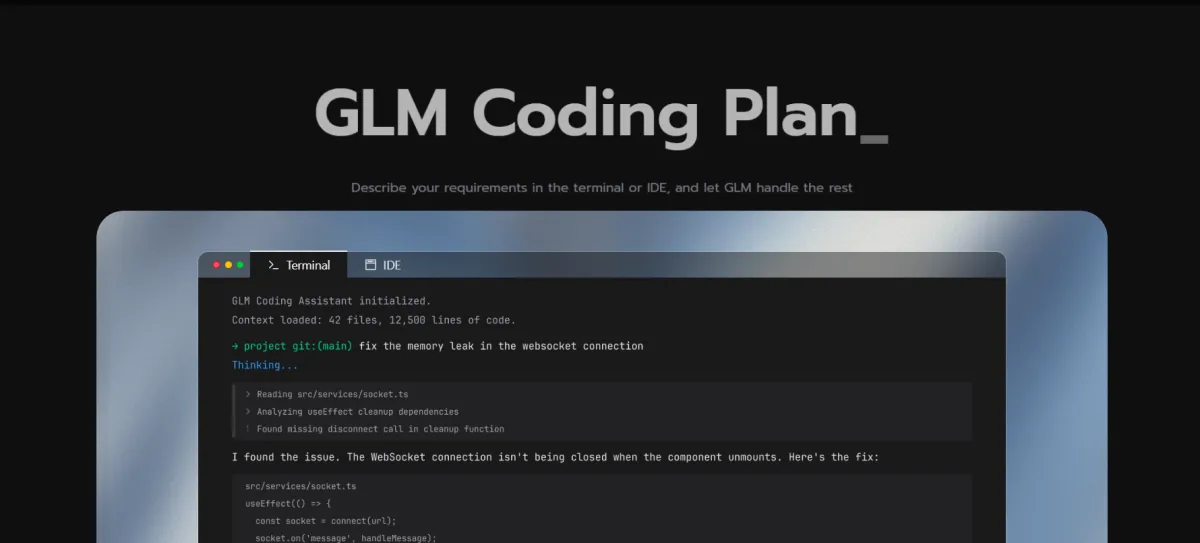
If GLM-5.5 delivers the same performance per dollar, the economics become undeniable. A trillion-parameter model at GLM's current pricing would be the cheapest frontier model ever released. For corporate IT budgets, that's a decision that writes itself.
The next milestone is August. JPMorgan's prediction suggests a launch within weeks. If GLM-5.5 matches its predecessor's trajectory — another 10-15 point jump on the Artificial Analysis leaderboard while maintaining the same cost advantage — the question shifts. Not "can Chinese models compete?" but "can US models justify their price tags?" The MIT open-source license will let any enterprise run a trillion-parameter model on their own chips, without paying anyone. That might be the real breakthrough.
P.S. If you are an enterprise AI buyer evaluating models today, you have a decision to make: pay $30 per million output tokens for GPT-5.5 Sol, or wait a few weeks for a trillion-parameter model at $4.40 that runs on any cloud. The smart money is already doing the math — and the numbers point one way.