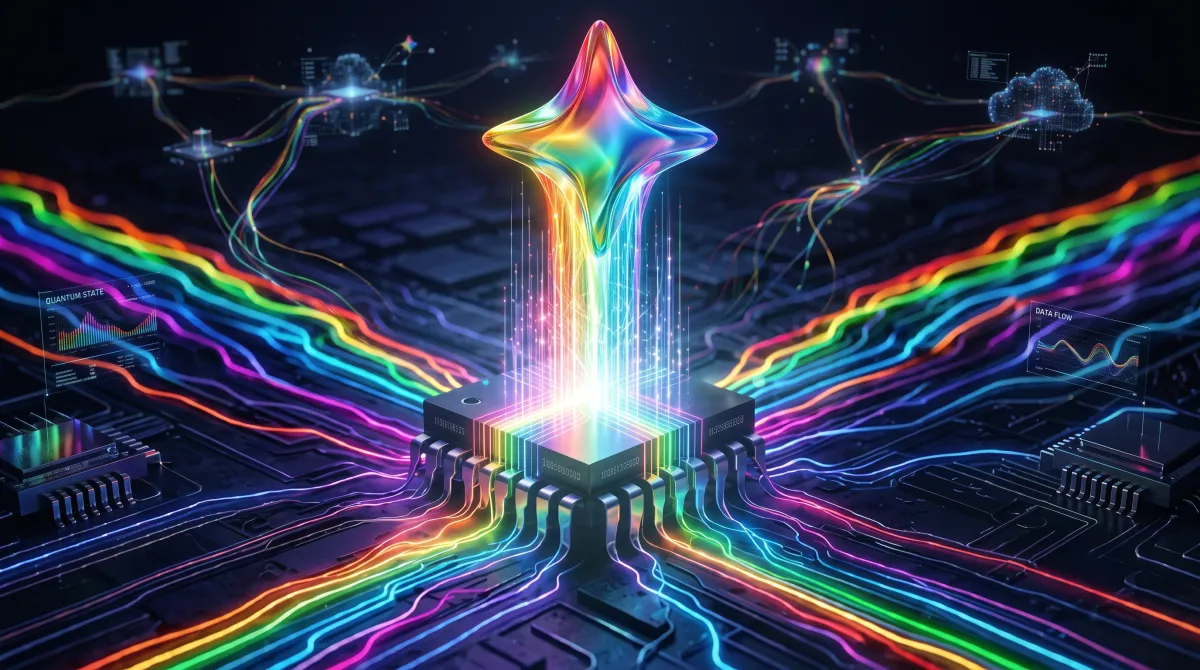
Google is building a chip that has Gemini's brain baked directly into the silicon . It is called Frozen v2. The name is literal — parts of the model architecture are permanently etched into the hardware.
The promise is staggering. Six to ten times more tokens processed per unit of power than Google's latest TPUs . Faster response times. Lower operating costs. A path out of the compute shortage that has forced Google Cloud to turn away customers and pushed Google to rent capacity from SpaceX at $920 million per month .
But the chip comes with a catch. A big one. It only works if Google sticks with the same underlying Gemini architecture for future models .
Google's engineers are betting that the company's AI model architecture is stable enough to justify freezing part of it in silicon until 2028. That is a long time in AI.
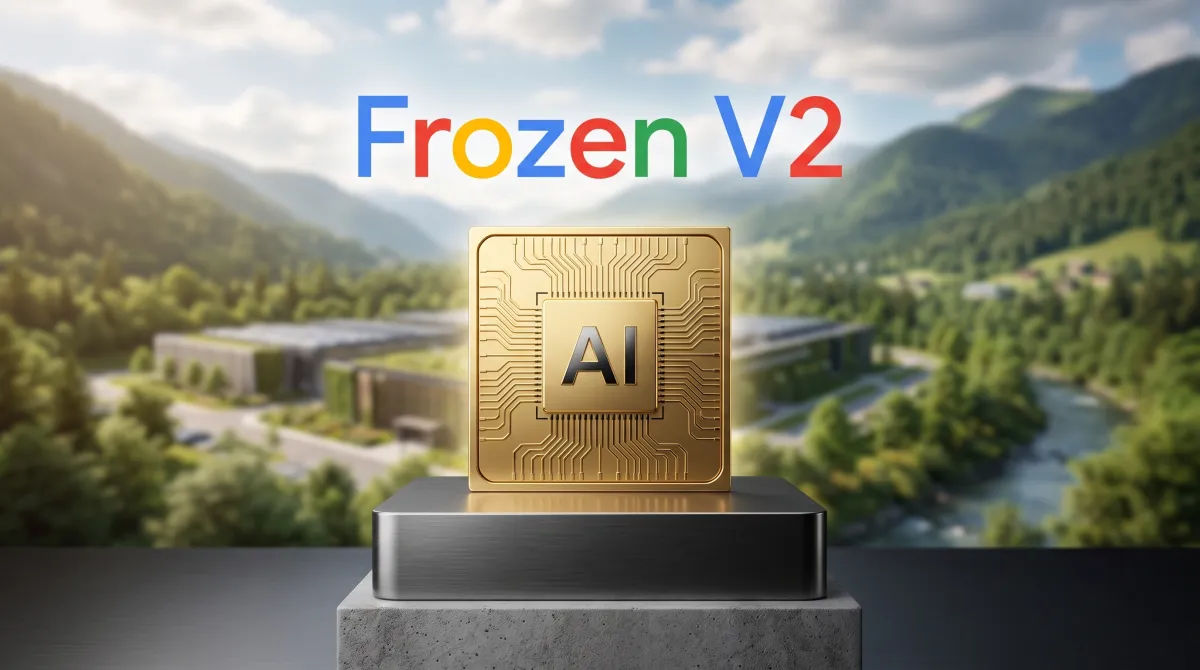
The chip will not replace TPUs. It is a specialized branch of Google's custom silicon portfolio, designed for inference — the ongoing work of running models, not training them . Production is not expected until 2028. Limited scale. No mass production planned .
This is not Google's first attempt. The original Frozen project, led by Jeff Dean, aimed to burn complete model weights directly into chips. It failed because the chip could only run one version of Gemini . Hardware outlived the model it was built for.
Frozen v2 takes a different approach. It does not freeze the weights. It freezes the architecture. Google can still update model weights — the parameters that determine how the model responds — after the chip is built . But deeper changes to Gemini's structure would require a new chip version.
That is a bet. A big one.
The urgency is real. Google is struggling with AI compute capacity. Internal resource conflicts have escalated. Google Cloud has turned away outside business . In June, the company signed a deal to pay SpaceX roughly $920 million per month for access to 110,000 Nvidia GPUs through mid-2029 . That is nearly $30 billion over the full term.
Frozen v2 is the long-term answer to that bill.
The market reacted positively. Alphabet shares rose about 3 percent on the news . Investors are buying a signal — Google is still in the hardware game. After months of stories about Gemini 3.5 Pro delays and falling behind OpenAI, Frozen v2 reminds the market that Google has a deep research bench and a willingness to place big bets.
But the bet comes with a trade-off. The chip's utility depends on architectural continuity. If Google changes Gemini's architecture significantly, the chip becomes a paperweight. The company views Frozen v2 partly as a trial run, not a guaranteed product .
That is the right posture for a project this speculative. But it also means the 6-to-10x efficiency gain is not guaranteed. It is a target.
For the rest of the industry, Frozen v2 is a signal. The AI chip race is moving from general-purpose accelerators to purpose-built silicon. SambaNova, d-Matrix, OpenAI, and Microsoft are all pushing in the same direction. Nvidia itself spent $20 billion to license Groq's technology. The future of AI inference may not be one chip that runs everything — it may be custom silicon for every major model.
Google is betting that Gemini is worth building a chip for. Whether that bet pays off depends on whether Gemini's architecture stays stable long enough for Frozen v2 to matter.
P.S. If you are an AI infrastructure planner, here is the question to ask: is your model architecture stable enough to freeze in silicon? Google is betting yes. The first Frozen project said no. The answer matters because the difference between 6x efficiency and 1x is measured in billions of dollars.