
For the past two years, when people talked about AI agents, they meant chatbots with tools. Ask it to write code. Ask it to draft an email. Ask it to summarize a document. Helpful, but still very much a helper.
That‘s changing. The line between “assistant” and “employee” is blurring faster than anyone predicted. UiPath’s 2026 trends report put it directly: “Agents are entering high-value workflows and decision-making processes — bringing new opportunities and new risks.” Their survey found that 82 percent of executives believe agentic AI will transform their industry within 18 months. More importantly, 78 percent agreed that getting maximum value from agentic AI requires building new operating models around agent capabilities.
Translation: Companies are no longer treating agents as plug-ins. They‘re treating them as digital workers that need to be orchestrated, governed, and managed alongside humans. This isn’t a pilot project anymore. It‘s an organizational redesign problem.
The Technical Milestone: Claude Code’s Sub-Agent Army
Anthropic quietly shipped something in late May that should have gotten more attention. It‘s called “dynamic workflows” in Claude Code. The feature lets Claude write its own orchestration scripts and spin up dozens — or even hundreds — of parallel sub-agents in a single session. These sub-agents divide work, check each other’s findings, and deliver a unified result. You don‘t need to build your own agent pipeline. Claude just does it.
Here’s the case that made people pay attention. Developer Jarred Sumner used it to port Bun from Zig to Rust. The result: roughly 750,000 lines of Rust code, 99.8 percent of the existing test suite passed, and the whole thing went from first commit to merge in 11 days. Sub-agents were assigned to map Rust lifetimes, write .rs ports for each .zig file in parallel, and then drive the fix loop until everything ran cleanly.
InfoQ noted that this solves exactly the kind of problem a single agent can‘t handle — debugging across an entire codebase, large-scale migrations affecting hundreds of files, security audits. Tasks that used to be broken into multiple sprints, assigned to multiple engineers, and planned by quarter. Now done in days. The trade-off, as Anthropic warned, is token consumption. Dynamic workflows burn far more tokens than a typical Claude Code session. The better the agent, the thicker the bill. That’s the paradox we keep running into.
The Payment Layer: Stripe Just Made Machines Pay Each Other
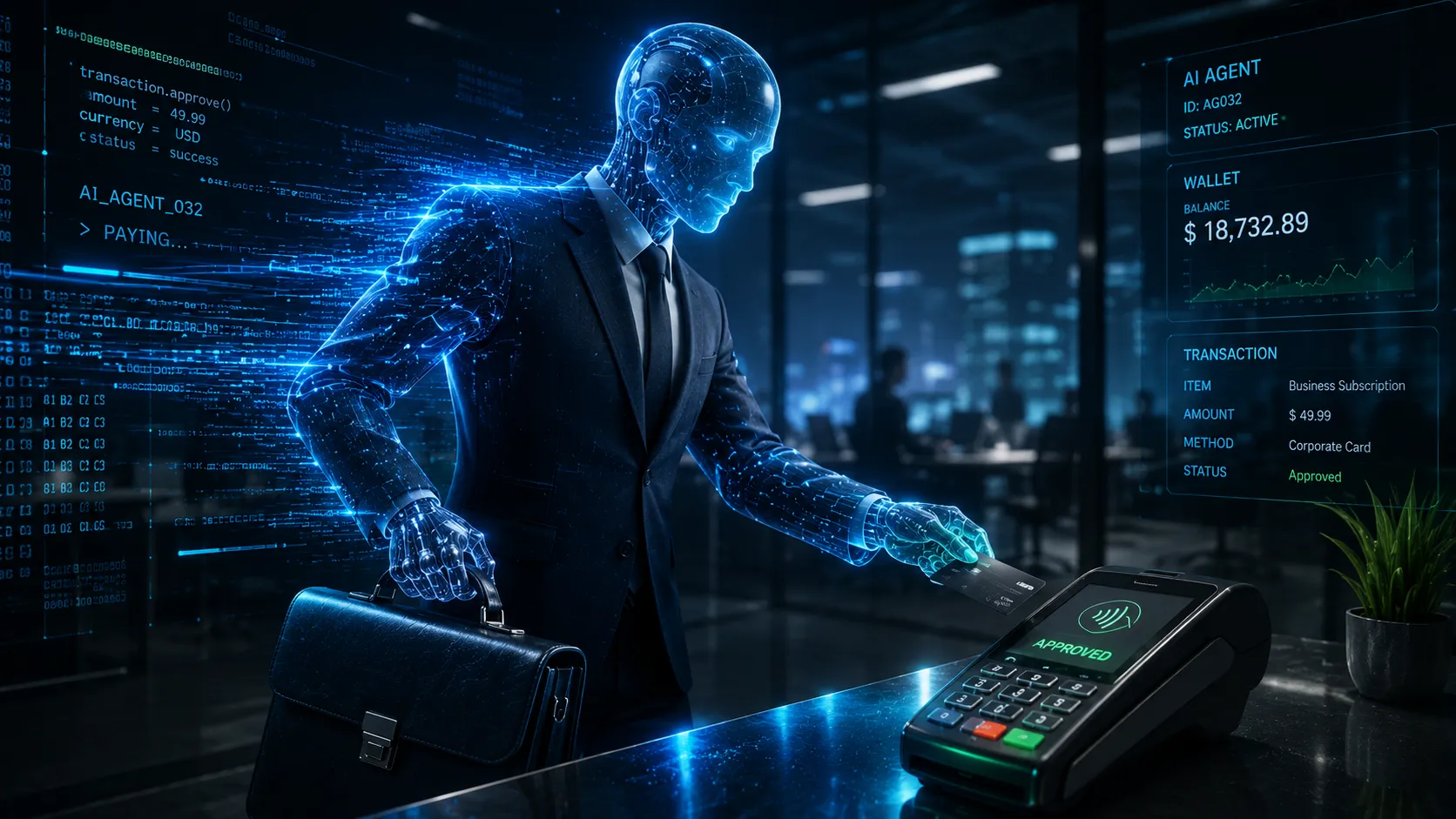
If agents are going to run business, they need to be able to pay for things. In March 2026, Stripe released the Machine Payments Protocol (MPP) — an open standard that lets autonomous agents make programmable payments.
Here‘s how it works. An agent requests a resource from a service. The service issues a payment request. The agent authorizes the transaction. The resource is delivered. No human touches any of it. Real use cases are already running. Parallel Web Systems integrated machine payments into Stripe “in a few lines of code.” Postalform lets agents pay for physical mail printing and postage. There’s even an agent called Prospect Butcher Co. that can order sandwiches for delivery in New York City.
Yes, an agent ordering sandwiches sounds ridiculous. But that‘s exactly the point. Once you put payment into the hands of agents, any transaction-based business process becomes automatable. The trivial use cases come first. The multi-billion dollar workflows follow. Stripe isn’t building a feature. It‘s building a rails for the agent economy.

Agents Are Entering Core Business Processes
UiPath’s report listed “agents entering core workflows” as a key trend for 2026. Their data showed that 65 percent of organizations are already piloting or deploying agentic systems. And 80 percent of executives said their boards are demanding “clear strategy and demonstrable ROI.”
Three signals worth watching. First, multi-agent systems are becoming standard. UiPath calls this “the power of the swarm.” Single-agent processes are giving way to systems where agents, robots, and humans work across data, applications, and workflows together. Second, the shift from assistance to autonomous decision-making. Gartner predicts that by 2028, 33 percent of enterprise software applications will include agentic AI, and at least 15 percent of daily work decisions will be made by AI agents autonomously. That‘s not “AI helps you decide.” That’s “AI decides for you” — within set boundaries.
Third, agents are being treated like people. Sophos‘s IT department put AI agents into its organizational chart. New agents get a “new team member” announcement. There’s even a leaderboard where humans and digital colleagues compete. Sophos CIO Tony Young explained: “Understanding how to use LLMs or how to create agents is like mastering Excel — it‘s a new foundational skill we all need to have.” That sounds like a gimmick until you realize every major software company is doing something similar.
The Governance Problem Nobody Has Solved Yet
More capability means more risk. As agents move into core workflows, the governance challenges become urgent.
Security and transparency are at the top of the list. UiPath’s report emphasized that as agents enter core workflows, “strong orchestration and governance capabilities are needed.” Eighty-two percent of executives said new operating models are required. Security, transparency, and control are at the center of that. Then there‘s the autonomy boundary. CIO.com pointed out the core dilemma. Agents with too little autonomy constantly ask humans for permission and defeat the purpose of automation. Agents with too much autonomy make catastrophic mistakes. Finding the balance is the hard part.
And then there’s tacit knowledge. Today‘s agents can’t access the knowledge inside experienced employees‘ heads — the kind that never gets written down. DoiT’s field CTO noted that if a junior programmer gets stuck, they can ask a senior engineer for help. Today‘s agents have no mechanism for that. They can’t tap the shoulder of the person who’s seen the problem before. That‘s a real limitation. And it’s not obvious how to fix it.
What This Actually Means
Agents “running business” isn‘t a future prediction. It’s already happening. Claude Code is orchestrating hundred-agent fleets. Stripe‘s machine payment protocol is live. Gartner’s forecasts are already in corporate strategy documents.
But the deeper question isn‘t technical. When an agent starts paying for things, placing orders, and making decisions — is it an employee or a piece of software? Sophos puts it on the org chart. UiPath treats it as a workload to orchestrate. Stripe treats it as a payment customer. Three different definitions. One shared reality: agents are blurring the line between person and tool.
The hardest part isn’t building them. It‘s deciding how much control to give them. That’s when agents really start running business.